

TL;DR:
- Hearing protection at concerts is essential for preventing permanent cochlear damage caused by noise levels exceeding 85 decibels. Properly fitted high-fidelity or custom earplugs effectively reduce volume while preserving sound clarity during live events. Consistent use of protection before and during shows helps safeguard long-term hearing health for attendees of all ages.
Hearing protection at concerts is defined as any method used to reduce sound exposure below levels that cause permanent cochlear damage. The role of hearing protection in concert attendance is not optional. Concert noise levels routinely exceed 85 decibels, the threshold at which hearing damage begins. Cochlear hair cells do not regenerate once destroyed. That means every unprotected show carries a real, cumulative cost to your long-term hearing health. Earplugs and quiet zones are the two most effective tools available to any concertgoer today.
How does loud concert noise damage your hearing?
Hearing damage at concerts starts at 85 decibels, and most live shows push well past that mark. Concert noise routinely exceeds this threshold, reaching levels that accelerate permanent damage to the tiny hair cells inside your cochlea. Those cells convert sound waves into electrical signals your brain reads as music. Once they are gone, they do not grow back.
The damage is not always immediate or obvious. Ringing in the ears, known as tinnitus, signals hearing stress, but the absence of ringing does not mean no damage occurred. Harm can accumulate silently across multiple shows before you notice any change in your hearing clarity.
Two factors drive how much damage you sustain: sound intensity and exposure duration. The louder the environment, the less time it takes to cause harm. Sitting near a speaker stack for an entire set is far more damaging than standing at the back of the venue for the same duration.
Hearing fatigue, a feeling of tiredness in the ears, is an early warning sign that often shows up before tinnitus or measurable hearing loss. Think of it as your auditory system waving a flag. Recognizing it early gives you a chance to act before the damage becomes permanent.
Common symptoms to watch for include:
- Tinnitus: ringing, buzzing, or hissing sounds after the show
- Reduced clarity: speech and music sound muffled for hours afterward
- Aural fatigue: ears feel tired or strained during or after the event
- Temporary threshold shift: sounds seem quieter than normal the next morning
Each of these symptoms points to stress on your cochlear hair cells. Repeated exposure without protection turns temporary stress into permanent loss.
What types of hearing protection work best at concerts?
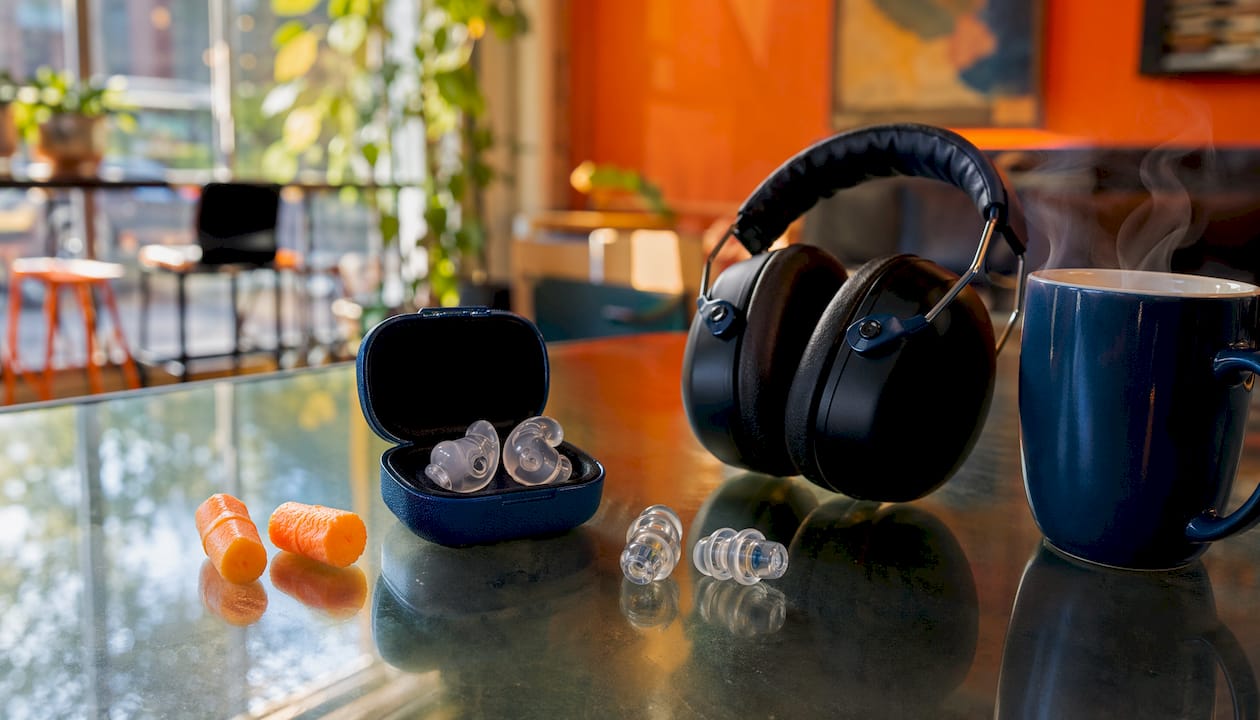
Noise Reduction Rating, or NRR, is the standard measure used to evaluate how much sound a hearing protector blocks. NRR values between 15 and 30 decibels provide the right balance between safety and music clarity at live events. Go too low and you are not protected. Go too high and the music sounds flat and lifeless.
Foam earplugs
Disposable foam plugs are cheap and widely available. Many festivals hand them out for free. The problem is fit. Disposable foam plugs are prone to poor sealing and can pop out easily, which means their actual noise reduction in practice is often lower than the rated value. They also tend to muffle high frequencies more than low ones, which distorts the sound of music.
High-fidelity musician earplugs
High-fidelity musician earplugs with acoustic filters preserve music clarity by attenuating sound evenly across frequencies. You hear the same mix at a safer volume rather than a muffled version of it. These are the preferred choice for regular concertgoers and musicians alike. Entry-level reusable sets with multiple tip sizes are accessible and effective for most people.
Custom-fitted earplugs
Custom-fitted plugs are made from molds of your ear canal. They offer the best seal, the most consistent NRR, and the highest sound quality. Audiologists provide them, and they last for years. The upfront cost is higher, but for anyone attending shows frequently, the investment pays off quickly.
| Type | NRR Range | Sound Quality | Best For |
|---|---|---|---|
| Disposable foam | 29–33 dB | Low, muffled | Occasional use, emergencies |
| Reusable high-fidelity | 15–25 dB | High, clear | Regular concertgoers |
| Custom-fitted | 15–26 dB | Highest, natural | Frequent attendees, musicians |
Pro Tip: Roll foam plugs into a tight cylinder, pull your ear up and back to open the canal, insert the plug, and hold it for 30 seconds. A proper seal makes the difference between real protection and false confidence.
Proper fit is not a minor detail. Correct fitting improves sound clarity and delivers the full rated NRR. A poorly inserted plug reduces both protection and music quality at the same time.
How to protect your hearing before, during, and after a show
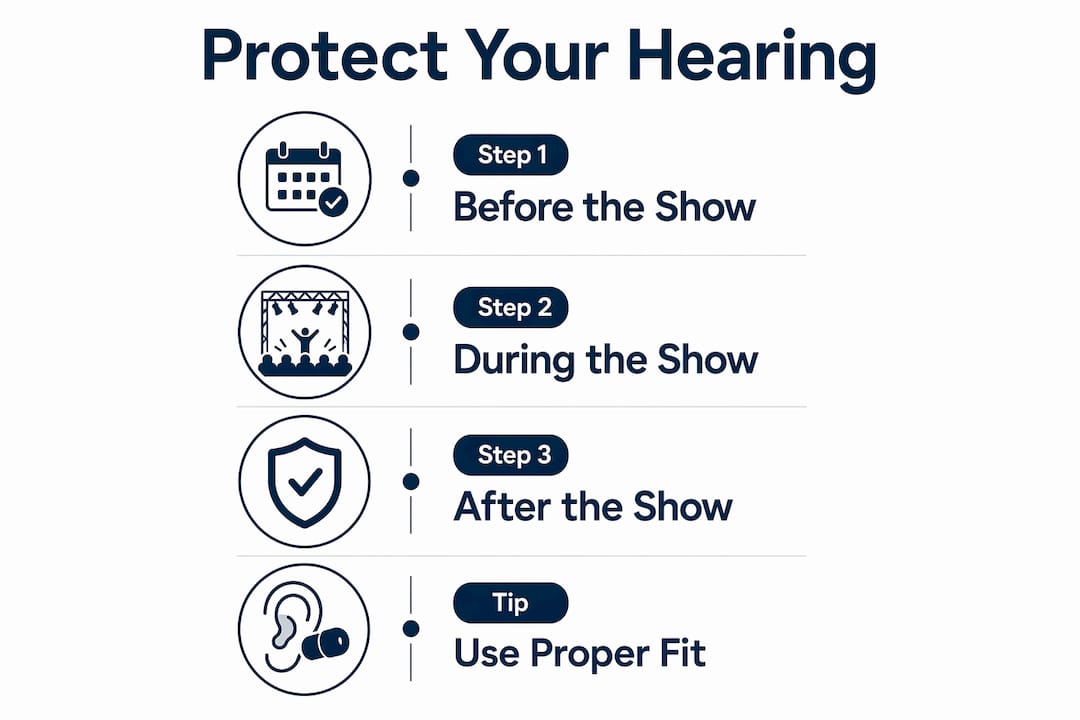
Protecting your hearing at a concert is a full-day effort, not just something you do when the first song starts. Smart habits before, during, and after the show reduce your total sound exposure significantly.
-
Limit headphone use earlier in the day. Resting your ears before attending a concert reduces pre-event hearing fatigue. Your auditory system has a daily capacity for sound stress. Burning through it on the commute leaves you more vulnerable at the show.
-
Insert earplugs before the music starts. Waiting until the volume feels uncomfortable means you have already absorbed unprotected sound. Put them in during the opening act or even during soundcheck.
-
Follow the 15-minute rule in loud zones. Ideal exposure in loud areas without hearing protection is limited to 15 minutes. If you step out for a drink or a bathroom break, use that time to give your ears a rest from peak volume.
-
Use venue quiet zones. Venues are recommended to provide quiet zones at or below 70 decibels to allow hearing recovery during shows. Not every venue offers them, but when they do, use them between sets.
-
Keep earplugs in for the full show. Removing them during your favorite song defeats the purpose. Consistent wear across the entire event is what prevents cumulative damage.
-
Avoid shouting. Using earplugs reduces the need to shout, which protects both your vocal cords and your conversation partner’s ears. Shouting over loud music is a sign the environment is already too loud for unprotected ears.
-
Check your hearing after the show. If sounds seem muffled or quieter the next morning, that is a temporary threshold shift. It usually resolves within 24–48 hours, but repeated shifts indicate cumulative damage building over time.
Pro Tip: Carry your earplugs in a small case on your keychain. If they are always with you, you will never skip protection because you forgot them at home.
If you attend concerts with children, the same rules apply with greater urgency. Children’s hearing protection needs at live events differ from adults because their ear canals are smaller and their developing auditory systems are more sensitive to loud noise.
Common myths about earplugs at concerts
The biggest barrier to earplug use is not cost or availability. It is the belief that earplugs ruin the experience. That belief is wrong, and the evidence is clear.
- Myth: Earplugs make music sound muffled. This is true only for poorly fitted foam plugs. High-fidelity plugs with acoustic filters reduce volume evenly, so the music sounds the same, just quieter and safer.
- Myth: If your ears are not ringing, you are fine. Damage can accumulate silently, affecting cochlear hair cells irreversibly. Tinnitus is a late-stage symptom, not an early warning system.
- Myth: Only older people lose hearing at concerts. Noise-induced hearing loss has no age minimum. Young, frequent concertgoers are among the most at-risk groups precisely because they attend more shows.
- Myth: Wearing earplugs looks strange. The cultural shift toward normalizing hearing protection at concerts is growing. Earplugs are increasingly treated the same way helmets are in cycling: standard protective gear, not an overreaction.
“Wearing earplugs at concerts prevents irreversible hearing loss and chronic tinnitus without ruining the music. High-fidelity plugs let you hear the full mix at a safer volume. Protecting your hearing is how you stay in the audience for decades, not just years.”
Many festivals now offer free foam earplugs, but quality and fit vary widely. Bringing your own well-fitting reusable plugs is the better choice. Treat them as essential concert gear, the same way you would treat a ticket or a phone charger.
Key Takeaways
Hearing protection is the single most effective tool for preventing permanent noise-induced hearing loss at concerts, and consistent use of properly fitted earplugs with an NRR of 15–30 dB protects both sound quality and long-term hearing health.
| Point | Details |
|---|---|
| Damage threshold | Concert noise exceeds 85 dB, the level at which permanent cochlear damage begins. |
| Best earplug type | High-fidelity plugs with NRR 15–30 dB preserve music clarity while reducing harmful volume. |
| Fit matters | Correct insertion delivers the full rated NRR; poor fit reduces both protection and sound quality. |
| Pre-show habits | Resting ears before a show and limiting headphone use reduces total daily sound exposure. |
| Quiet zones work | Venues offering zones at or below 70 dB give ears recovery time between loud sets. |
Why I think we have been thinking about earplugs all wrong
Most people treat earplugs as a last resort, something you grab when the volume gets unbearable. That framing gets it exactly backward. By the time a concert feels too loud, you have already absorbed significant unprotected exposure.
I have watched the conversation around hearing protection shift noticeably over the past several years. Younger concertgoers are arriving with reusable plugs already in their pockets. Artists are mentioning hearing health from the stage. Festivals are posting NRR information at entry points. That shift is real, and it matters.
The analogy I keep coming back to is sunscreen. Nobody argues that sunscreen ruins a day at the beach. You apply it before you go out, not after you are already burned. Earplugs work the same way. You put them in before the first song, not after your ears start ringing.
The other thing worth saying plainly: hearing loss is permanent. There is no treatment that restores destroyed cochlear hair cells. Every unprotected show is a small, irreversible withdrawal from a finite account. High-fidelity earplugs cost less than a concert ticket and last for years. That math is not complicated.
If you attend shows with kids, the stakes are even higher. Children’s auditory systems are still developing, and their hearing safety at family events deserves the same attention you give to sunscreen or car seats. Start the habit early, and it becomes second nature.
— Shari M. Murphy
BANZ® hearing protection for concertgoers and families
BANZ® builds hearing protection designed for real-world noise environments, including live music events. Parents attending concerts with children will find purpose-built earmuffs sized for babies and kids, with NRR ratings suited to the sound levels found at live shows.
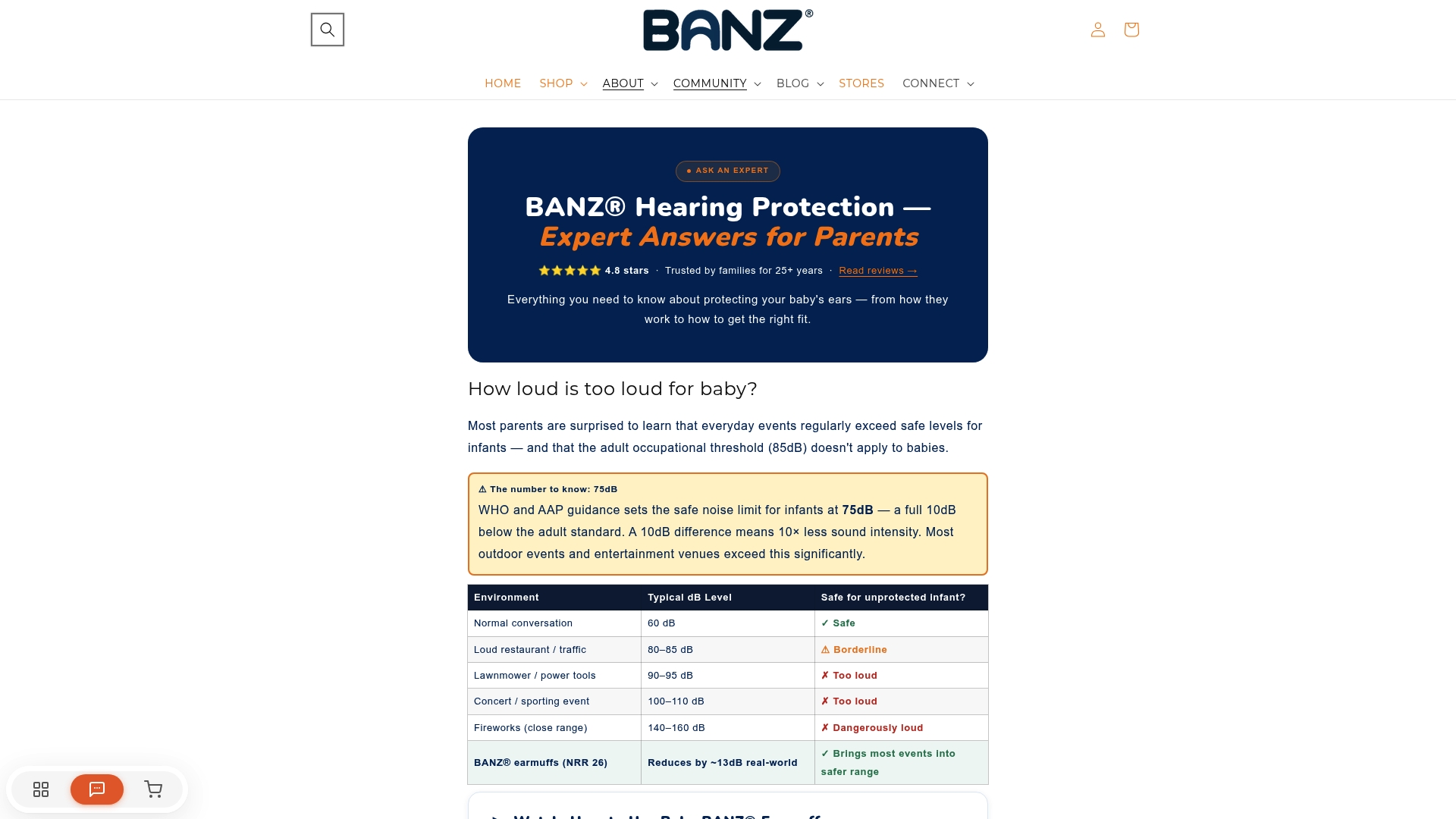
BANZ® earmuffs are used by over 2 million families across six continents. The free BANZ Protect app adds real-time noise monitoring so you know exactly when sound levels cross into harmful territory. For parents who want to understand NRR vs. SNR ratings before buying, BANZ® provides a clear breakdown of what those numbers mean in practice. Browse the full range of baby and kids ear protection to find the right fit for your family’s next show.
FAQ
What sound level causes hearing damage at concerts?
Hearing damage begins at sustained exposure to 85 decibels. Most live concerts exceed this level, which means unprotected ears are at risk throughout the show.
Do earplugs ruin the sound quality at concerts?
High-fidelity earplugs with acoustic filters do not ruin sound quality. They reduce volume evenly across frequencies, so the music sounds the same, just at a safer level.
How long can you safely stay in a loud concert area without earplugs?
The recommended limit for unprotected exposure in loud concert zones is 15 minutes. Beyond that, the risk of cumulative cochlear damage increases significantly.
What is the best NRR for concert earplugs?
An NRR between 15 and 30 decibels provides the best balance of hearing protection and music clarity for most live music environments.
Do children need different hearing protection at concerts?
Yes. Children’s ear canals are smaller and their auditory systems are still developing, making them more sensitive to loud noise. Purpose-built earmuffs sized for children provide a better seal and more reliable protection than adult plugs.
Recommended
- Earmuff Benefits for Kids at Concerts: Parent’s Guide – BANZ® Carewear USA
- Ear Protection in Indoor Entertainment: A Parent’s Guide – BANZ® Carewear USA
- Outer Ear Noise Protection for Kids at Loud Events – BANZ® Carewear USA
- Baby Earmuffs for Concerts, Fireworks & Loud Events: A Parent’s Guide – BANZ® Carewear USA