

TL;DR:
- Children’s UPF 50+ swimwear provides reliable protection by blocking most UVA and UVB rays during water activities. It lasts through wet conditions and must be paired with sunscreen and protective accessories for comprehensive sun safety. Proper care and clear labeling ensure optimal durability and trust in UPF-rated garments for toddlers.
For toddlers and young children, a long-sleeve UPF 50+ one-piece or a rashguard paired with swim leggings is the best first choice. These styles cover the most skin, stay in place during active play, and are engineered to maintain their UV-blocking rating even when wet — unlike a standard cotton tee or an unrated swim shirt.
Quick action checklist:
- Check the label for a certified high UPF rating before buying — not “UV protective” or “sun-safe,” but the actual UPF 50+ designation.
- Choose high-coverage styles (long sleeves, high neckline, full-length legs) for babies and toddlers under 3.
- Add a UPF 50+ sun hat and apply broad-spectrum sunscreen to all exposed skin.
BANZ® builds its children’s UPF swimwear specifically for this age group, with diaper-friendly closures, certified UPF 50+ fabric, and sizing that fits real toddler bodies. It is a practical, family-focused starting point for any caregiver building a sun-safety kit.
Table of Contents
- What UPF 50+ actually means for sun protection
- Types of UV-protective swimsuits and when to use each
- What to look for when buying a UPF 50+ swimsuit
- Why children need UPF 50+ and high-coverage swimwear
- How to care for UPF swimwear and how long protection lasts
- Does UV swimwear replace sunscreen? Practical sun-safety rules
- Jellyfish and stinger protection: what UPF swimwear can and can’t do
- Key Takeaways
- The case for getting sun protection right from the start
- BANZ® UPF 50+ swimwear: built for toddlers and families
- Useful sources and further reading
What UPF 50+ actually means for sun protection
UPF stands for Ultraviolet Protection Factor. It measures how much UVA and UVB radiation a fabric blocks, the same way SPF measures sunscreen performance on skin. The key difference: SPF applies to a topical product, while UPF applies to a garment.
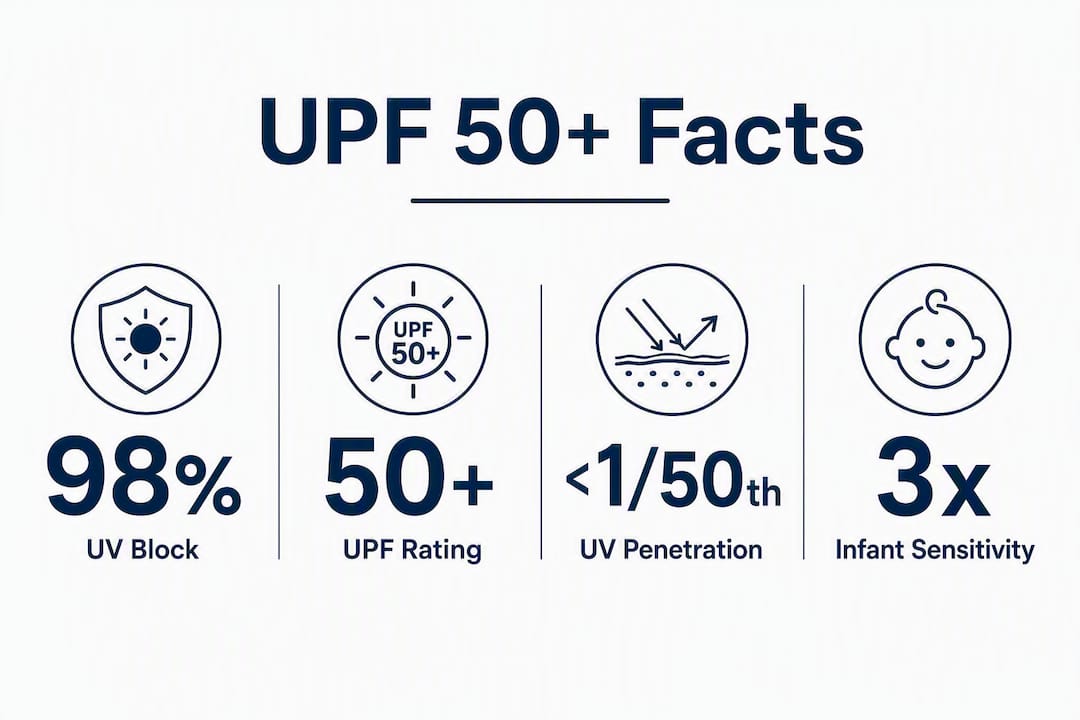
A certified UPF 50+ fabric blocks approximately 98% of UVA and UVB radiation, allowing only about 1/50th of UV rays to pass through. That is the highest rating on the standard scale, and it is what you want on a label when buying for children.
One important caveat: that rating applies to the fabric as tested in a lab. Non-certified fabrics, including some cotton tees and loose-knit synthetics, can lose significant UV-blocking performance when wet because fibers expand and let more radiation through. Certified UPF 50+ swimwear is engineered to retain its rating when saturated — a meaningful difference for kids who spend hours in the water.
On product labels, look for the UPF number itself plus a note on fabric composition and, ideally, a reference to lab or third-party testing. Phrases like “UV-resistant” or “sun-protective” without a specific UPF number are not the same thing. UPF ratings come from fabric construction and treatment, so a product page that lists fabric specs and testing details is more trustworthy than one that uses only marketing language.
Pro Tip: If a garment claims UPF protection but lists no fabric composition, no UPF number, and no testing reference, treat it as unrated.
Types of UV-protective swimsuits and when to use each
Not every style suits every situation. Here is a practical breakdown:
- Long-sleeve rashguard: The most versatile option. Covers arms and torso, pairs with swim shorts or leggings, and works for pool, beach, and water parks. Good for toddlers and older kids who resist full-body suits.
- Long-sleeve one-piece: Best for babies and toddlers. Full torso and arm coverage in one garment, no gaps at the waist, and easier to manage than a two-piece. Look for zip-front or snap-crotch designs for diaper access.
- Swim leggings: Pair with a rashguard for full-leg coverage. Useful for fair-skinned children or long beach days where lower-body exposure is a concern.
- Full-body stinger suit: Covers arms, legs, and torso in a single piece. Originally designed for marine environments, these also provide excellent UV coverage. Good for snorkeling, open-water swimming, or travel to high-UV destinations.
- Infant zip suit: A full-coverage one-piece with a front or back zip, designed for babies who cannot yet stand. Diaper-friendly, easy to put on and take off, and typically available in sizes from newborn up.
- Swim shirt (short-sleeve): Covers the torso but leaves arms exposed. Fine for lower-UV days or as a secondary layer, but not the best standalone choice for peak sun hours.
- UPF tankini or one-piece for adults: Covers the torso and is marketed for all-day pool or beach use. Brands position UPF 50+ swimwear as a lightweight, quick-dry option for continuous protection — a practical upgrade from a standard bathing suit for caregivers who are also in the water.
For newborns and infants under 6 months, coverage and shade are the primary tools. Full-body zip suits and stroller canopies do more work than sunscreen at that age. For toddlers 6 months to 3 years, a long-sleeve one-piece with a high neckline is the standard recommendation. Older kids can move to rashguard-and-leggings combos that are easier to put on independently.
Rashguards also reduce irritation from saltwater and chlorine and cut down on chafing during active play — a practical bonus beyond UV blocking that parents often notice after the first beach trip.
What to look for when buying a UPF 50+ swimsuit
Must-have criteria
- Certified UPF 50+ label: The number must appear on the tag or product page. “UV protective” without a number is not sufficient.
- Fabric type: Tightly woven polyester and nylon blends block more UV than cotton or rayon. Look for these materials in the fabric composition.
- Chlorine resistance: Stated on the label or product page. Chlorine degrades elastic and some fabric coatings over time; chlorine-resistant construction extends the garment’s useful life.
- Quick-dry performance: Reduces time in wet fabric and helps maintain fit and comfort during long days.
- Secure closures: Zippers, snaps, or drawstrings that stay in place during active movement. For toddlers, a front zip with a chin guard prevents scratching.
- Coverage appropriate to age: Long sleeves and high necklines for babies; full-leg coverage for toddlers in high-UV conditions.
- Care instructions on the label: Any garment without care guidance is harder to maintain correctly.
Fabric tradeoffs at a glance
| Feature | Polyester/Nylon Blend | Cotton/Rayon | Lycra/Spandex Blend |
|---|---|---|---|
| UPF when dry | High | Low–Medium | Medium–High |
| UPF when wet | Retains (if certified) | Drops significantly | Retains (if certified) |
| Chlorine resistance | Good–Excellent | Poor | Good |
| Quick-dry | Yes | No | Yes |
| Stretch/comfort | Good | Good | Excellent |
| Durability | High | Medium | Medium |
Red flags to avoid
- “UV protective” or “sun-safe” claims with no UPF number
- No fabric composition listed
- Loose, open-knit construction visible to the eye
- No care instructions
- Elastic that feels thin or already stretched in the store
Pro Tip: Hold the fabric up to a light source. If you can see light clearly through it, the weave is too loose for reliable UV blocking — regardless of what the label says.
Why children need UPF 50+ and high-coverage swimwear
Infant skin is up to three times more sensitive to ultraviolet radiation than adult skin, which means the same UV dose that causes mild redness in an adult can produce a serious burn on a baby. That sensitivity does not disappear overnight — toddler skin remains significantly more reactive than adult skin through the early years.

Severe childhood sunburns are linked to a significantly higher long-term risk of skin cancer. The American Academy of Dermatology and the Skin Cancer Foundation both identify early UV exposure as a primary risk factor, particularly for melanoma. Physical barriers — garments with certified UPF 50+ ratings — provide consistent, reliable protection that does not wash off, rub off, or require reapplication every two hours.
For babies under 6 months, the guidance from pediatric health authorities is clear: keep infants out of direct sun, use shade and physical cover as the first line of defense, and reserve sunscreen for small exposed areas when shade is unavailable. A full-coverage UPF 50+ zip suit is the most practical tool in that scenario.
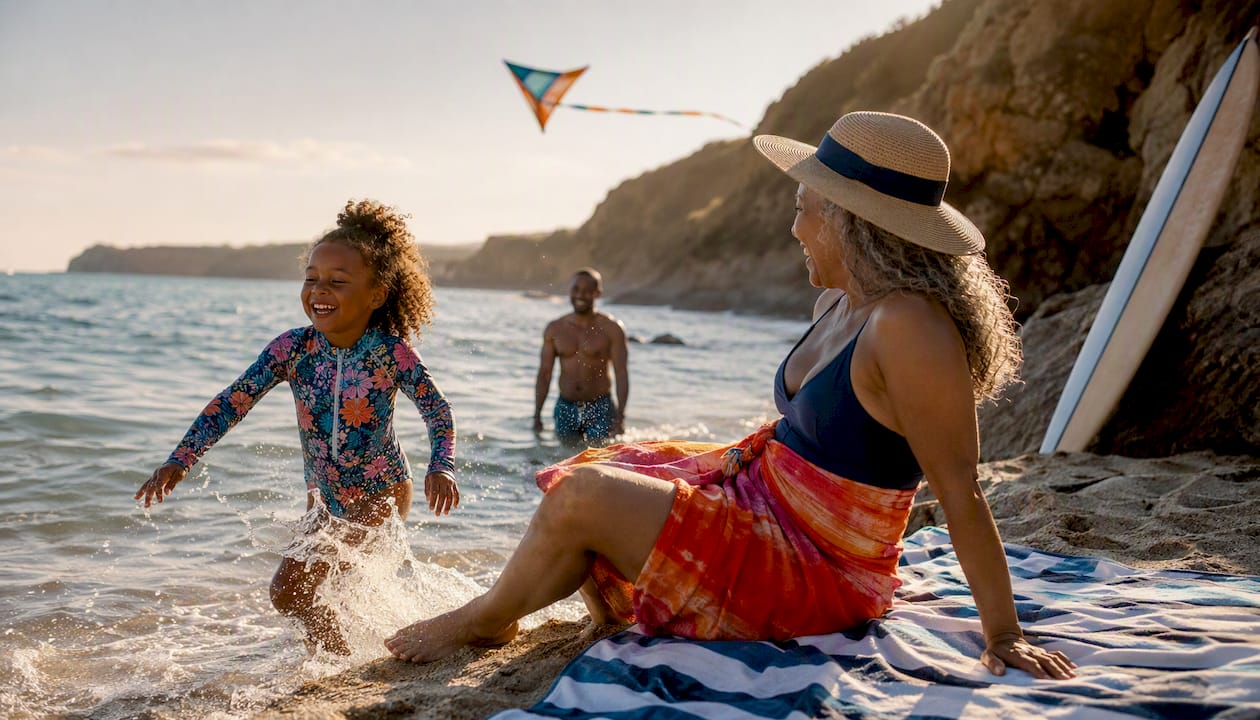
Sunlight also reflects off water and sand, increasing UV exposure even on overcast days. A child playing at the water’s edge is getting UV from above and below simultaneously. Clothing covers that exposure continuously; sunscreen alone cannot match that consistency during active water play.
Pro Tip: For toddlers, choose a long-sleeve one-piece with a high neckline and a front zip. It goes on fast, stays put, and covers the shoulders and upper chest — the areas most exposed during pool play.
How to care for UPF swimwear and how long protection lasts
Proper care preserves both the UPF rating and the garment’s fit. Follow these steps after every use:
- Rinse immediately in cool, clean water. Chlorine and saltwater degrade fabric and elastic faster than UV exposure does. Rinse within minutes of leaving the pool or ocean.
- Hand wash or machine wash on a gentle cycle with mild detergent. Avoid bleach and fabric softeners — both break down the fibers that provide UV blocking.
- Air dry flat or hang in shade. High heat from a dryer weakens elastic and can alter the fabric’s weave density. Direct sun drying also degrades some synthetic fibers over time.
- Store dry and flat. Folding a damp suit and leaving it in a bag accelerates mildew and elastic breakdown.
Chlorine resistance and quick-dry construction extend useful life, but even well-made UPF swimwear has a finite lifespan. Most quality garments hold their rating through a full season of regular use. Signs it is time to replace: visible fabric thinning, stretched-out elastic that no longer holds shape, fading that goes beyond color change to visible weave loosening, or any physical damage to the fabric.
Pro Tip: Rinse the suit before getting in the pool, not just after. A pre-saturated fabric absorbs less chlorinated water, which reduces the cumulative chemical load on the fibers.
Does UV swimwear replace sunscreen? Practical sun-safety rules
No. UPF clothing is a physical barrier, and it covers only the skin it sits on. Exposed areas — face, neck, hands, feet, and any skin visible at necklines or sleeve edges — still need broad-spectrum SPF 30+ sunscreen. The two tools work together, not as substitutes for each other.
Clothing provides consistent coverage where sunscreen can wash off. That is the practical case for UPF garments: they do not require reapplication, they do not rub off on towels, and they do not miss spots. Sunscreen fills the gaps clothing cannot cover.
Dos and don’ts for pool and beach days:
- Do apply broad-spectrum SPF 30+ sunscreen to all exposed skin 15–30 minutes before going outside.
- Do reapply sunscreen every two hours and immediately after toweling off.
- Do use shade during peak UV hours (10 AM–4 PM).
- Do pair UPF swimwear with a UPF 50+ hat and UV-blocking sunglasses for full coverage.
- Don’t assume a UPF suit eliminates the need for sunscreen on the face and neck.
- Don’t rely on a non-certified swim shirt as UV protection — especially when wet.
For infants under 6 months, the FDA and AAP advise against sunscreen on most of the body. UPF clothing, shade, and physical cover are the primary tools. For small exposed areas like the face, a minimal amount of mineral sunscreen is acceptable when shade is unavailable. See how to apply sunscreen on a toddler correctly for age-specific guidance.
Pro Tip: Build a routine around swim breaks: every time the child gets out of the water, check coverage, reapply sunscreen to exposed areas, and offer shade. It takes 90 seconds and removes the guesswork.
Jellyfish and stinger protection: what UPF swimwear can and can’t do
UPF swimwear is designed to block UV radiation. It is not designed or tested as a barrier against jellyfish venom. A tightly woven full-body suit may reduce the skin area exposed to tentacle contact and can limit minor scrapes from coral or sand, but it does not prevent venom from penetrating through fabric contact in most cases.
What to know before swimming in marine environments:
- Check local marine hazard alerts before entering open water. Many coastal areas post jellyfish warnings during peak seasons.
- A full-body stinger suit (also called a dive skin or lycra suit) provides more physical coverage than a rashguard and reduces tentacle contact area, but it is not a guaranteed barrier against box jellyfish or other highly venomous species.
- If stings are a serious concern — open-water swimming in tropical regions, for example — consult local dive operators about appropriate protective gear beyond standard UPF swimwear.
- For UV protection in marine environments, a UPF 50+ full-body suit serves both purposes adequately in low-to-moderate stinger risk areas.
- If stung, exit the water immediately, do not rub the area, and follow current first-aid guidance. Seek medical attention for any sting involving significant pain, swelling, or systemic symptoms.
The practical takeaway: if UV protection is the primary goal, a certified UPF 50+ suit is the right choice. If you are traveling to high-risk marine environments, research the specific hazards and consider a purpose-built stinger suit in addition to UV-rated gear.
Key Takeaways
UPF certified swimwear blocks a very large portion of UVA and UVB rays and is a reliable physical sun barrier for children, especially when paired with sunscreen on exposed skin and a UPF hat.
| Point | Details |
|---|---|
| UPF 50+ blocks most UV radiation | Only buy garments with a certified UPF 50+ label — not just “UV protective” marketing language. |
| Infant skin needs extra coverage | Infant skin is up to three times more sensitive to ultraviolet radiation than adult skin; full-coverage suits are the primary tool for babies. |
| Wet fabric matters | Certified UPF 50+ swimwear retains its rating when wet; non-certified fabrics often do not. |
| Care extends lifespan | Rinse immediately after use, air dry, and avoid hot dryers to preserve UPF performance season to season. |
| BANZ® for toddlers | BANZ® children’s UPF swimwear is built with certified UPF 50+ fabric, diaper-friendly closures, and toddler-specific sizing. |
The case for getting sun protection right from the start
Sun protection for children is not complicated, but it does require the right gear. Most caregivers already know sunscreen matters. What gets missed more often is the gap between a standard swimsuit and a certified UPF 50+ garment — and that gap is real, especially for babies and toddlers who spend hours in reflected UV at the water’s edge.
The conventional wisdom tends to stop at “put sunscreen on the kids.” That is necessary, but it is not sufficient. Sunscreen washes off. It misses spots. It requires reapplication that does not always happen on schedule during a busy beach day. A certified UPF 50+ suit covers the largest surface area of the body continuously, without any of those failure points.
What parents often underestimate is how much of the UV load comes from reflection off water and sand rather than direct overhead sun. A child sitting in the shade at the beach is still receiving reflected UV from the surface in front of them. A UPF suit addresses that exposure in a way that shade alone does not.
The other thing worth saying plainly: not all UPF claims are equal. A garment that says “UV protective” on the hang tag but lists no UPF number, no fabric specs, and no testing reference is not the same as a certified UPF 50+ product. The label matters. The fabric composition matters. And for the youngest children, the coverage style matters most of all.
BANZ® UPF 50+ swimwear: built for toddlers and families
BANZ® makes certified UPF 50+ swimwear specifically for the ages and situations where protection matters most: babies, toddlers, and young children who spend real time outdoors. The toddler one-piece UPF swimsuit features a diaper-friendly design, long sleeves, a high neckline, and certified UPF 50+ fabric — the combination pediatric guidance points to for children under 3.
BANZ® started as a family solving a problem they could not find a product for. That origin shows up in the details: closures that work with diapers, sizing that fits real toddler proportions, and materials rated for chlorine resistance. The full children’s UPF swimwear collection covers sizes from infant through older kids, and the BANZ® kids’ sun safety resource library compiles official public-health guidance alongside product information for caregivers who want the full picture. Browse the collection, check sizing, and add to cart directly on the BANZ® website.
Useful sources and further reading
Short list of authoritative references for caregivers who want to verify claims or read further:
- SwimRight Academy: Why Is UV-Protective Swimwear Important for Babies? — Covers infant UV sensitivity, rashguard benefits, and practical guidance for parents of young children.
- Today’s Parent: Summer sun protection guide for kids and babies — Explains fabric performance, wet-fabric effects, and sunscreen use by age.
- Skin Cancer Foundation: Seal of Recommendation — Details what the Skin Cancer Foundation’s product seal requires, including UPF testing standards.
- PubMed: UV radiation and skin cancer risk (NIH) — Peer-reviewed research on UV exposure and skin cancer risk factors.
- NIH/PMC: Photoprotection in children — Clinical summary of sun protection strategies for pediatric patients.
- L’ANIMAL CO: What Is UPF Swimwear? — Retail-focused explainer on how UPF ratings are achieved and what to look for on product pages.
- BANZ® UV Safety Resources and UV Index Guide for Kids — UV index guidance, safety tips, and educational resources compiled for families.
- BANZ® UPF 50 Protection for Kids: What Parents Need to Know — Internal explainer covering UPF 50 specifics, product trust signals, and buying guidance for caregivers.