

Activity rated UV protection is defined by the UPF (Ultraviolet Protection Factor) rating system, which measures how much UVA and UVB radiation a fabric blocks from reaching your child’s skin. According to the Cleveland Clinic, UPF reflects a garment’s effectiveness at blocking UV rays, with higher numbers meaning better protection. For parents choosing outdoor gear, understanding what is activity rated UV protection means knowing exactly how much sun your child’s clothing actually stops. The Skin Cancer Foundation and REI both use UPF as the standard measure for evaluating sun-protective clothing and gear.
What is activity rated UV protection and how is UPF measured?
UPF is a lab-measured ratio that tells you what fraction of UV radiation passes through a fabric to reach skin. A garment rated UPF 30 allows about 3.3% of UV through, while a UPF 50+ garment allows less than 2%. That difference matters most during long outdoor sessions, when cumulative UV exposure adds up fast for children.
The testing process is standardized. Lab protocols like AATCC Standard 183 measure full-spectrum UV transmission through textiles, covering both UVA and UVB wavelengths. This makes UPF a consistent, credible number you can compare across brands and products.

UPF and SPF are not the same thing. UPF covers both UVA and UVB through fabric, while SPF applies to sunscreen and primarily measures UVB protection. A shirt rated UPF 50+ gives your child broad-spectrum coverage on every covered inch of skin, without reapplication.
Garments without a UPF label offer uncertain protection. REI experts caution that vague “UV-protective” labels without a verified UPF rating should not be relied upon for serious sun safety decisions. If the tag does not show a number, the protection level is unknown.
Pro Tip: UPF 50+ is treated as the practical ceiling rating. The Cleveland Clinic confirms that protection gains above UPF 50 are not clinically significant, so UPF 50+ is the target, not a starting point.
How do UPF ratings compare for children’s outdoor protection?
Not all UV protection ratings are equal. The three main categories give you a clear picture of what you are actually buying.
| UPF Rating | Protection Level | UV Blocked | Best Use |
|---|---|---|---|
| UPF 15–24 | Fair | 93.3–95.8% | Casual, brief outdoor time |
| UPF 25–39 | Good | 96–97.4% | Regular outdoor play |
| UPF 40–50+ | Excellent | 97.5–98%+ | Prolonged sun exposure, beach, pool |
The Skin Cancer Foundation’s Seal of Recommendation requires a minimum UPF 50, blocking 98% of UV rays. That seal is a reliable shortcut when you are shopping quickly and want a medically grounded benchmark.
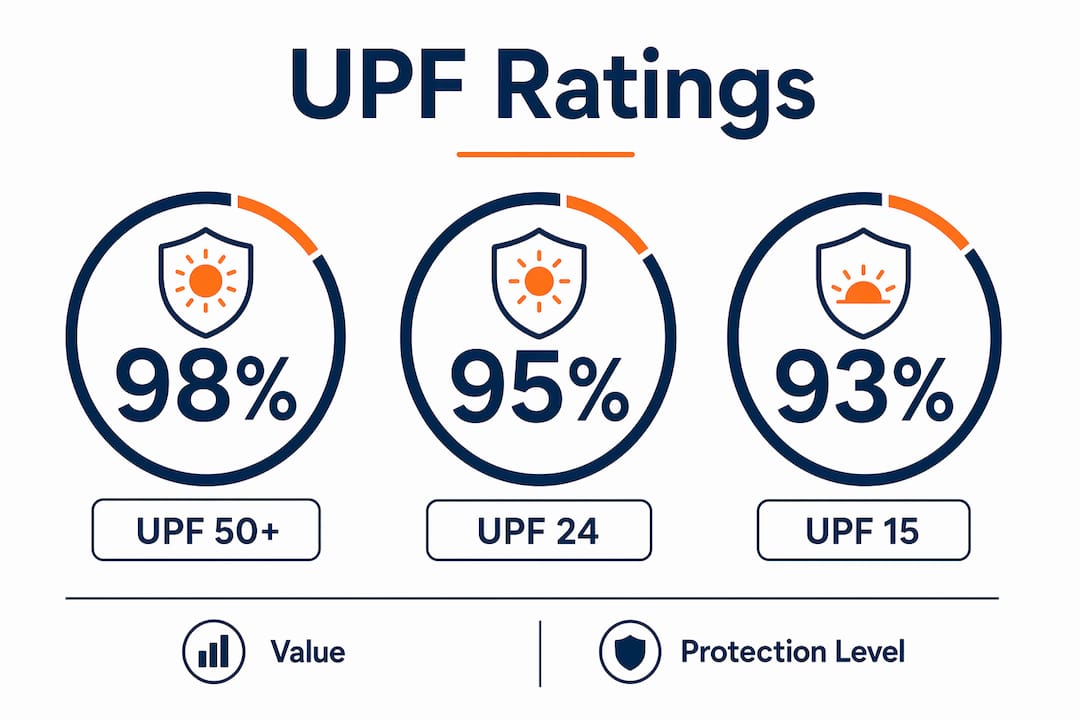
For children, UPF 50+ is the recommended baseline for any extended outdoor activity. Kids spend more time in direct sun than most adults, and their skin is more vulnerable to UV damage. A UPF 15 shirt may feel like sun protection, but it still lets in nearly 7% of UV radiation. Over a full afternoon at the park, that adds up.
Typical UPF-rated items for children include:
- Long-sleeve swim shirts and rash guards
- Wide-brim sun hats with neck flaps
- Full-coverage swimsuits
- Lightweight outdoor play shirts
- UV-blocking sunglasses
The importance of UV protection for children goes beyond sunburn prevention. Repeated UV exposure in childhood is directly linked to long-term skin damage and elevated skin cancer risk in adulthood.
What should parents look for in upf-rated sun gear?
The UPF number is the starting point, not the full picture. Real-world protection depends on how much skin the garment actually covers and how the fabric performs under activity conditions.
Coverage area matters as much as the rating
A UPF 50+ shirt that leaves the shoulders, neck, and arms exposed still leaves significant skin unprotected. Look for long sleeves, high necklines, and longer hemlines when choosing shirts for outdoor play. Pair UPF clothing with sunscreen on all exposed areas, including hands, face, and neck.
Fabric construction affects UV blocking
Tighter weaves block more UV than loose ones. Darker colors generally absorb more UV than lighter shades. Wet fabric can lose some of its UV-blocking effectiveness, which is why swimwear should carry its own UPF rating rather than relying on a dry-fabric number. You can learn more about how fabric weave affects UV blocking to make better purchasing decisions.
Practical features for active kids
- Lightweight, moisture-wicking fabric keeps kids comfortable and more likely to keep the garment on
- Flat seams reduce irritation during active play
- Adjustable features like toggles or drawstrings help with fit as kids grow
- Quick-dry materials are critical for water activities
Pro Tip: Always check the label for a specific UPF number and look for the Skin Cancer Foundation Seal or equivalent certification. A tag that says “sun protective” without a number is not a verified rating.
Hats and sunglasses complete the protection picture. A wide-brim hat with a UPF rating shields the face, ears, and neck. UV-blocking sunglasses protect eyes and the delicate skin around them. The right sun hat for your child should cover the ears and back of the neck, not just the top of the head.
How does activity type change your UV protection choices?
The activity your child is doing directly affects how much UV exposure they receive and what type of gear performs best. A one-size approach does not work across all outdoor settings.
Water activities
Water reflects and amplifies UV radiation. Water sports increase UV exposure significantly, which means standard dry-fabric UPF ratings are not enough on their own. Swimwear needs to be rated for wet conditions, quick-drying, and resistant to chlorine or saltwater degradation. Rash guards and full-coverage swimsuits with UPF 50+ are the standard for pool and beach days.
Hiking and trail play
Elevation increases UV intensity. At higher altitudes, UV radiation is stronger because there is less atmosphere to filter it. For UV blocking in hiking gear, look for breathable, long-sleeve shirts with UPF 50+ and wide-brim hats. Durability matters here too, since trail conditions are harder on fabric than playground use.
Extended outdoor play
For long sessions at the park, sports fields, or outdoor events, the combination of UPF clothing and regular sunscreen reapplication is the most reliable approach. No single product covers every scenario.
| Activity | Key UV Risk | Gear Priority |
|---|---|---|
| Swimming | Water reflection amplifies UV | Wet-rated UPF swimwear, UV goggles |
| Hiking | Elevation increases UV intensity | Breathable UPF shirts, wide-brim hats |
| Beach play | Sand reflection, prolonged exposure | Full-coverage UPF suit, sunscreen |
| Outdoor sports | Extended direct sun, sweat | Moisture-wicking UPF shirts, hats |
The consistent thread across all activities is UPF 50+ as the baseline. Activity-specific features like water resistance, breathability, and durability determine which product fits which situation.
Key takeaways
Activity rated UV protection, measured by UPF, is the most reliable standard for selecting sun-safe clothing and gear for children across all outdoor activities.
| Point | Details |
|---|---|
| UPF is a lab-verified rating | Only garments with a specific UPF number have tested, reliable UV protection. |
| UPF 50+ blocks 98% of UV | This is the recommended minimum for children in prolonged outdoor settings. |
| Activity type changes gear needs | Water, hiking, and beach activities each require specific UPF product features. |
| Coverage area matters | A high UPF rating only protects covered skin; pair clothing with sunscreen on exposed areas. |
| Look for certified seals | The Skin Cancer Foundation Seal confirms a garment meets medically grounded UPF standards. |
The number on the tag is only half the story
By Shari M. Murphy
After years of writing about children’s outdoor safety gear, the single most common mistake I see parents make is buying a product labeled “sun protective” and assuming the job is done. The UPF number tells you how well the fabric performs in a lab. What it does not tell you is whether the garment actually covers your child’s shoulders, whether they will keep it on in the heat, or whether the hat stays on their head when they run.
The parents I find most confident about sun safety are not the ones with the most expensive gear. They are the ones who understand the rating system well enough to ask the right questions. Does this shirt have a UPF number or just a vague claim? Does this hat cover the ears and neck? Is this swimwear rated for wet conditions?
My honest view is that the industry has made UPF ratings clearer than ever, but marketing language still muddies the water. “UV-protective” without a number is not a rating. “Blocks the sun” is not a specification. The Skin Cancer Foundation Seal exists precisely because consumers need a shortcut they can trust.
The practical approach that works: start with UPF 50+ clothing for covered skin, add broad-spectrum sunscreen on everything else, and reapply sunscreen every two hours regardless of what the clothing rating says. That combination is what the Cleveland Clinic and REI both recommend, and it is what I follow with my own kids.
— Shari M. Murphy
Trusted UPF sun gear for kids from BANZ
BANZ has built its reputation on exactly this kind of protection. Founded in Australia by a family who could not find adequate sun and noise safety gear for their own children, BANZ now serves over 2 million families across six continents.
For sun protection specifically, BANZ offers UPF 50+ rated hats, including the Children’s Flap Hat designed to shield the face, ears, and neck during outdoor play. The Children’s Sun Hats with Toggle add an adjustable fit for active kids who do not stay still. For complete outdoor protection, the Baby Earmuffs and Sunglasses Combo Set covers both UV and noise safety in one package. Every BANZ sun product is built to meet the UPF 50+ standard parents can rely on.
FAQ
What does UPF 50+ mean on a child’s clothing?
UPF 50+ means the fabric blocks at least 98% of UV radiation, allowing less than 2% to reach the skin. The Cleveland Clinic confirms this is the highest practical rating, as gains above UPF 50 are not clinically significant.
How is UPF different from SPF sunscreen?
UPF applies to fabric and blocks both UVA and UVB radiation across the entire covered area. SPF applies to sunscreen and primarily measures UVB protection, requiring regular reapplication to maintain effectiveness.
Do i still need sunscreen if my child wears UPF clothing?
Yes. UPF clothing only protects the skin it covers. The Cleveland Clinic recommends applying sunscreen to all exposed areas including the face, neck, and hands, even when wearing UPF-rated garments.
What UPF rating is recommended for kids at the beach or pool?
UPF 50+ is the recommended rating for prolonged sun exposure, including beach and pool settings. For water activities, choose swimwear specifically rated for wet conditions, since dry-fabric UPF ratings may not hold when the garment is soaked.
Can i trust a label that says “uv-protective” without a UPF number?
No. REI experts state that vague UV-protective labels without a specific UPF rating should not be relied upon for serious sun protection. Always look for a numbered UPF rating and, where possible, the Skin Cancer Foundation Seal of Recommendation.