

What does UPF 50 mean for sun protection?
UPF 50 is the highest practical rating on the UV protection scale for clothing, blocking 98% of UVA and UVB rays and allowing only 2% to reach your skin. The Skin Cancer Foundation classifies UPF 50 and above as “excellent protection,” the top tier in the rating system.
The UPF scale works like this, per international standards like AS/NZS 4399:2020:
- UPF 15: Minimum protection
- UPF 30: Good protection
- UPF 50 / 50+: Excellent protection
A UPF 50 is the highest practical rating on the UV protection scale for clothing, blocking 98% of UVA and UVB rays and allowing only 2% to reach your skin. The Skin Cancer Foundation classifies UPF 50 and above as “excellent protection,” the top tier in the rating system. The Skin Cancer Foundation requires a minimum UPF of 50 before awarding its Seal of Recommendation to any garment. That standard gives you a reliable benchmark when shopping for UPF 50 apparel.
How UPF and SPF measure sun protection differently
UPF and SPF both describe UV protection, but they measure completely different things. Knowing the distinction helps you use each one correctly.
| Factor | What it measures | UV types covered | Testing method |
|---|---|---|---|
| UPF | UV penetration through fabric | UVA and UVB | Spectrophotometer (instrument) |
| SPF | Time before skin reddens | UVB only | Human skin response |
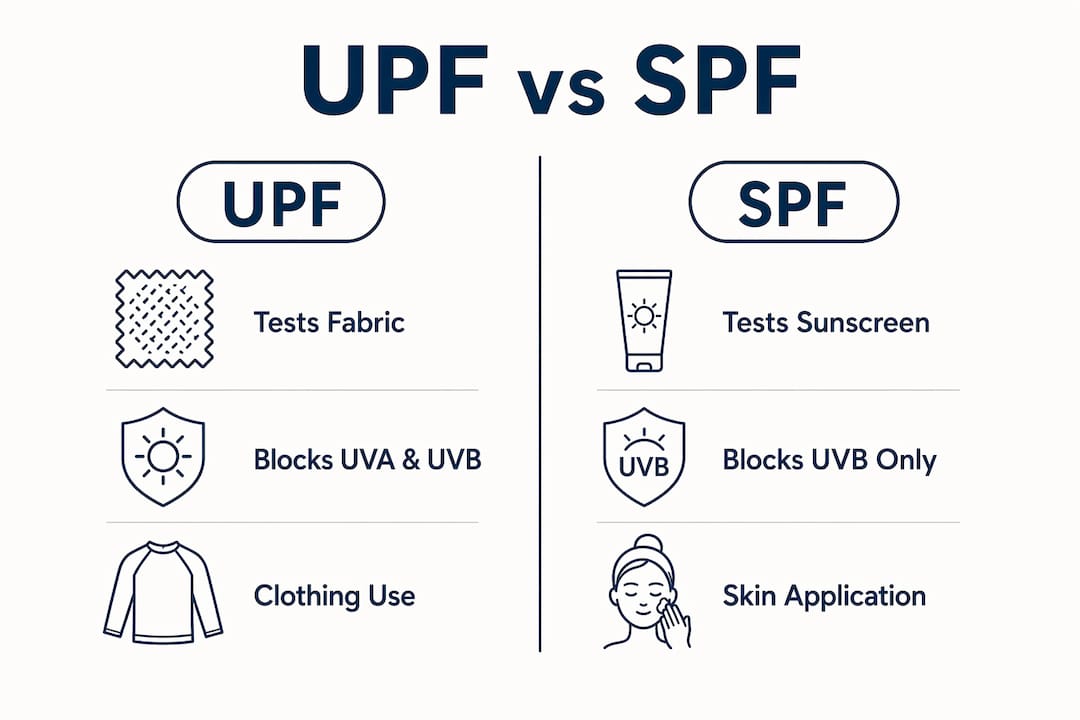
UPF evaluates both UVA and UVB blocking using a laboratory instrument, while SPF measures how long UVB takes to cause redness on unprotected versus protected skin. SPF says nothing about UVA exposure.
Key differences at a glance:
- UPF applies to textiles and garments; SPF applies to sunscreen products.
- UPF testing is instrument-based, giving a direct physical measurement of UV penetration.
- SPF testing relies on a biological response in human subjects, making it inherently more variable.
- A UPF-rated garment protects every time you wear it, with no reapplication required.
For assessing clothing, UPF is the only relevant metric. SPF tells you nothing about how well a shirt or hat blocks the sun.
Why UPF 50 outperforms lower ratings like UPF 30
The gap between UPF 50 and UPF 30 is smaller than most people expect, but it matters in real conditions. UPF 30 blocks most UV rays, while UPF 50 blocks slightly more UV than UPF 30, meaning UPF 50 lets through significantly less UV radiation than UPF 30.
For most people in everyday situations, UPF 30 provides solid coverage. The case for UPF 50 gets stronger in these scenarios:
- Fair or sensitive skin: Less UV tolerance means the extra margin counts.
- Children: Their skin is more vulnerable to UV damage, and cumulative lifetime exposure starts early.
- Extended outdoor time: A beach day, a hike, or an outdoor workday compounds the UV dose.
- High-altitude or reflective environments: Snow, sand, and water all bounce UV back at you.
- People with a history of skin cancer or photosensitivity: Dermatologists consistently recommend maximum-rated fabrics for these groups.
Pro Tip: If you’re choosing between UPF 30 and UPF 50 for a child or for all-day outdoor use, go with UPF 50. The cost difference is usually minimal, and the extra protection is there every time the garment is worn.
Who benefits most from UPF clothing, and when to wear it
Anyone spending time outside benefits from UV-protective clothing, but certain groups have the most to gain. Children top that list. Their skin accumulates UV damage from an early age, and activity-rated UV protection designed for kids accounts for movement, water play, and extended wear.
Other primary beneficiaries:
- Outdoor workers: Construction crews, landscapers, and lifeguards face daily, prolonged UV exposure with no option to step inside.
- People with fair skin or light eyes: Less melanin means less natural UV defense.
- Individuals on photosensitizing medications: Certain antibiotics, diuretics, and acne treatments increase UV sensitivity.
- Outdoor recreation enthusiasts: Hikers, cyclists, surfers, and runners often exceed the UV exposure of a typical beach visitor.
When should you reach for UPF clothing? The answer is straightforward: any time the UV Index is 3 or higher, sun protection is recommended. In most of the continental United States, that threshold is crossed on nearly every clear day from spring through early fall, and year-round in southern states. UV Index apps and weather services make it easy to check before heading out.
UPF clothing works best as part of a layered approach. Pair it with sunscreen on exposed skin, a wide-brim hat, and UV-blocking sunglasses for full coverage.
What materials and features make UPF clothing effective?
Fabric choice drives the UPF rating more than any other factor. Not all materials perform equally, and the construction of the garment matters as much as the fiber type.
Fabrics with naturally high UPF ratings:
- Polyester and nylon: Both block UV effectively and hold their ratings when wet, making them the standard for UPF 50 swimwear and activewear.
- Tightly woven cotton blends: Heavier cotton with a dense weave can reach UPF 30 or higher, though it typically drops when wet.
- Wool and silk: Both absorb UV well, though they are less common in dedicated sun-protective garments.
Design features that raise protection:
- Tight weave or knit structure with minimal gaps between fibers
- Darker colors, which absorb more UV than lighter shades
- Heavier fabric weight, which reduces UV penetration
- UV-absorbing chemical treatments applied during manufacturing
Wetness is a real concern. A standard cotton T-shirt drops from roughly UPF 7 dry to UPF 3 when wet. Specialized quick-dry UPF fabrics are engineered to maintain their rating even after submersion, which is why they matter for swimming, paddling, and any water-based activity.
Pro Tip: Look for garments with hoods, extended collars, or thumbholes. These features increase the area of skin covered and reduce the temptation to push sleeves up or remove the garment during activity. Coverage is protection.
Fabric weave and construction are covered in more depth in BANZ’s guide on fabric weave and UV protection, which walks through how fiber structure affects UV blocking at a practical level.
Sun protection goes beyond UPF clothing
UPF clothing covers the skin it touches. Everything else needs a different layer of defense. A complete sun safety routine combines several tools, and no single one does the whole job.
- Sunscreen on exposed skin: Apply SPF 30 or higher to your face, neck, hands, and feet. Reapply every two hours, or immediately after swimming or heavy sweating.
- Wide-brim hats: A hat with a brim of at least 3 inches shields your face, ears, and the back of your neck, areas that UPF shirts and rash guards miss entirely.
- UV-blocking sunglasses: Look for lenses labeled UV400 or 100% UV protection. Standard tinted lenses without UV coating offer no meaningful protection.
- Shade: Seek shade during peak UV hours, typically 10 AM to 4 PM, when UV Index readings are highest.
- Layering: On high-UV days, wearing a UPF shirt under a light jacket or over a swimsuit adds a second barrier without significant heat buildup.
- UV Index awareness: Check the UV Index before outdoor activities. At UV Index 6 or above, protection measures become urgent rather than optional.
UPF clothing protects only the skin it covers, so combining it with sunscreen and accessories is the only way to achieve full-body coverage. Treating UPF clothing as your first line of defense, not your only one, is the practical approach dermatologists recommend.
What experts say about UPF 50 and fabric testing
Dermatologists and public health organizations consistently point to certified UPF fabrics as one of the most reliable forms of sun protection available. Unlike sunscreen, UPF clothing does not wash off, does not need reapplication, and delivers consistent protection every time it is worn.
The testing process behind that claim is rigorous. UPF ratings are measured using a spectrophotometer with an artificial UV light source. The instrument measures how much UV radiation passes through the fabric across the full UV spectrum, from 290 to 400 nanometers, covering both UVA and UVB wavelengths. A mathematical weighting called the erythemal action spectrum is then applied, which accounts for the fact that different UV wavelengths cause different degrees of skin damage. The result is a single, standardized UPF number that reflects real-world protection performance.
Testing standards such as AATCC 183, ASTM D 6544, and ASTM D 6603 govern how American manufacturers test and label UPF garments. ASTM D 6544 specifically requires simulating the full life cycle of a fabric before testing, so the UPF rating reflects protection near the end of the garment’s usable life, not just when it is brand new.
Pro Tip: When shopping, look for the Skin Cancer Foundation Seal of Recommendation or a stated UPF 50+ rating backed by third-party lab testing. A brand claiming “sun protection” without a certified UPF number has not met the standard.
How to choose UPF clothing that actually works
Picking the right UPF garment comes down to three things: the certified rating, the fit, and the intended activity.
Start with the rating. Only garments labeled UPF 50 or UPF 50+ meet the Skin Cancer Foundation’s threshold for excellent protection. Anything below UPF 30 provides limited defense for extended outdoor use.
Match the garment to the activity. UPF 50 swimwear made from polyester or nylon holds its rating in water. A lightweight UPF shirt for hiking should be breathable and quick-drying. For children, look for full-coverage options with hoods or integrated neck protection, since kids spend more time in direct sun and are less likely to reapply sunscreen consistently.
Check the fit and coverage. A loose, stretched garment has a lower effective UPF than the label states, because stretching opens the weave and lets more UV through. Garments should fit comfortably without pulling at the seams. Longer sleeves, higher necklines, and built-in hoods all extend the area of protected skin.
Look for third-party certification. Brands that submit garments to independent lab testing and display a recognized seal give you a verifiable guarantee. Self-reported UPF claims without lab documentation carry no enforceable standard.
For families, BANZ’s guide on sun protection layers for toddlers covers how to combine UPF clothing with hats, sunscreen, and shade for children who are active outdoors.
How UPF testing and certification are conducted
A garment earns its UPF rating in a laboratory, not on a label. The process is standardized and repeatable, which is what makes the number meaningful.
The lab places a fabric sample in a spectrophotometer, an optical instrument that passes UV light through the material across the full solar UV spectrum. The instrument records how much UV penetrates at each wavelength. Those transmission values are then weighted using the erythemal action spectrum, a curve that reflects how effectively each wavelength causes skin redness and damage. The final UPF number is the ratio of UV exposure without the fabric to UV exposure with it.
American manufacturers follow AATCC 183 as the primary test method, often used alongside ASTM D 6544, which simulates wear and washing to age the fabric before testing. This aging step is significant. It means the UPF number on the label reflects how the garment performs after real use, not just out of the box. ASTM D 6603 sets the consumer labeling format, specifying how UPF ratings appear on hangtags and care labels.
A manufacturer may report results up to a maximum of UPF 50+, even if the tested fabric scores higher. This ceiling exists because the practical difference above UPF 50 is negligible for consumer protection purposes.
Care and maintenance tips to preserve UPF rating
A UPF 50 garment does not stay at UPF 50 indefinitely without proper care. The fabric’s UV-blocking performance degrades with wear, washing, and exposure to certain chemicals.
Washing guidelines:
- Follow the care label exactly. Most UPF garments are machine washable on a gentle or delicate cycle.
- Use mild detergent. Harsh detergents and bleach break down UV-absorbing dyes and fabric coatings faster.
- Wash in cold water to reduce fiber stress and color fading.
- Avoid fabric softeners. They coat fibers in a way that can reduce UV absorption.
Drying and storage:
- Air dry when possible. High heat from a dryer accelerates fiber breakdown and can shrink tight weaves that contribute to UV blocking.
- Store garments away from prolonged direct sunlight when not in use. UV exposure degrades fabric over time even when the garment is not being worn.
Signs a garment needs replacing:
- Visible thinning, pilling, or holes in the fabric
- Significant fading, which often signals UV-absorbing dye loss
- Stretched-out seams or a loose fit that was not there originally
Garments treated with UV-absorbing chemical finishes may lose some of that treatment after repeated washing, even when the base fabric retains reasonable protection. For high-use items like children’s swimwear or daily UPF shirts, replacing them each season is a practical approach rather than waiting for visible wear.
Key Takeaways
UPF 50 clothing blocks most UV radiation and is the highest practical protection rating available, making it the right choice for children, sensitive skin, and extended outdoor exposure.
| Point | Details |
|---|---|
| UPF 50 blocks 98% of UV | Only 1/50th of UV radiation penetrates the fabric, classified as excellent protection. |
| UPF vs. SPF | UPF covers both UVA and UVB via instrument testing; SPF measures UVB-only skin response. |
| UPF 50 vs. UPF 30 | UPF 30 blocks most UV rays; UPF 50 blocks 98%, letting through a smaller fraction of radiation. |
| Wear when UV Index is 3+ | Sun protection is recommended any time the UV Index reaches 3 or higher. |
| Combine with other protection | UPF clothing only protects covered skin; pair it with sunscreen, a hat, and sunglasses. |