

Most hikers pack sunscreen and call it done. But sunscreen wears off, gets sweated through, and covers only what you remember to apply it to. Understanding what is UV blocking in hiking gear changes how you think about sun protection entirely. It shifts protection from something you have to reapply every two hours to something built into what you wear. This article covers the science behind UV blocking fabrics, the real benefits over sunscreen alone, how gear performs in actual trail conditions, and how to choose the right pieces for your needs.
Table of Contents
- Key Takeaways
- What UV blocking means in hiking gear
- Benefits of UV blocking hiking gear
- How UV blocking gear performs on the trail
- Choosing the right UV blocking hiking gear
- My take on UV protection after years on the trail
- Gear up with Banzworld’s UPF 50+ sun protection
- FAQ
Key Takeaways
| Point | Details |
|---|---|
| UPF 50+ blocks 98% of UV | Fabric rated UPF 50+ allows only 2% of UV rays through, far more than standard clothing. |
| Sunscreen degrades, UPF doesn’t | UV blocking clothing maintains protection all day without reapplication, unlike chemical sunscreens. |
| Altitude increases UV risk | UV intensity rises roughly 10% per 1,000 meters, making gear selection critical on mountain trails. |
| Stretch and wetness reduce UPF | Tight fits and wet fabric can drop UPF 50+ ratings to as low as UPF 5 in real conditions. |
| Layer your protection | Combining UPF clothing, broad-spectrum sunscreen, and shade accessories gives the most reliable coverage. |
What UV blocking means in hiking gear
UV blocking in hiking gear refers to a fabric’s ability to prevent ultraviolet radiation from passing through to your skin. The measurement used is UPF, which stands for Ultraviolet Protection Factor. Think of it as SPF for fabric, but more precise. While SPF only measures protection against UVB rays, UPF accounts for both UVA and UVB radiation across the full UV spectrum.
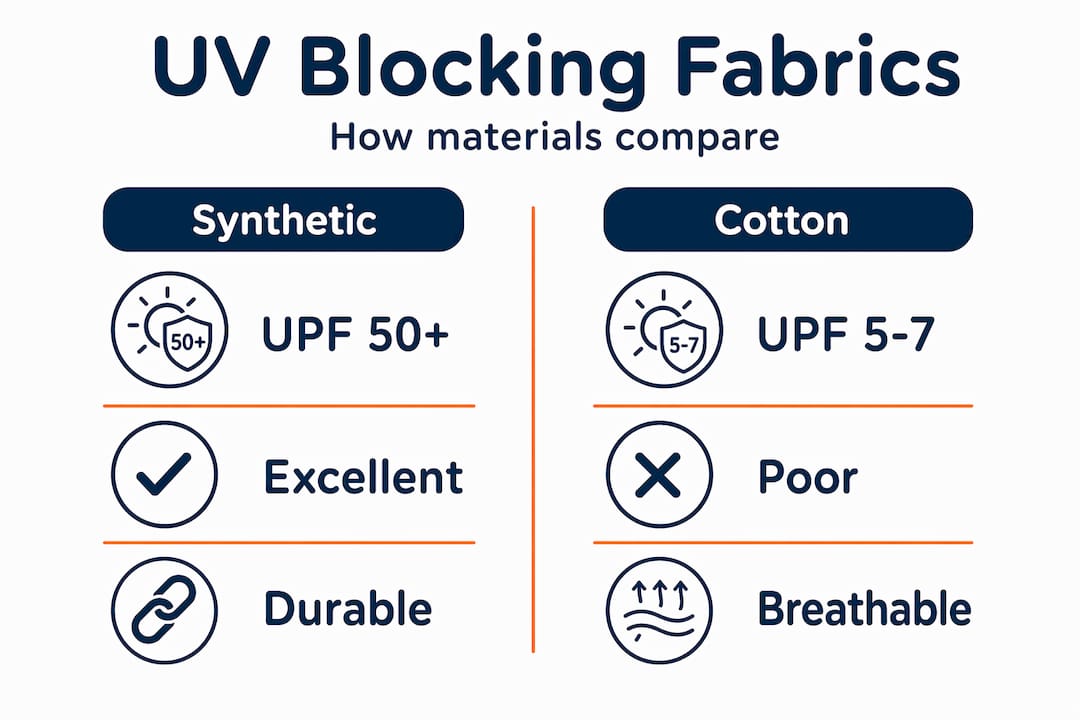
The numbers matter. A standard white cotton t-shirt typically rates at UPF 5 to 7, meaning it blocks only about 80% of UV rays. A UPF 50+ rated garment blocks 98% of UV radiation, allowing just 1/50th of rays to reach your skin. That gap is significant on a six-hour trail hike.
How does UV protection work at the fabric level? Two main factors drive it: fiber type and weave density. Synthetic fibers like polyester and nylon contain benzene ring molecular structures that physically absorb UV radiation before it reaches your skin. Natural fibers like untreated cotton lack this property and are largely transparent to UV without chemical treatment. Tight weaves reduce the gaps between threads, leaving fewer openings for UV rays to pass through. Dye also plays a role. Darker and more saturated dyes absorb UV radiation, adding another layer of defense.
Here is a quick comparison of how common fabrics stack up:
| Fabric | Typical UPF Rating | UV Blocking Level |
|---|---|---|
| Untreated white cotton | 5 to 7 | Poor |
| Polyester (standard) | 15 to 50+ | Good to excellent |
| Nylon (tight weave) | 30 to 50+ | Very good to excellent |
| Treated merino wool | 20 to 50+ | Good to excellent |
| Denim | 1,700+ (not a standard rating) | Very high |
Pro Tip: Hold a fabric up to a light source. If you can see light clearly through it, UV rays are getting through just as easily. This is a quick field test before you buy.
Certified UPF garments go through standardized testing under the ASTM D6603 standard in the US, which tests fabric in its dry, relaxed state. That last part matters more than most people realize, which comes up in the section on real trail conditions.
Benefits of UV blocking hiking gear
The most practical benefit is consistency. UPF clothing’s protection does not degrade from sweat, water exposure, or time on trail. Chemical sunscreens break down after 80 to 120 minutes of activity. On a full-day hike, you would need to reapply three or four times to maintain coverage, and most people do not do that reliably on moving terrain.
Here are the core benefits that make UV resistant hiking clothing worth the investment:
- All-day coverage without reapplication. Once you put on a UPF 50+ shirt, the arms, shoulders, and torso are covered for the duration of your hike. No missed spots, no faded coverage.
- Reduced skin cancer risk. Long-term UV exposure is the primary driver of skin cancer. Dermatologists emphasize that UV blocking clothing is critical for anyone spending repeated hours outdoors, particularly for visible skin aging and immune suppression.
- Performance fabrics work better than cotton. Modern UPF garments use moisture-wicking synthetic blends with ventilation features that keep you cooler than a standard cotton shirt. The myth that sun protection clothing is heavy or hot is outdated.
- Hands-free, full coverage protection. Hooded UPF shirts cover the neck, ears, and lower face without requiring you to stop and apply anything. Fishing guides and long-distance hikers favor them for exactly this reason.
- Durability. Quality UPF garments hold their rating through dozens of wash cycles, unlike sunscreen-treated fabrics that lose effectiveness after a few washes.
“UPF clothing offers more consistent protection, but sunscreen covers exposed skin areas not covered by clothing.” — Dr. Shilpi Khetarpal, Cleveland Clinic
The takeaway here is that UV blocking gear and sunscreen are not competing options. They work best together. Clothing handles the large covered areas reliably. Sunscreen handles the face, hands, and any exposed skin.
Pro Tip: When choosing what to wear for UV protection hiking, prioritize a long-sleeve UPF shirt and a wide-brim hat over sunscreen on the arms. You will get better coverage with less effort.
How UV blocking gear performs on the trail
Real hiking conditions are not the same as a lab testing environment. Several factors change how well your gear actually performs once you are moving.
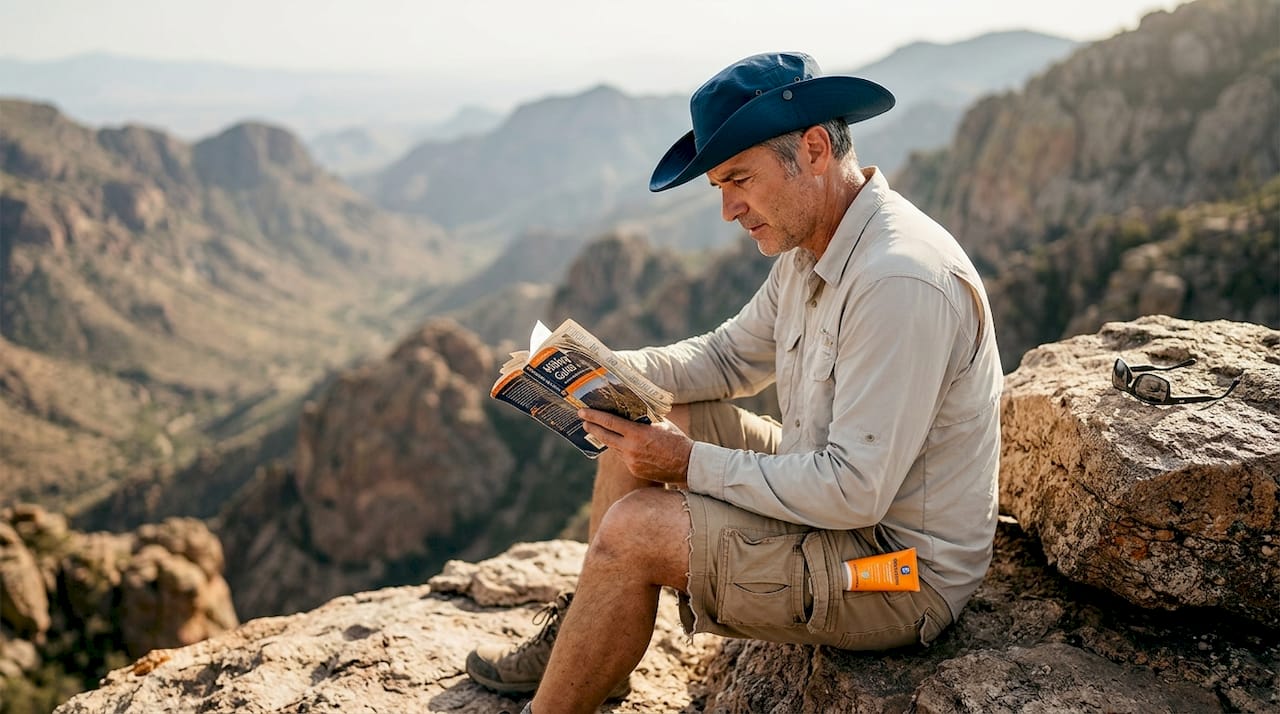
Altitude is the biggest variable most hikers underestimate. UV exposure increases roughly 10% for every 1,000 meters of elevation gain. At 10,000 feet, UV intensity runs approximately 40% higher than at sea level. A hike in the Rockies or Sierra Nevada at altitude is a fundamentally different UV environment than a coastal trail walk.
Reflective surfaces compound this. Snow reflects up to 80% of UV radiation back upward, meaning you are getting hit from above and below simultaneously. Water and sand do the same at lower levels. Standard hiking gear UV protection ratings assume direct exposure only.
Two phenomena affect UPF performance in motion:
- The Stretch Penalty. Pulling fabric tight over a backpack hip belt or across the shoulders can drop a UPF 50+ garment to as low as UPF 5. The weave gaps open under tension, letting UV through. Looser fits maintain their rated protection better.
- The Wetness Paradox. Wet synthetic fabrics often maintain or slightly improve UPF ratings as fibers swell and close weave gaps. Wet cotton does the opposite, losing most of its already limited protection.
Here is a comparison of how conditions affect different fabric types:
| Condition | Synthetic UPF 50+ | Treated Cotton UPF 30 |
|---|---|---|
| Dry, relaxed fit | Full rated protection | Full rated protection |
| Wet from sweat or rain | Maintained or slightly better | Significantly reduced |
| Stretched over pack | Reduced, potentially severe | Reduced |
| High altitude (10,000 ft) | Still best available option | Marginal protection |
For full coverage on long or high-altitude hikes, layering matters. Combine UPF clothing with a wide-brim hat, apply sunscreen to exposed skin, and consider timing your most exposed sections before 10 a.m. or after 4 p.m. Portable UV-rated umbrellas can also block up to 99% of UV radiation and reduce body temperature by 15°F, making them a practical addition for exposed ridgeline sections.
Choosing the right UV blocking hiking gear
Reading labels correctly is the starting point. Look for the UPF number and, in the US, the Skin Cancer Foundation Seal of Recommendation. That seal means the product has been independently tested and meets a minimum UPF 30 standard. Products rated UPF 50+ carry the “Excellent” classification.
Practical selection tips:
- Match UPF level to activity. UPF 15 to 20 fabrics offer better airflow for high-output activities in hot climates but allow more UV through. For high-altitude or long-exposure hikes, UPF 50+ is the right choice.
- Choose darker colors for higher protection. Dark colors absorb more UV before it reaches your skin. Light-colored UPF garments can still be effective if the fabric is rated, but darker options add an extra margin.
- Avoid assuming loose weaves protect you. Sheer or loosely woven fabrics offer minimal UV blocking regardless of color. If you can see through it easily, UV passes through easily.
- Prioritize coverage area. Long sleeves, collars, and hoods cover the most UV-vulnerable areas. A short-sleeve UPF shirt still leaves arms exposed. For serious sun exposure, long sleeves are worth the trade-off.
- Maintain your gear properly. Wash in cool water and avoid bleach. Bleach degrades the fiber structures that provide UV blocking. Air dry when possible. Most quality UPF garments maintain their rating for 30 to 40 washes.
Pro Tip: Check the garment tag for the actual UPF number, not just a “sun protection” marketing claim. Only tested and rated fabrics carry a specific UPF number.
For family hikes, children need the same level of attention. Kids spend more time outdoors and their skin is more susceptible to UV damage. A properly fitted UPF 50+ hat covers the face, ears, and neck, which are the areas most often missed by sunscreen application.
My take on UV protection after years on the trail
I spent years relying on sunscreen and a baseball cap for sun protection on hikes. It felt like enough. Then I did a week-long trip at altitude in late summer and came back with sun damage on my forearms that took months to fade. That was the shift.
What I have learned since then is that the biggest gap in most hikers’ sun protection is not the face. It is the forearms, the back of the neck, and the ears. Those are the areas that get continuous exposure during a hike and are the easiest to miss with sunscreen. A long-sleeve UPF shirt and a wide-brim hat solve all three at once.
I have also learned to be skeptical of marketing language. “Sun protective” printed on a tag means nothing without a UPF number. I only buy garments that show a specific lab-tested rating. The difference between UPF 15 and UPF 50+ is not a small margin in real conditions, especially at altitude.
The four-layer approach is what I now use consistently: shade when available, UPF 50+ clothing, broad-spectrum SPF 50+ sunscreen on exposed skin, and timing to avoid peak UV hours. None of those layers alone is sufficient. Together, they cover every gap.
— Shari
Gear up with Banzworld’s UPF 50+ sun protection
Protecting kids on the trail starts with the right hat. Banzworld carries a full range of UPF 50+ certified sun hats designed for active outdoor use, built to stay on and block the sun through a full day outside.
The reversible UPF 50+ children’s sun hats offer full-brim coverage with two looks in one, built from certified UPF 50+ fabric that holds its rating wash after wash. For younger kids, the baby sun hats with UPF 50+ provide the same protection in a fit designed for smaller heads. If you want practical features alongside protection, the sun hats with pocket add storage for trail essentials without sacrificing coverage. Pair any hat with a UPF shirt and broad-spectrum sunscreen for complete family sun protection on every hike.
FAQ
What does UPF 50+ mean on hiking clothing?
UPF 50+ means the fabric blocks 98% of UV radiation, allowing only 1/50th of UV rays to reach the skin. It is the highest standard classification for UV protective apparel.
Is UV blocking clothing better than sunscreen for hiking?
UV blocking clothing provides more consistent, all-day protection than sunscreen, which degrades after 80 to 120 minutes. The two work best when used together, with clothing covering large areas and sunscreen applied to exposed skin.
Does stretching a UPF garment reduce its protection?
Yes. Pulling fabric tight, such as across a backpack hip belt, can reduce a UPF 50+ garment’s effective rating to as low as UPF 5 by opening the weave gaps. A relaxed fit maintains the rated protection.
Why does UV exposure increase at higher altitudes?
UV intensity increases approximately 10% per 1,000 meters of elevation. At 10,000 feet, UV levels run roughly 40% higher than at sea level, making UPF 50+ gear especially important on mountain trails.
What fabrics provide the best UV blocking for hiking?
Polyester and nylon are the most effective UV blocking materials for hiking gear because their molecular structures absorb UV radiation directly. Tight weaves, darker colors, and higher thread counts all increase protection regardless of fiber type.
Recommended
- Children’s Sun Hats with Toggle – BANZ® Carewear USA
- Kids Ski Anti-Fog UV Swim Goggles – BANZ® Carewear USA
- Childrens Sun Hats with UPF 50+ Protection - Reversible UPF 50+ – BANZ® Carewear USA
- Children’s Sun Hats with UPF 50+ Protection with Pocket – BANZ® Carewear USA
Article generated by BabyLoveGrowth