

If your toddler removes earmuffs the second you put them on, distract with a favorite toy, check the fit for gaps around hair or glasses, and swap them back on calmly within seconds. Most toddlers repeat the removal if it gets a big reaction, so keep your response low-key and quick.
- Distract immediately with a toy, snack, or song before re-offering the earmuffs.
- Check the seal for hair, hat brims, or glasses frames breaking contact.
- Praise briefly the moment they go back on, then move on.
- Replace fast rather than lecturing or negotiating.
Pro Tip: A broken seal from hair or glasses can quietly cut a 26 dB NRR rating in half, so check the fit before assuming your toddler just dislikes earmuffs.
Key Takeaways
Keeping earmuffs on a toddler comes down to a checked fit, a gradual introduction plan, and quick, low-drama responses when they slip off.
| Point | Details |
|---|---|
| Check the seal first | Hair, hats, and glasses commonly break the seal and cause discomfort. |
| Introduce gradually | Build from 30 seconds to 15 minutes over two to three weeks before an event. |
| Choose moderate NRR | An NRR around 22 to 26 dB balances protection with comfort and hearing. |
| React calmly to removal | Distract, replace quickly, and praise briefly rather than negotiating. |
| BANZ 26 dB earmuffs | Built with a low-clamp headband sized for toddlers to help maintain a proper seal. |
Table of Contents
- Why Does My Toddler Remove Earmuffs?
- How Do You Introduce Earmuffs to a Toddler?
- How Do You Get Earmuffs to Fit a Toddler Properly?
- What Tactics Keep Earmuffs On During Loud Events?
- When Do Toddlers Actually Need Hearing Protection?
- Quick Fixes for Slipping, Sweating, and Fussing
- BANZ Expert Tips on Choosing the Right Fit
- Simple Tactics Parents Can Try Right Now
- How BANZ Can Help You Solve This Today
- Frequently Asked Questions
- Sources
Why Does My Toddler Remove Earmuffs?
Four causes explain most cases: sensory discomfort, a poor seal, the urge to hear and communicate, and plain toddler independence. Sensory sensitivity calls for gradual desensitization. A poor seal, often from hair, hats, or glasses frames breaking contact, needs a fit adjustment, not more coaxing.
- Sensory discomfort from pressure or heat
- Poor seal caused by hair, hat brims, or glasses
- Wanting to hear parents or ambient sound
- Curiosity and testing independence
| Cause | Likely Fix |
|---|---|
| Sensory discomfort | Gradual desensitization at home |
| Poor seal | Adjust headband, remove hat or glasses |
| Wants to hear | Short supervised breaks |
| Independence | Let them remove and replace themselves |
How Do You Introduce Earmuffs to a Toddler?
A short, playful timeline works better than forcing earmuffs on right before a loud event. Turning hearing protection into a game and letting your toddler explore the earmuffs on a stuffed animal first lowers resistance dramatically before you ever put them on a real ear.
- Day 1: Let your toddler hold and inspect the earmuffs like a toy. No wearing yet.
- Day 2 to 3: Model wearing them yourself for 30 seconds while narrating, “See, Mommy’s ears are cozy.”
- Day 4 to 5: Put them on your toddler for 30 seconds during a calm activity, then remove them yourself before they try.
- Week 2: Stretch sessions to 5 minutes while playing a favorite game.
- Week 3: Extend to 15 minutes with mild background noise, like a vacuum in another room.
- Before the event: Do one full practice run with the actual outfit and earmuffs together.
Reward small wins, not perfect compliance. If your toddler tolerates 20 extra seconds, that counts. Letting them take the earmuffs off occasionally during practice, then guiding them back on, gives a sense of control that reduces power struggles later. BANZ guidance on introducing earmuffs to sensory sensitive children recommends pairing sessions with a favorite story or song so the earmuffs become part of something enjoyable rather than a chore.
Pro Tip: Read the same short book every time you practice. The routine itself becomes a cue that earmuffs mean something fun is starting, not something scary.
How Do You Get Earmuffs to Fit a Toddler Properly?
A good toddler earmuff is lightweight, has a low-clamp headband, and uses soft, adjustable cups that seal without pinching. Look for a child-specific size rather than an adult model turned down, since adult headbands sit too high and gap around small ears.
- Confirm the size is labeled for toddlers, not “one size fits most”
- Push hair behind the ears and remove hats or glasses before fitting
- Do a simple seal test: cup a hand over each ear, comparing sound levels
- Pick a moderate NRR rather than the highest number available
| Feature | Why It Matters |
|---|---|
| Toddler-specific sizing | Prevents gaps around small ears |
| Low-clamp headband | Reduces pressure complaints |
| NRR around 22–26 dB | Balances protection with comfort |
| Adjustable cups | Accommodates growth and different head shapes |
A 26 dB NRR earmuff from BANZ hits that sweet spot for most toddlers, cutting harmful noise without making the child feel completely cut off from you.
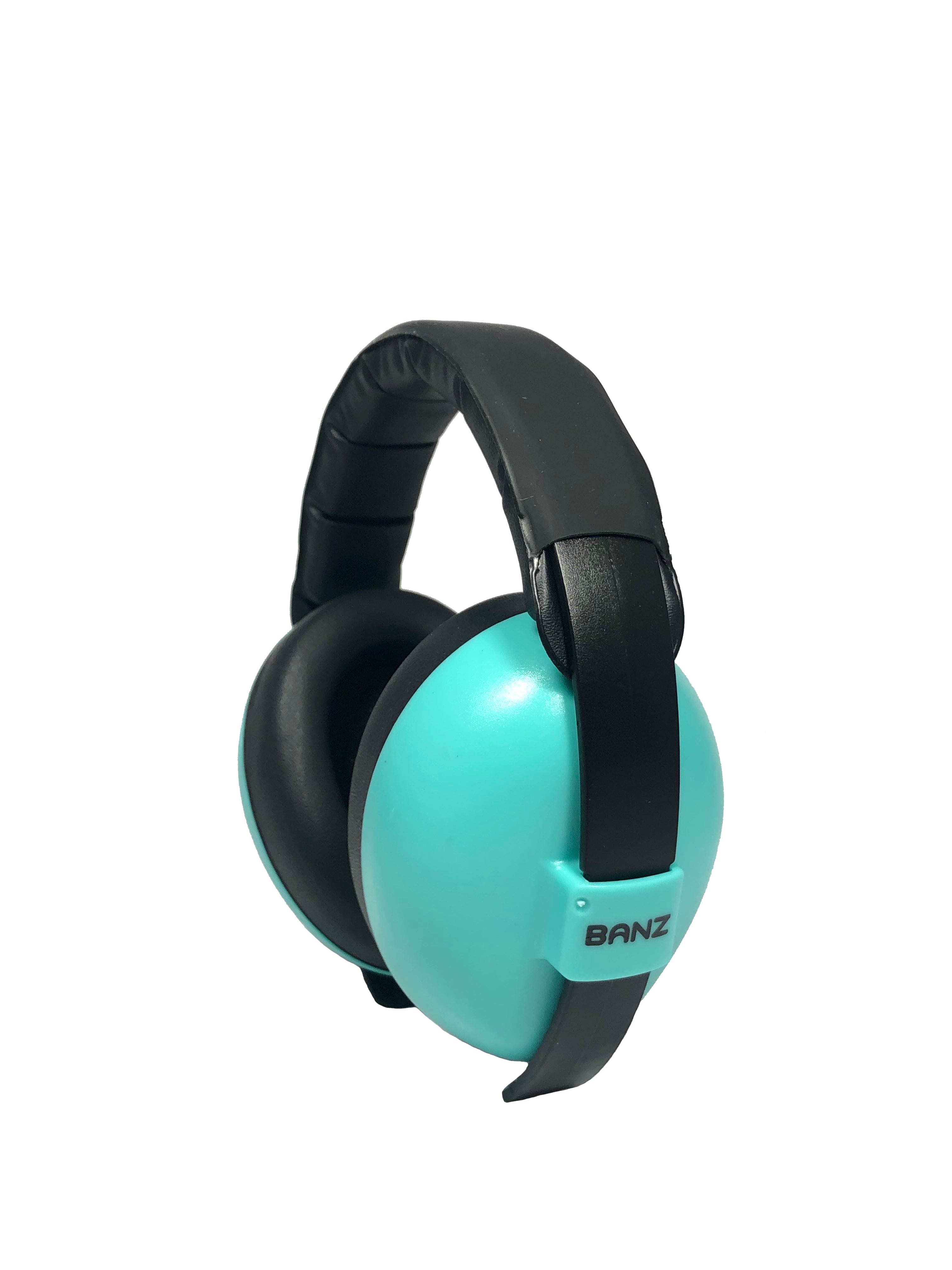
Pro Tip: If your toddler wears a sun hat to the same event, check that the brim doesn’t push the cups away from the head. A snug-fitting toggle hat sits closer to the scalp than a wide floppy brim.
What Tactics Keep Earmuffs On During Loud Events?
Preparation before you leave the house matters as much as anything you do once you’re there. Run one short practice session that morning, pack a favorite small toy, and choose seating near an exit so you can step away if things get overwhelming.
- Position your toddler away from speakers or the loudest noise source
- Bring a snack and water; thirst and hunger fuel meltdowns fast
- Schedule quiet breaks every 20 to 30 minutes
- Let your toddler remove the earmuffs briefly under your hand, then guide them back
- Before sudden bangs: Cover your toddler’s ears with your hands first if you’re unsure the earmuffs are seated.
- During a crowd surge: Move to open space rather than trying to fix the earmuffs mid crowd.
- If distress escalates: Leave the area. No event is worth prolonged panic.
Many parents find toddlers adapt within one or two outings, especially after a calm first experience like a short flight. Watch for signs of real distress, not just fussing. Repeated ear-pulling paired with crying that doesn’t settle after a break can signal the fit is wrong or the noise level is too much for that environment altogether.
When Do Toddlers Actually Need Hearing Protection?
Fireworks, motorsports, live concerts, and prolonged construction noise all call for protection because sound at those levels can exceed safe limits in minutes rather than hours. The NIDCD recommends avoiding loud sound sources when possible and using earmuffs with a known NRR when avoidance isn’t an option.
- Fireworks displays and indoor arenas
- Motorsport events, air shows, and parades with sirens
- Concerts, especially near speakers
- Home renovation or yard work with power tools
An NRR of 26 dB means a genuinely loud environment, one that might otherwise damage hearing after sustained exposure, reaches your toddler’s ears noticeably softened rather than eliminated entirely. If your toddler consistently refuses all protection or you suspect an existing hearing issue, talk to a pediatrician rather than pushing through with a different device.
| Scenario | Typical Noise Concern | Protection Needed |
|---|---|---|
| Fireworks | Sudden, very loud bursts | Yes, earmuffs recommended |
| Motorsports | Sustained high volume | Yes, earmuffs recommended |
| Backyard play | Generally moderate | Usually not needed |
| Concerts near speakers | Sustained high volume | Yes, earmuffs recommended |
Quick Fixes for Slipping, Sweating, and Fussing
- Slipping: Tighten the headband adjustment or size down if there’s a smaller fit available.
- Sweating: Take a shaded break and loosen the fit slightly between wear periods.
- Fussing: Distract with a toy, offer a 5-minute break, or let a doll “wear” earmuffs first as role play.
- Repeated removal at long events: Plan breaks in advance rather than waiting for a meltdown.
Pro Tip: If your toddler keeps turning removal into a game, calmly replace the earmuffs without eye contact or laughter. Reacting big, even with frustration, often reinforces the behavior.
BANZ Expert Tips on Choosing the Right Fit
Comfort beats maximum decibel reduction every time with toddlers. A muff that stays on at NRR 24 protects far better in practice than a heavier NRR 30 model sitting in a diaper bag because the child refused to wear it.
Shari M. Murphy’s guidance on the BANZ blog centers on matching protection level to how a toddler actually behaves, not just the number on the box. The free BANZ Protect app lets you monitor real-time noise levels around your child, so you know when protection is genuinely necessary versus optional.
Pro Tip: Choose an NRR that still lets your toddler hear your voice at close range. If they can’t hear you calling their name from three feet away, the fit may be too aggressive for daily use.
Simple Tactics Parents Can Try Right Now
Before reaching for a bigger strategy, try the smallest intervention first. Distraction works faster than almost anything else with toddlers under three. Hand over a small toy, start a clapping game, or point out something visually interesting the second you notice hands reaching for the earmuffs.
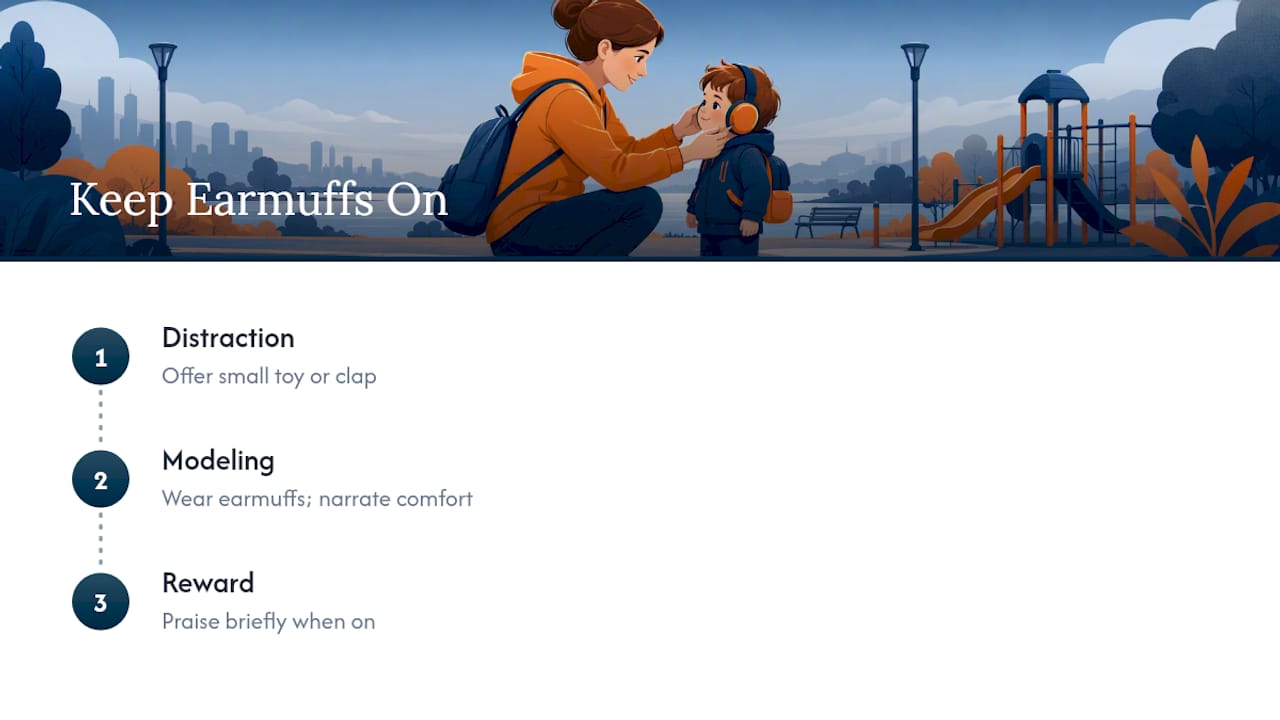
Modeling comes next. Toddlers copy what they see far more than what they’re told. Put on your own set of earmuffs or noise-canceling headphones alongside them, even briefly, and narrate how comfortable it feels. Siblings work well here too. A toddler who watches an older brother or sister wear earmuffs happily is far more likely to accept the same gear without a fight.
Reward the behavior you want, not the behavior you’re trying to stop. A quiet “nice job keeping those on” said the moment the earmuffs stay in place teaches your toddler what earns attention. Avoid rewarding removal with negotiation, extra snacks, or a long explanation, since that attention can accidentally reinforce the very thing you’re trying to reduce.
Combine all three in sequence during a real event: distract before the loud moment hits, model calm behavior yourself, then praise briefly once the earmuffs are back in place. This three-step loop takes less than 10 seconds once you’ve practiced it a few times at home, and it holds up surprisingly well even in chaotic settings like a fireworks show or a crowded fair.
A note on patience and progress
Toddlers test boundaries with earmuffs the same way they test everything else at this age. Expect setbacks, and treat each small win, even five extra minutes of tolerance, as real progress. If you’re ready to try a model built specifically for small ears, the BANZ baby and kids earmuff collection is worth a look.
How BANZ Can Help You Solve This Today
Fit problems cause more removal than defiance ever does, and that’s exactly where BANZ earmuffs are built to help. The 26 dB NRR design uses a soft, low-clamp headband sized for toddler heads, so cups seal properly instead of sitting on top of hair or sliding off a small skull mid-tantrum.
 If a sun hat is part of your outing, pick one that won’t fight the earmuff seal. The toggle-adjustable sun hat sits snugly against the head, and the pocket-style sun hat folds flat when the earmuffs need priority. For a lighter, decorative option on cooler-noise days, the Hello Sunshine sunhat with sequins works well for shaded, lower-volume outings. Confirm your size and color are in stock before you check out, since availability shifts by season. Browse the BANZ earmuff collection and pick the toddler size before your next loud outing.
Frequently Asked Questions
Why does my toddler keep taking off earmuffs? Most cases trace back to a poor seal from hair, hats, or glasses, sensory discomfort, or simple curiosity. Check the fit before assuming the earmuffs themselves are the problem.
How long does it take to get a toddler used to earmuffs? Most toddlers adapt within one to three weeks of short daily practice sessions, though some settle in after a single calm real-world experience like a quiet flight.
What NRR is appropriate for a toddler? A range around 22 to 26 dB usually works best, since it reduces harmful noise without blocking a caregiver’s voice or feeling too heavy on a small head.
Should I let my toddler take off earmuffs during an event? Brief, supervised removal is fine and can reduce power struggles. Guide them back on calmly afterward rather than forcing continuous wear.
Are earmuffs better than earplugs for toddlers? Yes, earmuffs are generally easier for young children to use correctly since there’s no risk of improper insertion the way there is with earplugs.
Sources
- Protect Your Child’s Hearing | NIDCD
These links offer general guidance and are not a substitute for advice from your pediatrician.
Recommended
- How to Introduce Earmuffs to a Sensory Sensitive Child – BANZ® Carewear USA
- How to Protect Toddler Ears from Summer Sun – BANZ® Carewear USA
- Are Baby Earmuffs Safe for Newborns? The Fontanelle Question, Answered – BANZ® Carewear USA
- Why Earmuffs Help Sensory Processing Issues in Kids – BANZ® Carewear USA
