

The best defense combines four things: broad-spectrum SPF 30 to 50+ sunscreen reapplied every two hours, goggles or sunglasses that block 100% of UVA/UVB rays, UPF-rated clothing covering the neck and face, and SPF lip balm. Altitude and snow glare push UV exposure far higher than a normal sunny day, which is why the CDC and BANZ both treat this pairing as non-negotiable for kids on the slopes. Skip one piece and you leave a gap the mountain will find.
TL;DR:
- Kids should wear broad-spectrum SPF 50 sunscreen, reapplying every two hours, regardless of overcast weather or cold temperatures at high altitudes.
- UV protection from goggles or sunglasses must block 100% of UVA and UVB rays, with wraparound styles providing the best coverage and fog-resistant features for clarity.
- UPF-rated clothing, including hats, neck gaiters, and base layers, offers critical sun protection without the need for reapplication during the day.
- Warming sunscreen tubes beforehand and allowing children to help with application reduces resistance and ensures more consistent coverage.
- A ski-day sun protection kit should include sunscreen, SPF lip balm, goggles or sunglasses, a UPF hat or liner, and a neck gaiter for comprehensive coverage.
Table of Contents
- What Goes In Your Ski-Day Sun Protection Kit?
- How Much Sunscreen Do Kids Need for Skiing?
- How Do You Choose Ski Goggles or Sunglasses for Kids?
- What Should Kids Wear Skiing for Sun Protection?
- How Do You Keep Kids Protected All Day on the Slopes?
- Which BANZ® Products Cover the Ski-Day Checklist?
- What If Your Kid Refuses to Wear Sunscreen?
- A Parent’s Perspective on Ski-Day Sun Safety
- Where to Find a Ready-Made Ski Sun Kit
- Sources
- FAQ
What Goes In Your Ski-Day Sun Protection Kit?
A ski day runs long, and kids move fast between chairlifts, snacks, and bathroom breaks. Pack light but pack smart, and keep the small stuff where you can reach it without taking off gloves.
- A stick sunscreen for quick face touch-ups without mess
- SPF lip balm clipped to a jacket zipper so it never gets left behind
- A backup tube of sunscreen in the car or lodge locker
- Goggles or wraparound sunglasses, plus a spare pair if you have one
- A neck gaiter or balaclava for wind and UV coverage on the chairlift
- Helmet and UPF outer layers already fitted before you leave the house
Apply sunscreen before you step outside, not once you’re already on the chairlift. Reapply every two hours, and again immediately after a big fall, heavy sweating, or a face wipe. That two-hour clock is the single easiest habit to build into a ski day, and it matters more here than at the beach.
How Much Sunscreen Do Kids Need for Skiing?
Broad-spectrum SPF 30 to 50 is the baseline health authorities recommend for extended time outdoors. Skiing qualifies as extended exposure even on a short morning run. The CDC’s sun safety guidance calls for reapplication every two hours, and that clock doesn’t pause because it’s cold or overcast.
Snow makes the math worse. Fresh powder reflects a huge share of incoming sunlight, so a clear “bluebird” ski day can hit a child’s face with a double dose: direct rays from above and reflected rays bouncing off the snow, according to a snow scientist interviewed by PBS NewsHour.
Elevation raises the stakes further. UV intensity climbs roughly 10 to 12% for every 1,000 feet of elevation gain, so a resort base at 8,000 feet delivers meaningfully more radiation than the same latitude at sea level. That’s the real reason SPF 50 gets recommended so often for mountain days instead of the everyday SPF 30.
For application, follow these steps:
- Warm the tube in your hands or a jacket pocket first. Cold sunscreen turns thick and hard to spread evenly.
- Apply about 20 to 30 minutes before heading out if your schedule allows it, so the sunscreen has time to bind.
- Use a stick formula for the nose, ears, and cheekbones, the spots that catch the most reflected glare.
- Reapply every two hours, and sooner after a face-plant in the snow or heavy sweating under a helmet.
- Cover the lips with a dedicated SPF balm; skin there is thin and burns fast.
Mineral formulas built on zinc oxide or titanium dioxide tend to work well in cold weather because they sit on top of skin and protect on contact, with less stinging around sensitive young eyes than some chemical filters. For infants, follow your pediatrician’s guidance before applying any sunscreen, since recommendations shift for children under six months.
How Do You Choose Ski Goggles or Sunglasses for Kids?
Any eyewear you buy needs to block 100% of UVA and UVB rays, full stop. That standard matters more on snow than almost anywhere else, because unprotected eyes exposed to reflected glare can develop temporary snow blindness, a genuinely painful sunburn of the cornea.
Beyond UV rating, fit determines whether the goggles actually stay on:
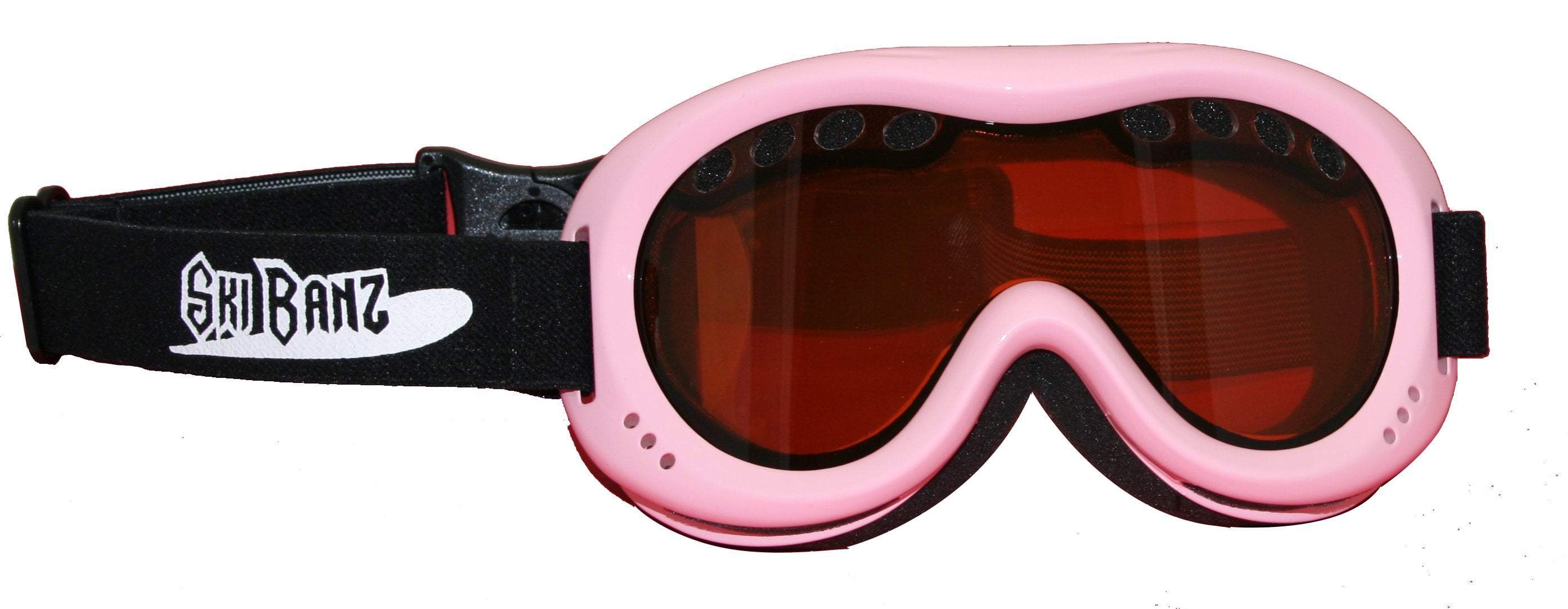
- Wraparound coverage or a full foam seal that blocks light from sneaking in around the edges
- A strap long enough and adjustable enough to fit comfortably over a helmet
- Double lenses or vented anti-fog coatings so vision doesn’t cloud up mid-run
- Sizing that adjusts as kids grow, rather than a one-season fit
For toddlers who aren’t yet skiing independently, wraparound sunglasses with a secure strap are usually the more practical starting point, moving to full goggles once helmet use becomes routine. Swap out any lens that’s scratched enough to distort vision. Scratches don’t just look bad; they scatter light and reduce clarity exactly when glare is at its worst.
Pro Tip: Keep goggles in an inside jacket pocket between runs instead of on top of a helmet. Body heat helps prevent the fog that builds up the moment a kid stops moving and starts waiting in a lift line.
What Should Kids Wear Skiing for Sun Protection?
Clothing is the sun protection layer parents forget about most, and it’s arguably the easiest one to get right once you know what to look for. UPF-rated fabrics work by blocking UV radiation the way sunscreen does chemically, except there’s nothing to reapply.
- Choose helmet-compatible hats or liners with a UPF rating printed on the tag when you can find one
- Add a neck gaiter or balaclava to shield the lower face, chin, and neck from wind and reflected glare
- Layer UPF-rated base layers under ski jackets for kids who run warm and shed outer layers
- Pay extra attention to the chin strap area and goggle gap, both common spots where sunscreen rubs off fast
Helmet fit comes first, always. Choose the helmet for safety, then find hats, liners, and goggles that actually work with that helmet rather than fighting it. The skin right where a goggle strap or chin strap sits tends to lose sunscreen coverage through friction, so plan on touching up those exact spots at every reapplication break, not just the obvious cheeks and nose.
How Do You Keep Kids Protected All Day on the Slopes?
Consistency beats intensity. A perfect morning application means little if nobody reapplies after lunch.
- Fold sunscreen into the same routine as boots and gloves, so it becomes automatic rather than optional
- Let older kids carry their own stick sunscreen and take ownership of reapplying it
- Schedule a reapplication break around lunch or snack time, when everyone’s already stopping anyway
- Pack spares in a parent’s pocket for the kid who insists they don’t need any
- Watch for numbness on cheeks or noses. Cold air masks the sting of sunburn, so redness may show up before any child complains it hurts
Research on ski-school sun safety programs found that when kids and parents recall the safety messaging clearly, reported use of sunscreen and eyewear actually goes up. Repetition works. Say it the same way every ski day and it sticks.
Which BANZ® Products Cover the Ski-Day Checklist?
BANZ built its catalog around exactly the gaps this checklist covers, since a family facing the same lack of proper gear is how the brand started in Australia.
- Kids Anti-Fog UV Ski Goggles are designed to sit comfortably under a helmet strap while anti-fog lenses keep vision clear through temperature swings between lodge and lift.
- Kids Anti-Fog UV Swim Goggles solve the same fogging problem for pool and beach days, useful if your family splits time between snow and summer water sports.
- Kids Wrap Around Sunglasses with flexible frames give younger kids or casual lodge days a lighter option than full goggles, with UV400 wraparound coverage and a flexible build that survives getting sat on.
Beyond eyewear, there are UPF 50+ sun hats, hearing earmuffs designed to reduce noise, and a free app available for real-time UV and noise monitoring, all supporting families around the world.
What If Your Kid Refuses to Wear Sunscreen?
Every parent who’s tried to sunscreen a squirming six-year-old at 7:00 AM in a ski lodge parking lot knows this fight. The good news: most resistance comes from sensation, not defiance, and sensation is fixable.
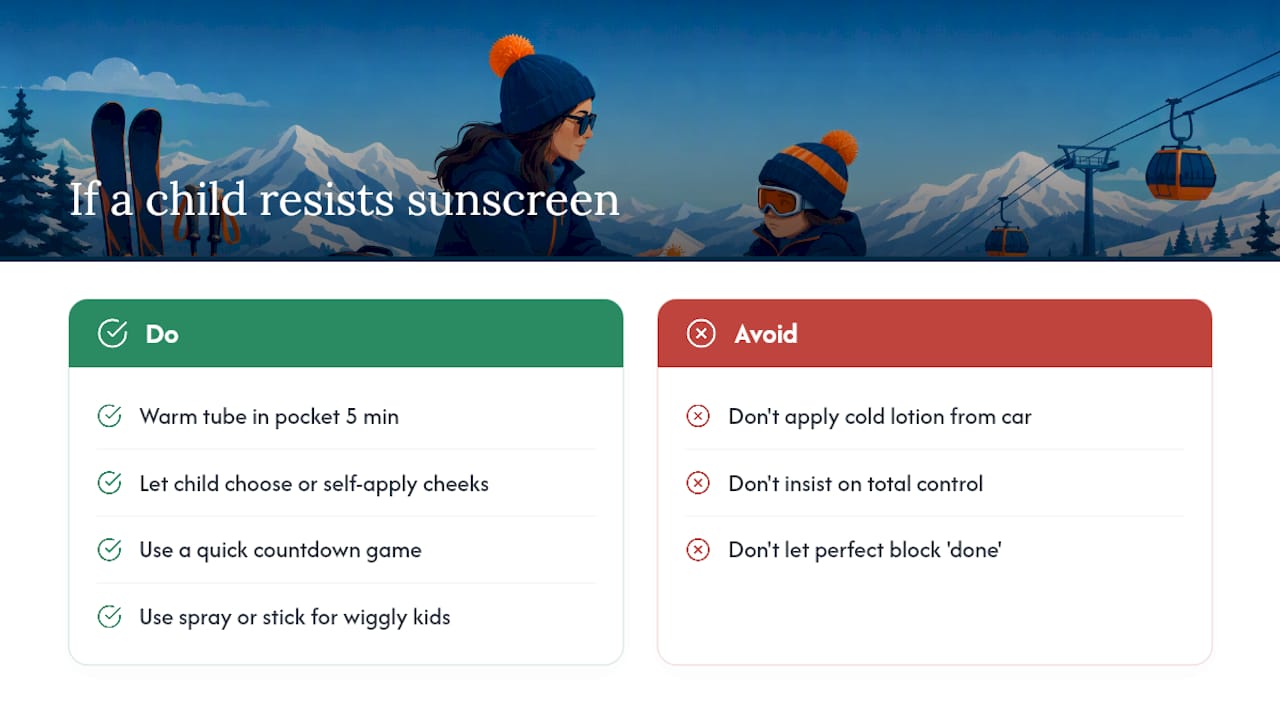
Cold sunscreen is the biggest trigger. A lotion straight from a cold car feels shocking on warm skin, so kids flinch and pull away before they even know what’s happening. Warming the tube in your pocket for five minutes before you start solves a surprising amount of the battle on its own.
Give kids some control where you can afford to lose it. Let them pick which stick sunscreen goes in their own pocket, or let them apply their own cheeks while you handle the nose and ears. Kids who feel like participants resist less than kids who feel like they’re being done to.
Turn it into a fast game instead of a chore. Counting down from five while you apply each section, or letting a younger sibling “help” by holding the tube, shifts the moment from confrontation to routine. Consistency helps too: kids who apply sunscreen the same way every single ski morning stop treating it as a negotiation, because it’s simply what happens before boots go on.
If a child still won’t sit still, a spray or stick applied fast beats a lotion applied slowly. And keep expectations realistic. A slightly uneven application beats no application, so don’t let a perfect job become the enemy of a done job.
A Parent’s Perspective on Ski-Day Sun Safety
Sun protection on the slopes gets treated as an afterthought behind boots, poles, and lift tickets, and that ordering is backwards. The mountain doesn’t wait for you to remember sunscreen at lunch. Build the habit the same way every single trip, and treat eyes and lips with the same seriousness as skin, because both get overlooked until a child is squinting or wincing halfway down the run.
— Shari M. Murphy
Where to Find a Ready-Made Ski Sun Kit
BANZ builds its gear around exactly the problems this checklist raises, so you’re not piecing together separate purchases from different brands the week before a trip. A simple starter pack covers the essentials in one order: goggles for the resort, flexible wraparound sunglasses for lodge days and travel, and a UPF sun hat that layers under a helmet without adding bulk.
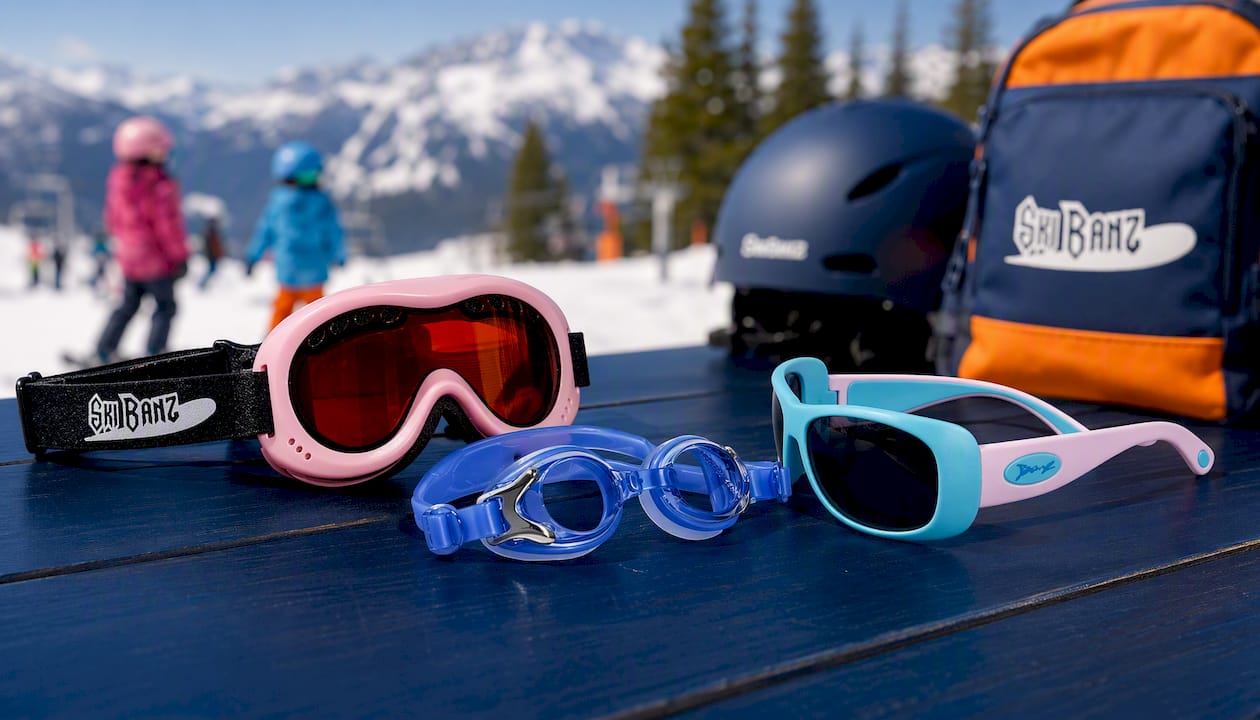
Browse the full kids ski and snow goggles collection to match fit and lens type to your child’s age and helmet style. For families who want the whole kit in one stop, from earmuffs to sunglasses to sun hats, the BANZ homepage lays out the full range so you can order everything before your next trip instead of scrambling at the lodge gift shop.
This article is general information, not a substitute for advice from a qualified doctor. Consult a qualified healthcare professional about your own circumstances before acting on anything here.
Sources
- Protecting yourself from the sun | CDC
- Why do skiers sunburn so easily? A snow scientist explains | PBS NewsHour
- Winter sun and your skin: What to know about sun exposure at altitude | CU Anschutz Cancer Center
- Skincancer
FAQ
What Are the 5 S’s of Sun Safety for Kids?
Most versions cover slip on clothing, slop on sunscreen, slap on a hat, seek shade, and slide on sunglasses.
Do 3-Year-Olds Need Ski Goggles?
Toddlers who aren’t skiing independently often do better with secure wraparound sunglasses first, moving to full goggles once helmet use becomes part of their routine. Either option must block 100% of UVA/UVB rays to prevent snow glare damage.
Can a 7-Year-Old Use Adult Sunscreen?
Broad-spectrum SPF 30 to 50 sunscreen formulated for general use is typically fine for a 7-year-old, though mineral formulas tend to be gentler on sensitive skin and sting less around the eyes. Check the label for any age-specific cautions and patch-test new products before a full ski day.
What Should Kids Wear Skiing for Sun Protection?
A helmet-compatible UPF hat or liner, a neck gaiter or balaclava for the lower face, and wraparound goggles or sunglasses rated for 100% UV protection cover the main exposure points. Pair the clothing with SPF 30 to 50+ sunscreen and SPF lip balm for full coverage.
How Often Should You Reapply Sunscreen While Skiing?
Reapply every two hours, and immediately after a fall, heavy sweating, or wiping the face. Cold, high-altitude conditions don’t slow down UV exposure, so the two-hour clock applies just as strictly as it would at the beach.