

TL;DR:
- Implementing UV awareness education in schools helps students develop sun safety habits early, reducing skin cancer risk.
- Effective programs include age-appropriate lessons, staff training, policy integration, and seasonal scheduling aligned with UV risk periods.
UV awareness education is defined as a structured program teaching students and staff how ultraviolet radiation affects health and how to prevent sun-related harm. Schools that incorporate UV awareness into their school curriculum reduce students’ lifetime skin cancer risk by building protective habits during the years when sun exposure is highest. The UV Index, SunSmart Schools programs, and free national resources like SunWise give educators a clear, evidence-based path forward. This guide covers the core components, resource selection, staff training, and policy integration you need to build a program that works.
What are the essential components of a UV awareness curriculum?
A strong UV awareness curriculum covers four areas: scientific knowledge, behavioral skills, staff training, and policy alignment. Skipping any one of these produces awareness without action. Students learn facts but do not change behavior unless the school environment reinforces what the classroom teaches.
Scientific knowledge and age-appropriate content
Lessons must match the developmental stage of the student. For younger children, the focus is on simple rules: seek shade, wear a hat, apply sunscreen. For older students, content should include how the UV Index works and why UV levels above 3 require protection even on cool or cloudy days. That last point surprises most students and many adults, which makes it one of the most useful teaching moments in any sun safety program.
Integration with existing subjects
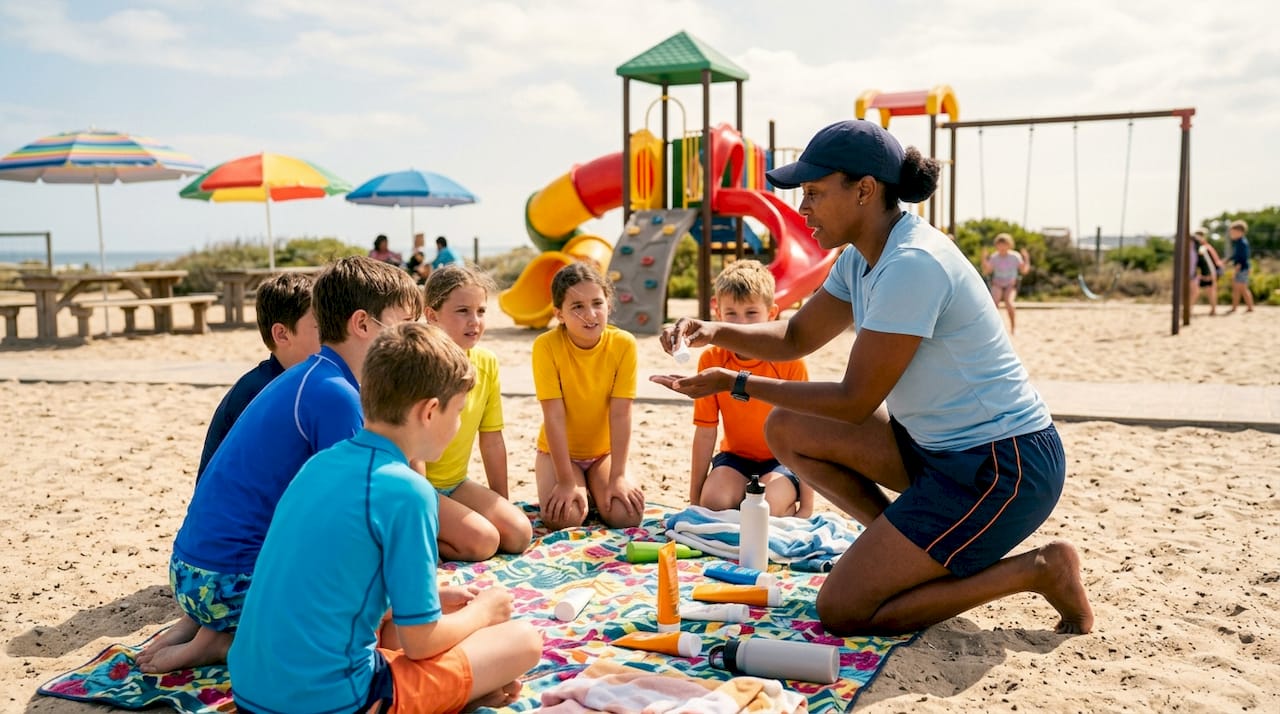
Sun safety education does not need its own dedicated class period. Embedding sun protection into PE, outdoor education, and health classes makes it a practical life skill rather than an isolated topic. A science class can analyze UV Index data. A PE class can practice applying sunscreen before outdoor activity. This cross-subject approach keeps the content visible without crowding the timetable.
Curriculum alignment and policy connection
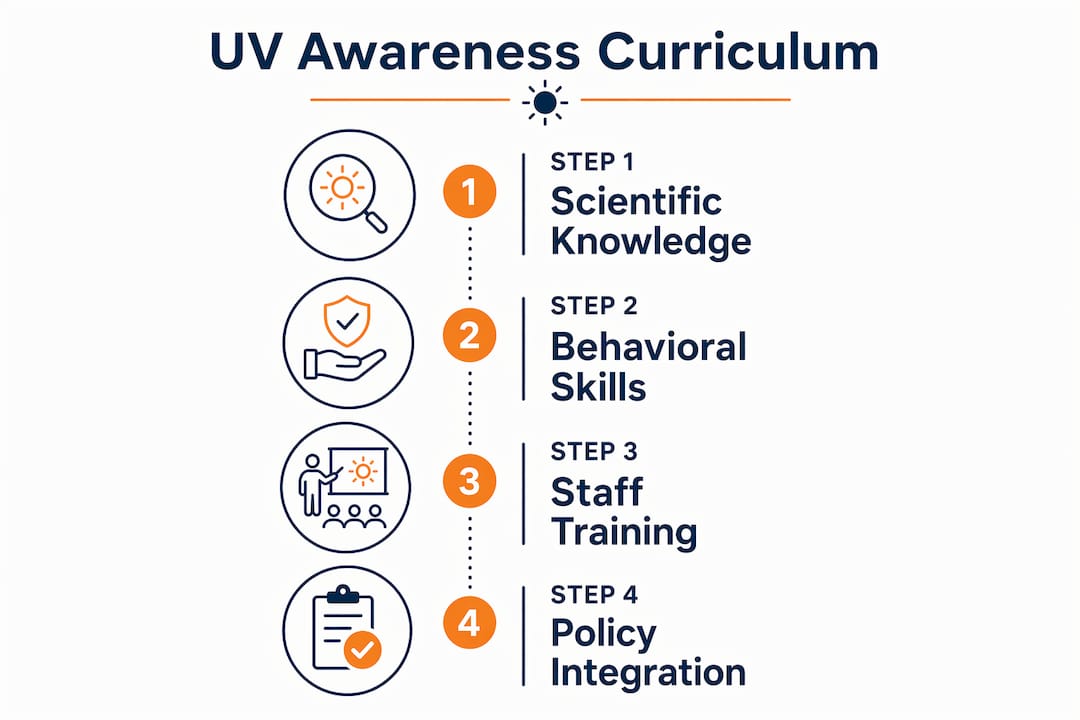
Every lesson should connect to a school-wide policy. Students who learn about sun protection in class but see no hats required at recess receive a contradictory message. Aligning curriculum content with written school policies closes that gap and reinforces the behavior you are teaching.
Here are the core components every UV education program should include:
- Age-appropriate lesson plans covering UV radiation, skin health, and protection methods
- Staff training modules completed before the program launches
- Integration with PSHE, science, and PE lesson plans
- Written school policies on hats, shade, sunscreen, and outdoor scheduling
- Parent communication materials that extend learning beyond school hours
Pro Tip: Schedule your first UV lesson at the start of the high-UV season, typically spring, so students apply what they learn immediately rather than months later.
How to select and implement UV education programs in schools
Selecting the right resources is the step most administrators underestimate. The quality of the curriculum material determines whether students retain the information or forget it by the following week.
-
Start with free, evidence-based programs. The EPA’s SunWise program provides comprehensive UV and ozone education modules for K-8 students, delivered through digital resources and classroom activities at no cost. These materials are ready to use and require minimal preparation from teachers.
-
Match content to grade level. Primary students respond well to visual activities, simple rules, and hands-on demonstrations like UV-sensitive beads that change color in sunlight. Secondary students need more depth. Programs like SKCIN’s Expose The Glow use case files and active participation to engage teenagers on UV risks, specifically addressing social media misinformation about tanning.
-
Use short, high-impact modules. Effective UV curricula are designed as 45–60 minute modules aligned seasonally and age-appropriately. A single well-designed session outperforms a semester of passive reading on the topic.
-
Address myths directly. Teens in particular hold misconceptions: that a tan is healthy, that cloud cover blocks UV, or that sunscreen is only for beach days. Interactive myth-busting content addresses the social media misinformation that drives these beliefs. Naming the myth before correcting it is more effective than simply presenting facts.
-
Schedule lessons around UV risk periods. A lesson on sun protection delivered in december has far less impact than one delivered in march or april. Align your curriculum calendar with the UV Index forecast for your region. The BANZ sun safety activities guide offers seasonal activity ideas that connect classroom learning to real outdoor conditions.
-
Build in reinforcement. One lesson does not change behavior. Plan follow-up activities, visual reminders in hallways, and brief check-ins during outdoor sessions throughout the school year.
What are best practices for staff training and role modeling sun-safe behaviors?
Staff training is the single most important factor in whether a UV program succeeds or fails. Students watch what adults do. A teacher who skips sunscreen or goes hatless during recess supervision sends a louder message than any lesson plan.
South Australia’s SunSmart Schools program demonstrates the scale this can reach. The program involves over 1,000 schools and approximately 38,000 staff completing mandatory UV safety modules. That mandate exists because voluntary training produces inconsistent results. When training is required, the school-wide culture shifts.
Effective staff training covers more than UV facts. It addresses:
- How to wear and model protective gear, including hats and UPF-rated clothing, during all outdoor supervision
- When and how to apply sunscreen, including during recess and sports days
- How to explain UV risks to students in age-appropriate language
- Workplace health and safety obligations related to UV exposure
- How to respond when students or parents push back on sun safety rules
One misconception that training must correct is that UV protection is only relevant on sunny days. UV levels above 3 require protection regardless of cloud cover or temperature. Staff who understand this model the correct behavior year-round, not just in summer.
Pro Tip: Use the free BANZ Protect app during outdoor supervision. It provides real-time UV monitoring so staff can make immediate, informed decisions about when protection is needed.
For a structured approach to staff sun protection training, BANZ provides a practical protocol guide that covers both the training content and the behavioral expectations for school personnel.
How to integrate UV safety into school policies and outdoor activities
Policy integration turns individual lessons into school-wide habits. A UV awareness program without a supporting policy relies entirely on individual teacher effort. That is not sustainable.
The table below outlines the key policy areas and the specific actions schools should take in each.
| Policy area | Recommended action |
|---|---|
| Outdoor scheduling | Avoid peak UV hours (10 AM to 2 PM) for recess and PE when UV Index is 3 or above |
| Shade provision | Install or identify shaded areas for all outdoor activities and eating |
| Protective clothing | Require broad-brimmed hats and allow UPF-rated clothing for outdoor sessions |
| Sunscreen access | Provide sunscreen stations at school entrances and outdoor areas |
| Parent communication | Send UV safety guidelines home at the start of each school year |
Schools should schedule outdoor activities to avoid peak UV times and implement policies requiring sun protection measures like hats and sunscreen. This is not just a health recommendation. In many jurisdictions, it is a duty-of-care requirement under workplace health and safety law.
Connecting policy to curriculum is the step that makes both more effective. When students learn about UV Index levels in class and then see the school schedule adjusted based on those levels, the lesson becomes real. Schools that adopt best practices for sun protection policy in 2026 are also better positioned to meet evolving regulatory standards. Schools can also partner with organizations like Jam 4 Apparel to source custom UPF-rated apparel that supports sun-safe dress codes while building school spirit.
Parent communication is often the weakest link in school UV programs. A single letter home at the start of the year is not enough. Regular reminders tied to seasonal UV risk periods, event-specific guidance for sports days and field trips, and clear explanations of the school’s sun safety rules all help parents reinforce the message at home.
Key Takeaways
Incorporating UV awareness into school curriculum requires evidence-based resources, mandatory staff training, age-appropriate lessons, and written policies that reinforce what students learn in class.
| Point | Details |
|---|---|
| Start with free programs | SunWise and SunSmart Schools offer ready-to-use, evidence-based modules at no cost. |
| Train all staff, not just teachers | Mandatory training for every school employee creates a consistent sun-safe culture. |
| Match content to grade level | Primary students need simple rules; secondary students need myth-busting, interactive content. |
| Connect curriculum to policy | Written policies on hats, shade, and scheduling reinforce classroom lessons every day. |
| Schedule lessons seasonally | Deliver UV education at the start of high-UV periods so students apply it immediately. |
What I’ve learned about making UV programs actually stick
By Shari M. Murphy
After working with schools on health and safety education for years, the pattern I see most often is this: a school launches a UV awareness program with genuine enthusiasm, delivers a few good lessons, and then watches it quietly disappear by the following year. The content was fine. The problem was always the culture.
The schools where UV education actually sticks are the ones where the principal wears a hat at the school gate every morning. That sounds small. It is not. Students notice what leaders do, and they discount what leaders only say. When administrators treat sun safety as a personal habit rather than a compliance exercise, the whole school follows.
The second thing I have learned is that teenagers are the hardest audience and the most important one. A 10-year-old will wear a hat if you tell them to. A 15-year-old needs a reason that matters to them. Programs like SKCIN’s Expose The Glow work because they do not lecture. They put students in the role of investigator, working through real case files on UV damage and skin health. That format respects the student’s intelligence and meets them where social media has already shaped their thinking.
The third lesson is about sustainability. Programs that treat sun safety as a practical life skill, woven into PE, science, and outdoor education, outlast programs built around a single awareness day. The goal is not a memorable event. The goal is a habit that students carry into adulthood. Schools that get this right are not doing more work. They are doing the same work differently.
— Shari M. Murphy
BANZ resources for your school’s UV program
BANZ has supported over 2 million families across six continents with sun protection products and educational resources designed specifically for children and schools.
The free UV safety resource library from BANZ includes guides from the EPA, CDC, and WHO, formatted for classroom use and ready to share with parents. The free BANZ Protect app gives staff real-time UV Index readings during outdoor supervision, removing the guesswork from protection decisions. For schools building out a full sun safety program, BANZ also offers UPF 50+ sun protection products suited to school-age children. Schools looking to combine UV awareness with fundraising can also find sun-safe apparel options through spirit wear programs that align with school dress code policies.
FAQ
What subjects can UV awareness be taught in?
UV awareness fits naturally into science, PE, health education, and PSHE. Programs like SunWise and SunSmart Schools provide lesson plans already aligned to these subject areas.
How long should a UV awareness lesson take?
Effective UV curriculum modules run 45–60 minutes and are designed for one-time delivery per season, with brief reinforcement activities throughout the year.
Do all school staff need UV safety training?
Mandatory UV safety training applies to all school personnel, not only classroom teachers. South Australia’s SunSmart Schools program requires approximately 38,000 staff to complete UV safety modules to meet duty-of-care standards.
How do you engage teenagers in sun safety education?
Secondary students respond to interactive, case-based formats that address real-world misinformation. Programs like SKCIN’s Expose The Glow use active participation and case files rather than traditional lectures to drive behavioral change.
When is the best time to schedule UV lessons?
Deliver UV education at the start of spring or the high-UV season in your region. This timing means students apply protective behaviors immediately, rather than months after the lesson.
Recommended
- School Sun Protection Policy Best Practices for 2026 – BANZ® Carewear USA
- How UV Awareness Reduces Long-Term Risk for Kids – BANZ® Carewear USA
- UV Eye Protection for Children: A Resource for Eye Care Professionals – BANZ® Carewear USA
- Sun Safety Awareness Activities Kids Will Actually Do – BANZ® Carewear USA