

TL;DR:
- The UV Index measures the sun’s ultraviolet radiation intensity and guides daily sun safety. Families and children need protection at all levels, especially with environmental factors like clouds and reflective surfaces increasing exposure. Consistent use of protective clothing, sunscreen, and monitoring the UV Index reduces long-term skin and eye damage.
The UV Index is a numeric scale from 0 to 11+ that measures the intensity of ultraviolet radiation from the sun at a specific location and time. Developed through standards set by the EPA, CDC, and WHO, it serves as a daily health decision-making tool, not just a weather number. Understanding what does UV index mean gives families and outdoor enthusiasts a clear signal for when and how to protect skin and eyes from UV radiation damage. Children are especially vulnerable, making daily UV Index awareness a non-negotiable part of safe outdoor planning.
What does UV index mean and how do you read the scale?
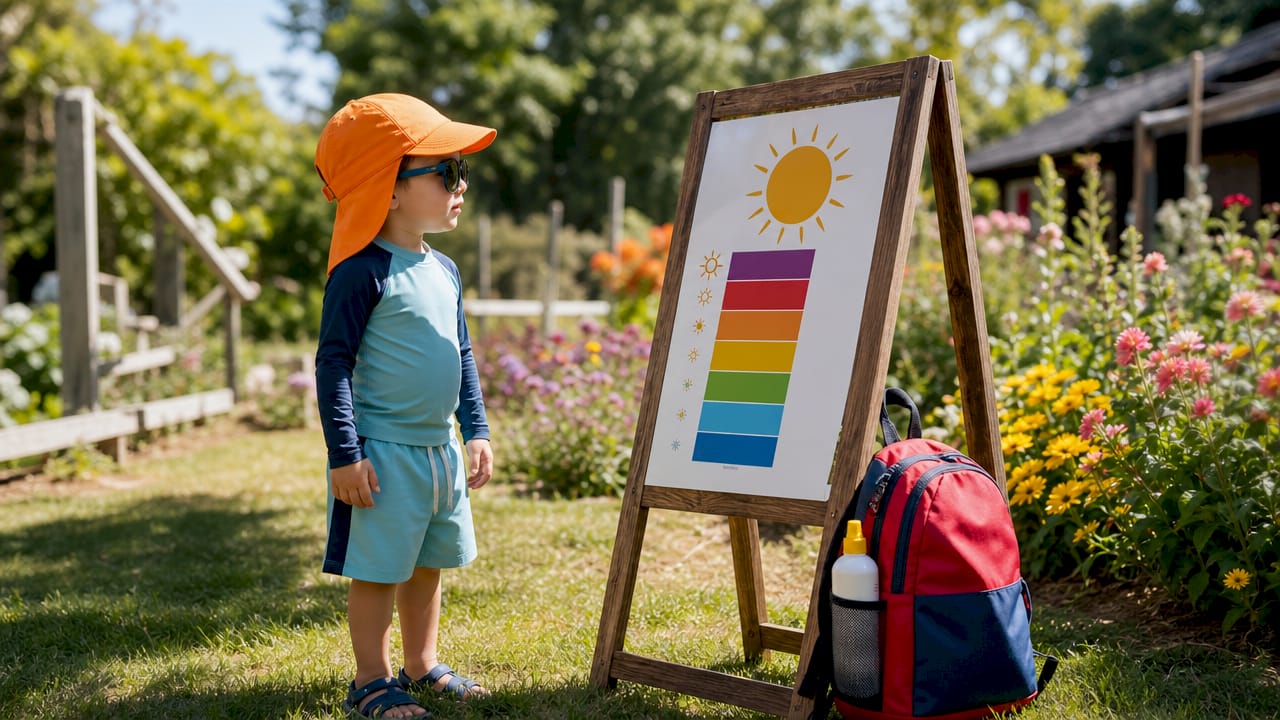
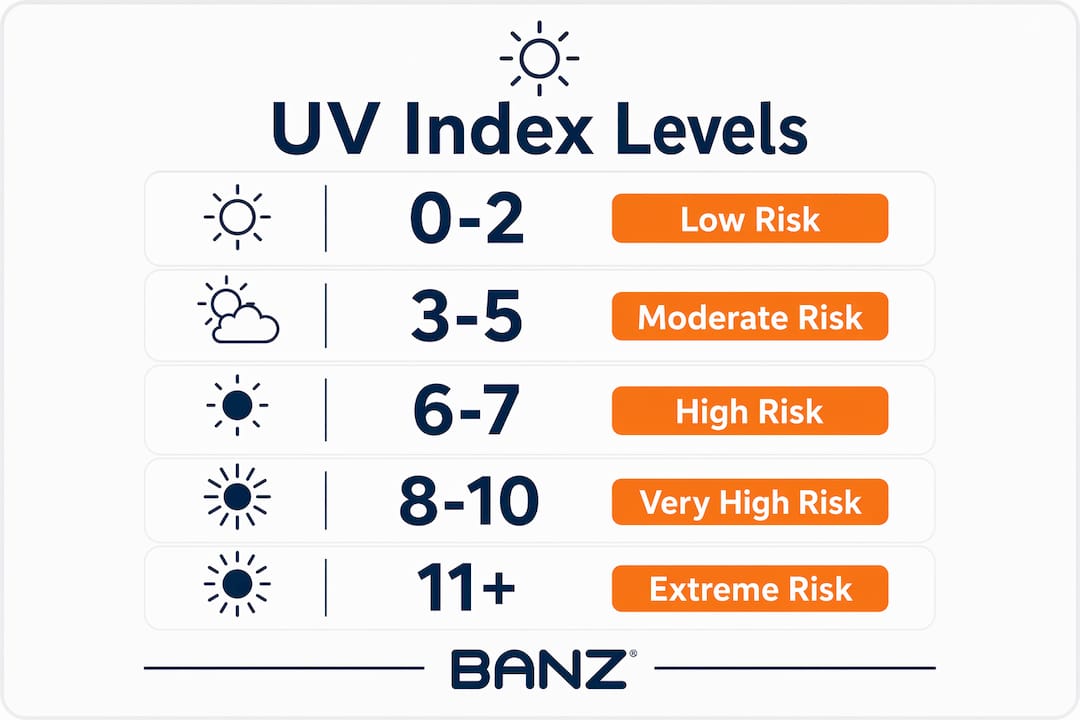
The UV Index scale runs from 0 to 11+, divided into five risk categories that signal how quickly unprotected skin can be damaged. Each category corresponds to a specific range of UV radiation intensity and a recommended level of protection. Reading the number correctly tells you exactly what precautions to take before stepping outside.
| UV Index Range | Risk Category | Key Precautions |
|---|---|---|
| 0–2 | Low | Minimal protection needed for most people |
| 3–5 | Moderate | Sunscreen SPF 30+, sunglasses, hat recommended |
| 6–7 | High | Reduce midday sun exposure, cover up |
| 8–10 | Very High | Extra protection required, seek shade |
| 11+ | Extreme | Avoid sun during peak hours, full coverage |
At a UV Index of 3 or above, health guidelines recommend sunscreen, protective clothing, and shade as standard precautions. That threshold is lower than most people expect. Many families assume protection is only necessary when the number hits 8 or higher, but skin damage begins well before that point.
One factor that surprises many readers: the UV Index calculation accounts for solar angle, altitude, ozone, and cloud cover, but not local reflectivity. Sand, snow, and water can push your actual UV exposure higher than the forecast number suggests.
Pro Tip: Check the UV Index the night before an outdoor activity, not the morning of. Many weather apps and the EPA’s UV Index tool update forecasts daily, giving you time to pack sunscreen, hats, and UV-rated gear before you leave.
Why children need extra protection at every UV level
Children are more sensitive to UV radiation than adults, and that sensitivity makes the UV Index especially relevant for parents. Children require more vigilant protection during outdoor activities, regardless of the specific index number. Their skin has less melanin and fewer years of built-up tolerance, which means UV damage accumulates faster.
At Very High (8–10) and Extreme (11+) UV Index levels, the risk for children rises sharply. These are the conditions where sunburn can occur in under 15 minutes for fair-skinned kids. Protective measures at these levels go beyond sunscreen alone.
Recommended steps for children when the UV Index reaches moderate or higher:
- Apply broad-spectrum SPF 30+ sunscreen 20 minutes before going outside
- Reapply every 2 hours, or immediately after swimming or sweating
- Dress children in UPF 50+ clothing that covers arms and legs
- Use wide-brimmed hats that shade the face, neck, and ears
- Add UV-blocking sunglasses to protect developing eyes
BANZ products are built around exactly these needs. The brand’s UPF 50+ sun hats and UV eye protection for children meet the protection standards that health guidelines recommend for moderate to extreme UV conditions. For parents who want real-time data, the free BANZ Protect app provides live UV monitoring so you always know the current risk level.
Pro Tip: Dress kids in UV-rated clothing as the first layer of defense. Sunscreen alone washes off and gets missed in spots. UPF 50+ fabric blocks UV consistently across the entire covered area.
How environmental factors change your actual UV exposure risk
The UV Index forecast gives you a solid baseline, but several environmental factors can raise your real-world exposure above that number. Knowing these factors helps you make smarter decisions, especially with children in tow.
UV rays are strongest between 10 a.m. and 4 p.m., but elevated UV levels also occur throughout spring and autumn, not only in summer. Many families drop their guard after August, assuming the risk drops with the temperature. It does not.
Reflective surfaces compound the problem significantly. Sand, snow, water, and concrete all reflect UV radiation back onto exposed skin, increasing the effective dose beyond what the forecast index shows. A day at the beach or a winter ski trip can deliver far more UV than the number on your phone suggests.
“Clouds reduce UV radiation but do not eliminate it. Up to 80% of UV rays penetrate thin and broken cloud layers. An overcast day is not a safe day without sunscreen.”
Altitude adds another layer of risk. UV intensity increases at higher elevations because there is less atmosphere to filter radiation. Hiking trips and mountain vacations require the same level of protection as a summer beach day, sometimes more. For families planning outdoor adventures, UV blocking in hiking gear is a practical starting point for understanding what to wear and why.
How to use the UV Index for daily sun safety decisions
The UV Index functions as a daily health tool, guiding when to apply sunscreen, wear UV-protective clothing, or limit sun exposure. Using it effectively means building it into your routine, not just checking it occasionally.
Here is a practical framework for applying the UV Index to outdoor activities:
- Check the local UV Index forecast each morning. The EPA’s UV Index tool and most weather apps display the daily peak UV level. Note the time of day when the peak occurs.
- Match your protection level to the forecast category. At Low (0–2), minimal gear is needed. At Moderate (3–5) and above, sunscreen SPF 30+ and a hat are standard. At High (6–7) and above, add UV-rated clothing and sunglasses.
- Reapply sunscreen every 2 hours without exception. This applies even on cloudy days and even when children are not visibly sweating or swimming.
- Schedule high-energy outdoor activities before 10 a.m. or after 4 p.m. This single timing adjustment reduces UV exposure significantly during Very High and Extreme index days.
- Add physical barriers for children. Wide-brimmed hats, UPF 50+ shirts, and UV-blocking sunglasses provide consistent coverage that sunscreen alone cannot guarantee.
- Account for reflective surfaces. At the beach, pool, or ski slope, treat the effective UV level as one category higher than the forecast and protect accordingly.
Consistent UV protection habits, including UV-rated clothing and frequent sunscreen application, are the most effective way to lower melanoma risk over a lifetime. The UV Index gives you the daily signal. Your habits determine the outcome.
Pro Tip: Keep a small sunscreen bottle and a UPF-rated hat in your car or bag year-round. When the UV Index spikes unexpectedly, you will already have what you need.
Common misconceptions about UV exposure and the UV Index
Several widespread misunderstandings cause people to underestimate UV risk, even when they are actively checking the UV Index. Addressing these directly helps you use the index more accurately.
The most common misconceptions:
- “Clouds mean no UV risk.” False. Up to 80% of UV rays pass through cloud cover. An overcast sky does not lower your protection needs on a Moderate or High index day.
- “I only need sunscreen in summer.” False. UV levels rise in spring and remain elevated through autumn. The index, not the season, is the correct guide.
- “A single sunburn is the real danger.” Misleading. Sun damage is cumulative. Multiple small unprotected exposures add to melanoma risk over time, even without a visible burn.
- “The UV Index covers all my exposure risk.” Incomplete. The index does not account for reflective surfaces or cumulative lifetime exposure. It is a snapshot of immediate risk, not a full picture.
- “Dark skin doesn’t need sunscreen.” False. All skin types experience UV damage, including eye damage and cumulative cellular harm, regardless of melanin levels.
UV radiation causes long-term skin and eye damage, making consistent public education on the UV Index and protective measures a genuine health priority. The index is a tool. Misreading it, or ignoring it on “safe-looking” days, removes the protection it was designed to provide.
Pro Tip: Treat the UV Index as a minimum risk indicator, not a maximum. Reflective surfaces, altitude, and cumulative exposure all push your actual risk higher than the number alone suggests.
For parents raising children with sensitive skin, the guide on UV radiation and children’s skin damage offers a detailed breakdown of how UV affects developing skin and what protection levels are appropriate at each UV category.
Key Takeaways
The UV Index is a daily health signal, not a weather curiosity. Families who act on it consistently, using sunscreen, UPF-rated clothing, and UV-blocking eyewear at every Moderate level and above, reduce their long-term skin cancer risk in a measurable and practical way.
| Point | Details |
|---|---|
| UV Index scale basics | The scale runs 0 to 11+, with five risk categories from Low to Extreme. |
| Protection starts at 3 | Health guidelines recommend sunscreen, hats, and shade at UV Index 3 and above. |
| Children need more protection | Kids’ skin is more sensitive, requiring UPF 50+ clothing and UV sunglasses at moderate levels and higher. |
| Clouds do not eliminate risk | Up to 80% of UV rays penetrate cloud cover, so protection is needed on overcast days. |
| Cumulative damage is real | Repeated small exposures add to lifetime melanoma risk, even without visible sunburn. |
The UV Index habit that actually changes outcomes
By Shari M. Murphy
After years of talking with families about sun safety, the pattern I see most often is not ignorance. Parents know sunscreen exists. They know hats help. What they underestimate is consistency.
The UV Index only works as a protective tool when you check it and act on it every single day, not just on beach trips or summer vacations. I have watched families apply sunscreen religiously in July and completely skip it in april when the index hits 6. The number does not care what month it is.
The other thing I have learned: children follow what they see. When parents make checking the UV Index a normal part of the morning routine, kids grow up treating sun protection as a given, not a chore. That habit, built early, is worth more than any single product.
My practical advice for busy parents: pair the UV Index check with something you already do every morning, like checking the weather before school. One extra glance at the UV forecast takes five seconds. Acting on it takes two minutes. That two minutes, repeated daily, is what actually lowers long-term risk for your family.
— Shari M. Murphy
BANZ sun safety gear for families who take UV seriously
Sun safety decisions are only as good as the gear backing them up.
BANZ designs UPF 50+ sun hats, UV-blocking sunglasses, and protective clothing specifically for children and families. Every product is built to meet the protection standards that health guidelines recommend for Moderate UV conditions and above. Over 2 million families across six continents rely on BANZ for daily sun protection. The free BANZ Protect app adds real-time UV monitoring so you always know the current index before heading out. For a full look at children’s UV protection options, the BANZ UV protection resource covers eyewear, hats, and clothing in one place. For families who also want to protect kids from loud environments, the BANZ family safety range covers both UV and hearing protection in one trusted lineup.
FAQ
What does UV index mean in simple terms?
The UV Index is a number from 0 to 11+ that tells you how strong the sun’s ultraviolet radiation is at a specific location and time. A higher number means a greater risk of skin damage and a greater need for protection.
At what UV index level should you wear sunscreen?
Health guidelines recommend applying SPF 30+ sunscreen at a UV Index of 3 (Moderate) or above. Reapply every 2 hours, or after swimming or sweating.
Is a UV index of 5 dangerous for children?
A UV Index of 5 falls in the Moderate category, and children require protection at this level. Apply sunscreen, use a wide-brimmed hat, and add UV-blocking sunglasses before outdoor activity.
Does the UV index change throughout the day?
Yes. UV radiation peaks between 10 a.m. and 4 p.m. and drops in the early morning and late afternoon. Checking the daily peak UV Index helps you plan outdoor timing to reduce exposure.
Can you get UV damage on a cloudy day?
Yes. Up to 80% of UV rays penetrate thin and broken cloud cover. The UV Index forecast accounts for cloud cover, so check it even on overcast days and apply protection accordingly.