

For active swimming, laps, or swim lessons, a swim-ready UPF 50+ hat wins because it stays put and dries fast. For beach lounging, poolside supervision, or long stretches out of the water, a wide-brim sun hat wins because it blocks more direct sun on the face, ears, and neck. The exception: babies under six months should stay out of direct sun altogether, and bald or short-haired kids need extra scalp coverage no matter which hat they wear.
TL;DR:
- UPF 50+ rating blocks about 98% of UV rays and remains effective when quick-dry synthetics are used, but cotton fabrics lose UV protection when wet.
- Swim hats offer a snug fit, short or stiff brims, and features like floatable elements, making them ideal for active swimming and diving with secure stays-on ability.
- Wide-brim sun hats with neck flaps provide better protection during extended sun exposure and lounging, especially when UV rays reflect off water surfaces.
- Proper fit is crucial; adjustable straps or snug crowns prevent hats from slipping off, while loose or weak elastic loops compromise security in water.
- Regular rinsing, air-drying, and careful storage help maintain the hat’s UPF effectiveness and fit over time.
Table of Contents
- Swim Hat vs Sun Hat: What Separates the Two Designs
- Materials and UPF: What Keeps Blocking UV When Wet
- Fit and Features That Actually Work in Water
- Decision Guide: Which Hat Fits Which Scenario
- Care and Maintenance to Preserve UPF and Fit
- BANZ® Perspective: Why Swim-Ready Design Isn’t Optional
- Featured BANZ® Hats That Match This Guide
- FAQ
Swim Hat vs Sun Hat: What Separates the Two Designs
A swim hat and a sun hat solve two different problems, and the difference in construction shows it. A swim hat is built low and tight against the head, using quick-dry fabric that won’t drag or flop once it’s wet. A sun hat is built wide and loose, trading a snug fit for as much shade as possible.
That trade-off shows up in every design decision:
- Swim hats hug the scalp with minimal brim, so there’s less fabric to catch water resistance during strokes or dives.
- Sun hats extend brims of 3 inches or more, plus sometimes a neck flap, to shade the face, ears, and back of the neck.
- Swim hats use stretch synthetics that snap back to shape after being soaked and wrung out.
- Sun hats favor structured crowns and stiffer brims that hold their form in still air but sag once drenched.
- Swim hats ventilate poorly by design (the tight fit is the point); sun hats often add mesh panels since airflow matters more than water shedding.
The practical result: a swim hat protects the scalp and keeps hair somewhat contained during active swimming, while a sun hat protects the face, ears, and neck during the long, low-intensity stretches of a beach or pool day. Neither one does the other’s job well, which is exactly why the “swim hat or sun hat” question doesn’t have one universal answer.
Materials and UPF: What Keeps Blocking UV When Wet
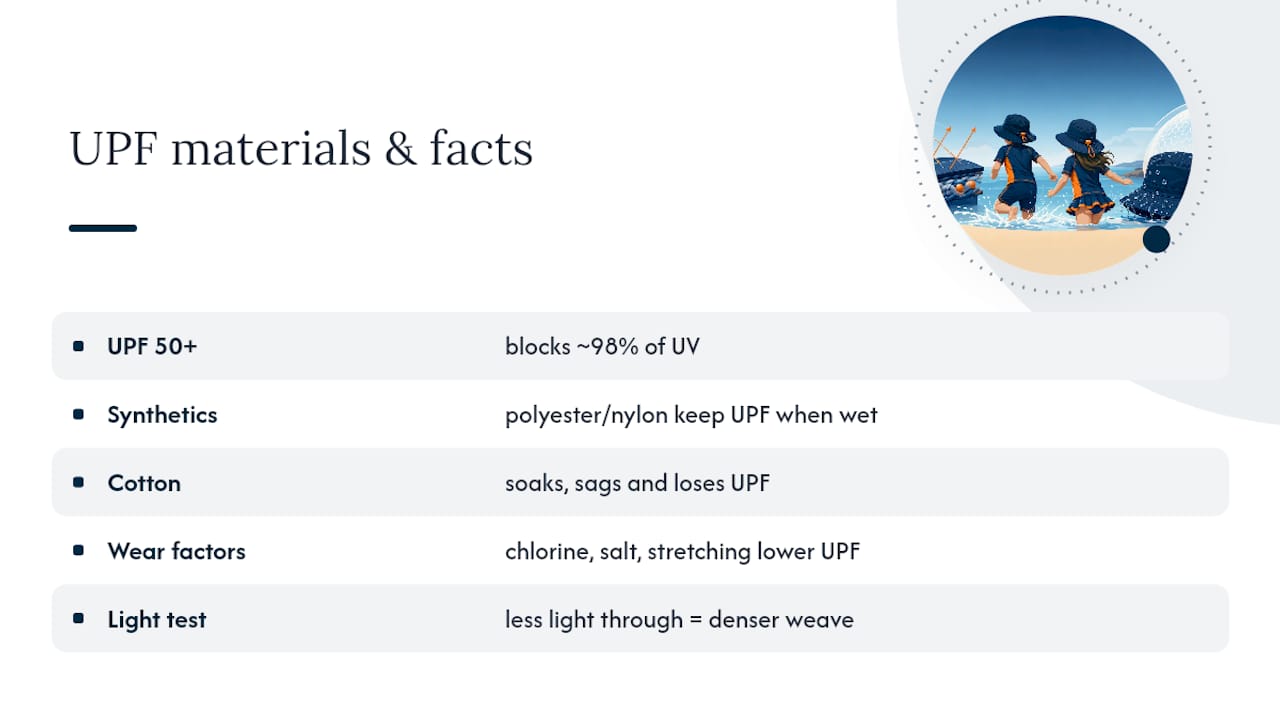
UPF 50+ is the number to look for on any hat marketed for sun protection, and it isn’t a marketing gimmick. A UPF 50+ rating means the fabric blocks roughly 98% of UV rays under test conditions, which is why it’s become the standard recommendation for children’s sun hats and swimwear alike.
UPF 50+ blocks about 98% of UV radiation, making it the benchmark caregivers should check for on any hat, swim or sun, before buying.
Fabric choice determines whether that rating holds up once the hat gets wet. Polyester, nylon, and other quick-dry synthetics keep their weave structure and UPF performance when soaked. Cotton does the opposite: it soaks up water, sags, and loses shape, which is why cotton sun hats are a poor match for anything near a pool or ocean.
Repeated chlorine and salt exposure, plus the physical stretching that comes from pulling a hat on and off wet hair, gradually weakens fibers and can lower effective UV protection over time. If a hat has no UPF label, there’s a quick check: hold the fabric up to a bright light. The less light that passes through, the denser the weave and the more UV it’s likely blocking.
Fit and Features That Actually Work in Water
A hat that doesn’t stay on isn’t protecting anyone. Comfort and securement decide whether a child keeps a hat on for an entire swim session or rips it off after five minutes.
- Breakaway chin straps hold a hat in place through dives and splashing while releasing under snag pressure, which matters for both comfort and safety around pool equipment.
- Adjustable toggles and snug crowns let one hat fit a growing child across a season instead of getting swapped out every few months.
- Fixed elastic loops are the weakest option. They tend to loosen with repeated wetting and drying, and kids often work them off.
Brim behavior is where sun hats and swim hats part ways completely. Wide brims flop the instant they’re submerged, which is fine for a hat that’s meant to sit poolside but useless for one that’s supposed to survive laps. Swim-ready hats sidestep this by keeping brims short, stiffened, or eliminated altogether.
A few features are worth checking for on any water-focused hat: floatable brims that resist waterlogging, quick-dry interior liners, and corrosion-resistant eyelets or snaps that won’t rust after repeated chlorine exposure.
Pro Tip: Press a wet hat brim between two fingers before buying. If it collapses flat and stays that way, it will flop the same way in the pool.
Decision Guide: Which Hat Fits Which Scenario
Matching the hat to the activity solves most of the “swim hat vs sun hat” confusion in one step.
- Active swimming, diving, or swim lessons: a swim-ready hat with a snug crown and breakaway strap. Brims and neck flaps just get in the way of strokes and goggles.
- Poolside supervision, beach lounging, or long stretches of dry sun exposure: a wide-brim UPF 50+ sun hat or legionnaire-style hat with a neck flap. Water reflects sunlight back up at swimmers, increasing UV exposure from below, so extra coverage on the ears and neck earns its keep here.
- Hybrid days, paddleboarding, or long floats: a high-coverage hat built for water, or a swim hat paired with sunscreen and a rash guard for neck coverage.
- Bald or very short-haired kids: either hat type works, but scalp sunscreen underneath is non-negotiable since there’s no hair buffer at all.
- Infants under six months: skip the sun exposure question entirely and stick to shade and lightweight clothing rather than relying on any hat as the sole barrier.
If you’re still narrowing down fit and coverage for a specific age group, this breakdown on choosing the right sun hat fit for toddlers walks through sizing in more detail.
Care and Maintenance to Preserve UPF and Fit
A hat’s UPF rating and fit both degrade with neglect, but the fixes are simple and take under a minute per wear.
- Rinse hats in fresh water immediately after chlorine or saltwater exposure to stop mineral buildup from weakening fabric and stitching.
- Air-dry away from direct heat. Hot dryers and direct sun exposure both accelerate fiber breakdown and can shrink adjustable straps.
- Skip harsh detergents, which strip the finishes that help synthetic fabrics resist water absorption.
- Check straps, seams, and brim wire regularly for fraying or cracking, especially at the start of a new swim season.
- Store flat or on a rounded form rather than crushed in a bag, so brims and crowns keep their shape between wears.
BANZ® Perspective: Why Swim-Ready Design Isn’t Optional
Kids don’t sit still for sun protection, so a hat has to survive actual play, not just look good on a hanger. That’s the design lens BANZ® brings to UPF 50+ hats: fabrics that hold their rating when wet, and fits secure enough that a five-year-old doesn’t pull the hat off halfway through a pool afternoon.
No single hat replaces layered protection. A well-built hat, sunscreen on exposed skin, and shade during peak hours still work better together than any one piece alone. As a contributor to the topic of children’s sun safety notes, the goal isn’t finding one perfect product. It’s building a routine that holds up across an entire summer.
— Shari M. Murphy
Featured BANZ® Hats That Match This Guide
Choosing between a swim hat and a sun hat gets easier once you’re looking at options actually built for kids’ water routines. BANZ® carries three styles that map directly onto the scenarios above.
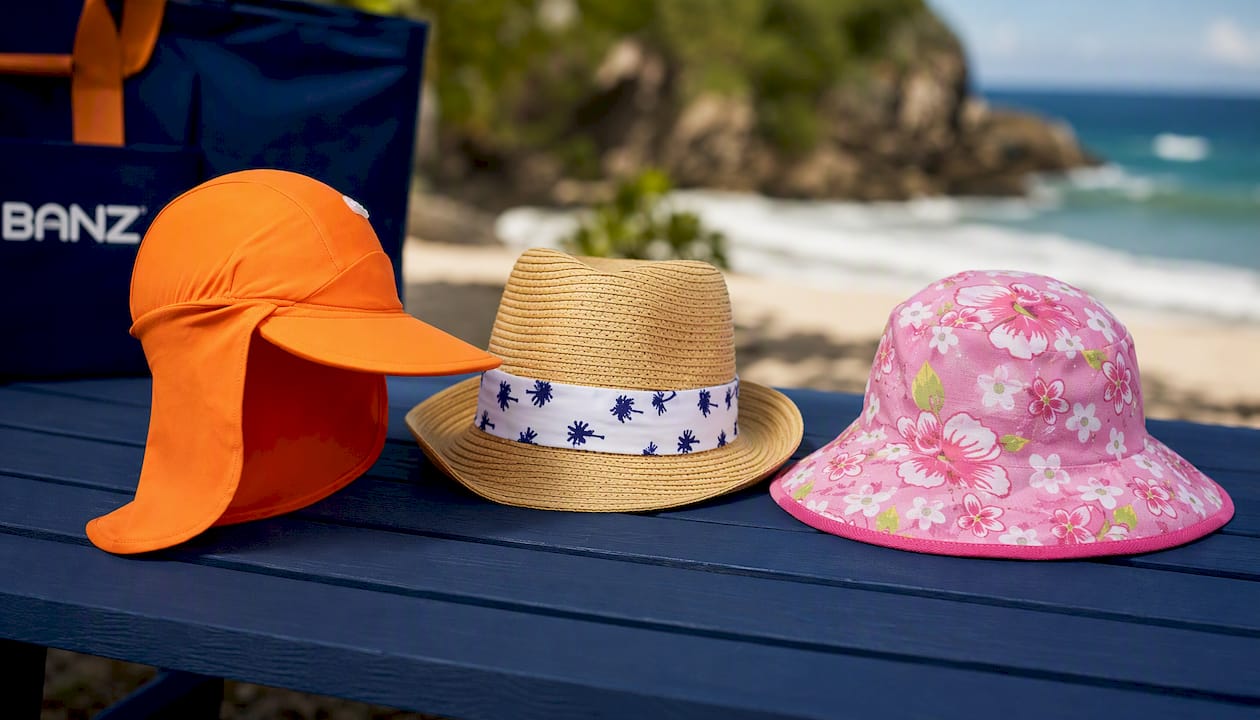
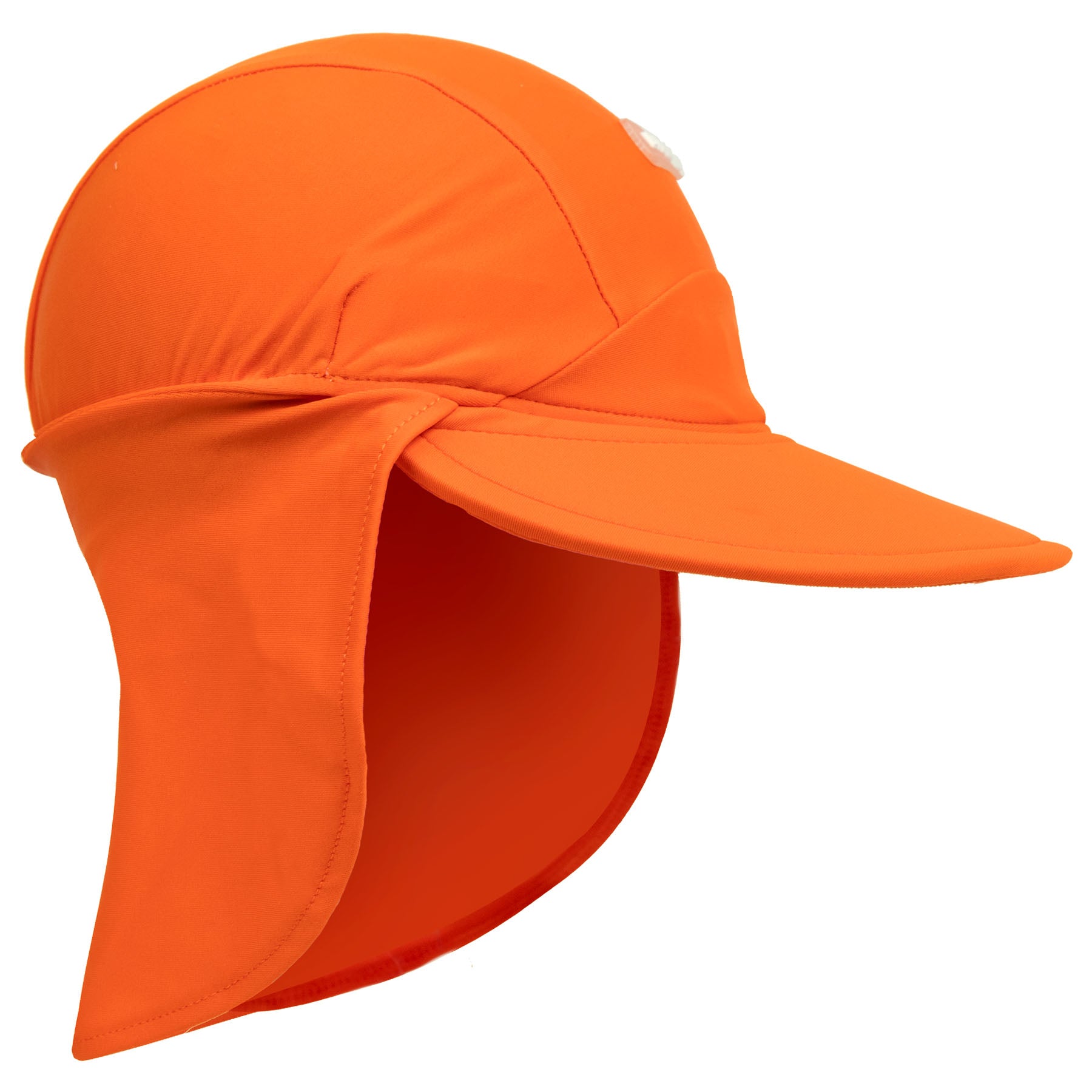
The Childrens Flap Hat covers the classic legionnaire need: a wide crown with a neck flap for ears and neck, suited to poolside supervision and beach afternoons where kids are mostly out of the water. The Fedora Sunhat with Band Detail offers a higher-coverage, everyday sun hat style for caregivers who want broad shade for walks, playgrounds, and general outdoor time beyond the pool deck. The Children’s Reversible Sun Hat, UPF 50+, gives you two color options in one hat, with UPF 50+ fabric built to hold its protection through repeated wear and washing.
For families who want a swim-ready option that fits the securement standards covered above, the reversible UPF 50+ sun hat is worth checking against your child’s routine. If you’re outfitting a full pool bag, the BANZ® store carries matching UPF 50+ swimwear and sunglasses so hat, suit, and eyewear all pull the same weight. Shop the Childrens Flap Hat or the Fedora Sunhat with Band Detail directly to compare coverage styles side by side.
FAQ
Should a Swim Cap Cover the Ears?
Most swim caps are not designed to fully seal the ears, and they aren’t a substitute for earplugs if water in the ears is a concern. Their job is to keep hair contained and reduce drag, not to provide watertight ear coverage.
Does Hair Still Get Wet Under a Swim Cap?
Yes. Standard silicone or fabric swim caps slow down water absorption but don’t create a fully waterproof seal, so hair usually gets damp, especially at the edges near the forehead and neck.
Is a Swim Cap Better for Your Hair?
A swim cap helps protect hair from prolonged chlorine or saltwater exposure and can reduce tangling, but it won’t keep hair completely dry. For kids with longer hair, pairing a snug swim cap with a leave-in conditioner offers better protection than the cap alone.
Should I Wear a Swim Cap If I’m Bald?
Yes, for sun protection rather than hair protection. Bald or very short-haired swimmers have no natural buffer against UV rays, so a UPF-rated swim hat plus scalp sunscreen is the safer combination while swimming, and the same 3-inch brim guidance that pediatric sources recommend for kids applies to adult sun hats out of the water.
When Should I Choose a Sun Hat Over a Swim Hat?
Choose a sun hat whenever a child is mostly out of the water and exposed to direct sun for long stretches, such as beach lounging or poolside play. The wider brim and neck coverage on a sun hat protect areas a low-profile swim hat simply doesn’t reach.