

Beach activities require extra UV protection because the environment delivers UV radiation from multiple directions at once, not just from the sky above. Direct sunlight combines with UV rays reflected off water and sand, creating an exposure level that far exceeds what you encounter in a park, backyard, or even a rooftop. The CDC confirms that reflective surfaces like water, sand, and cement demand extra protection even when you are sitting in shade. For parents and caregivers bringing children to the beach, understanding this layered UV threat is the first step toward building a protection plan that actually works.
Why beach activities require extra UV protection
The beach is one of the highest UV exposure environments on earth, and the reason is geometry. Direct sunlight hits you from above, but water reflects between 10% and 30% of UV rays back at you, and sand reflects up to 25% from below and around you. That means your skin is receiving UV radiation from multiple angles simultaneously, which no single layer of sunscreen or shade can fully address on its own.
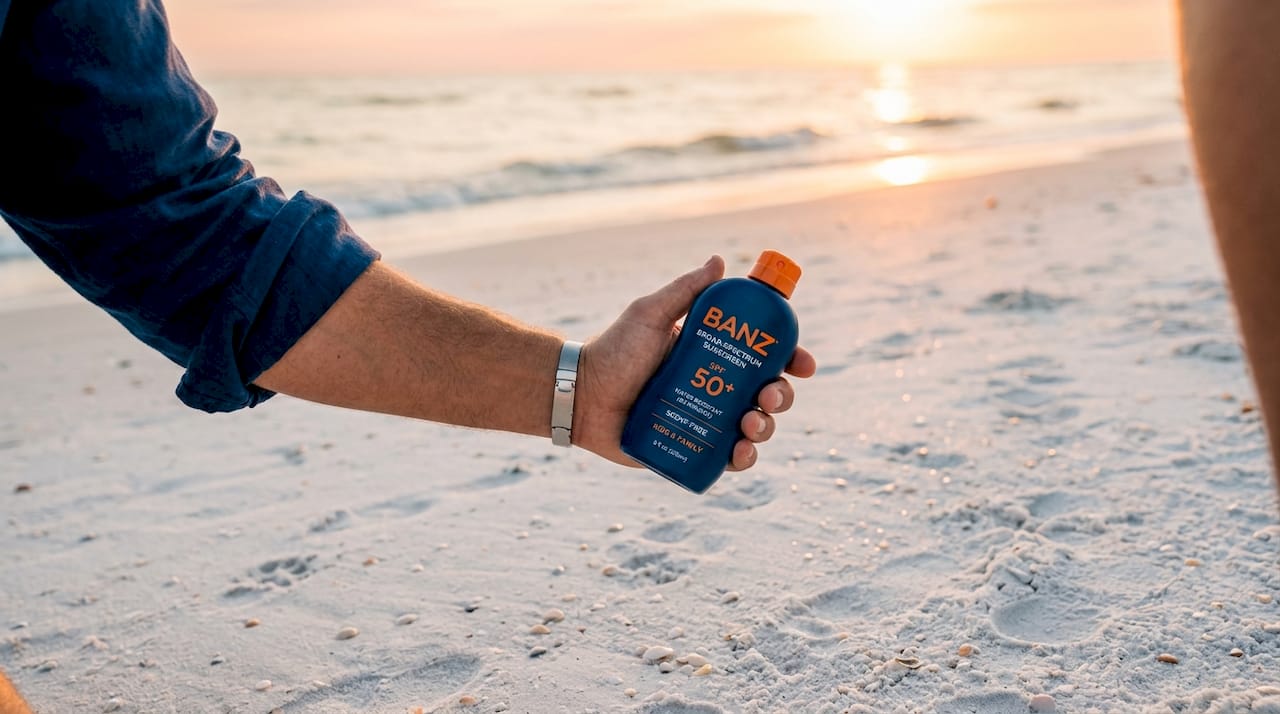
Compare this to a shaded urban park or a forest trail. In those settings, trees and buildings absorb and scatter UV radiation, reducing your total exposure significantly. At the beach, open water and flat sand create a wide reflective bowl with almost no natural UV absorption. The result is that a child playing in the sand under a beach umbrella still receives meaningful UV exposure from reflected rays bouncing off the surrounding environment.
Peak UV hours in the United States run from 10 a.m. to 4 p.m., which maps almost exactly onto the hours most families spend at the beach. This overlap is not a coincidence to work around. It is the core reason why sun exposure during beach activities carries higher skin damage risk than most other outdoor settings.
| Surface | UV Reflection Rate | Key Risk |
|---|---|---|
| Water | 10–30% | Reflects UV from multiple angles while swimming |
| Sand | 15–25% | Reflects UV upward, reaching under hats and umbrellas |
| Grass | Less than 5% | Minimal reflection, lower ambient UV risk |
| Concrete | Up to 10% | Moderate reflection in urban beach areas |
Pro Tip: The BANZ Protect app provides real-time UV index readings so you can check actual UV levels at your beach location before and during your outing, removing the guesswork from protection decisions.
Does sunscreen type matter for beach use?
Sunscreen is not a single product category. The SPF number on a bottle measures UVB protection only, which covers the rays that cause sunburn. UVA rays, which penetrate deeper into the skin and drive photoaging and skin cancer risk, require a broad-spectrum label to be addressed. Many parents apply SPF 50 sunscreen and assume full protection, but without broad-spectrum coverage, UVA damage accumulates invisibly beneath the surface.
Water resistance is equally critical at the beach. Swimming, sweating, and towel-drying all remove sunscreen from the skin faster than time alone does. A water-resistant formula maintains its rated SPF for either 40 or 80 minutes of water exposure, depending on the product label. After that window closes, the sunscreen must be reapplied regardless of how much time has passed since the last application.
Here is what effective sunscreen use at the beach requires:
- Choose a broad-spectrum sunscreen rated SPF 30 or higher to cover both UVB and UVA radiation.
- Apply sunscreen approximately 30 minutes before going outside so it bonds properly to the skin.
- Use enough product. Most adults need about one ounce (a full shot glass) to cover exposed skin completely.
- Reapply every two hours and immediately after swimming, sweating heavily, or towel-drying.
- Pay attention to commonly missed spots: ears, the back of the neck, tops of feet, and the part line in hair.
Pro Tip: Set a phone timer for every 90 minutes at the beach rather than two hours. This accounts for the time children spend in and out of the water and reduces the chance of a missed reapplication window.
The SPF rating alone does not guarantee full protection. Many parents assume that no visible sunburn means no UV damage occurred. UVA exposure causes cellular damage that does not show up as redness but still contributes to long-term skin health risks, particularly for children whose skin is still developing.
How to build a layered UV protection plan for families
Sunscreen is one layer of protection, not the whole system. A layered approach combines physical barriers, timing strategies, and sunscreen to reduce total UV exposure across the entire beach visit. This is especially important for children, whose delicate skin requires more vigilant protection than adult skin at equivalent UV levels.
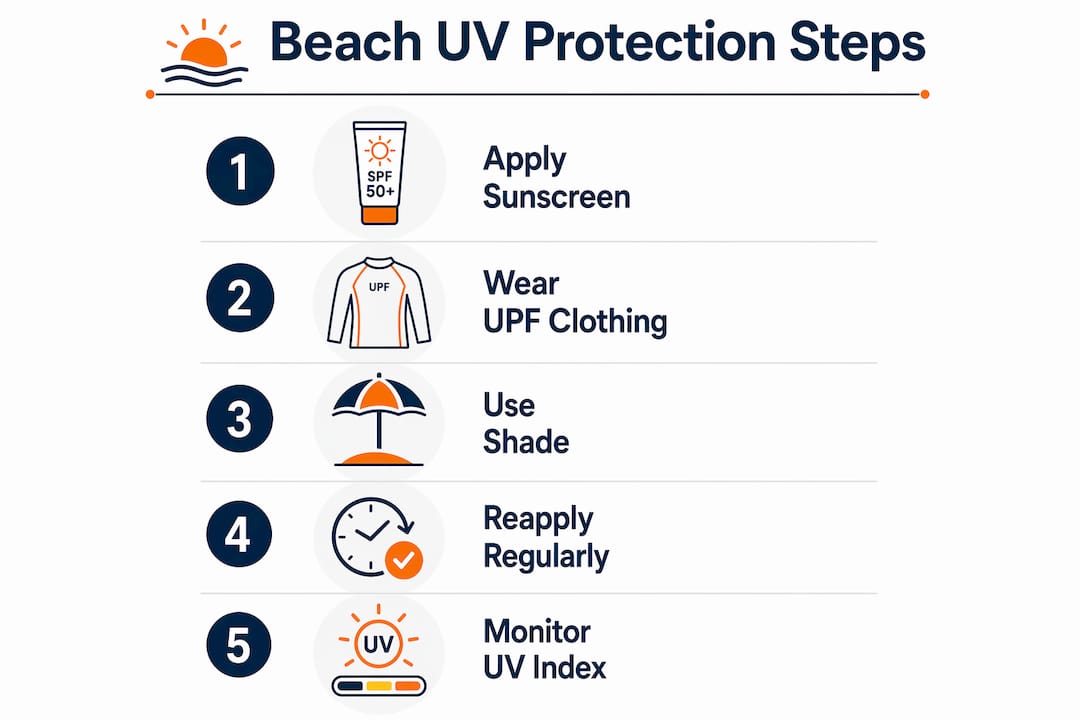
Follow these steps to build a complete protection plan:
-
Dress for UV defense first. UPF-rated clothing blocks UV radiation physically, with UPF 50+ fabrics blocking over 98% of UV rays. Long-sleeve rash guards, UPF swimwear, and wide-brim hats with neck flaps cover the skin that sunscreen alone often misses. BANZ offers UPF 50+ children’s swimwear designed specifically for extended beach exposure.
-
Build shade with three-dimensional thinking. A standard beach umbrella provides overhead shade but leaves the sides open to reflected UV from sand and water. Pair the umbrella with a pop-up tent or shade shelter that has side panels, and position children inside it during rest periods. The CDC recommends treating shade as a layered protection tool, not a standalone solution.
-
Time your beach activities strategically. Arrive early (before 10 a.m.) or plan activities for late afternoon (after 4 p.m.) when UV index levels drop. Use the middle hours for lunch, rest, or indoor activities. This single scheduling adjustment reduces peak UV exposure more than any product can.
-
Schedule sunscreen breaks. Build reapplication into the beach routine rather than treating it as an interruption. Every time children come out of the water for a snack or rest, reapply sunscreen before they go back in.
-
Protect the eyes and scalp. UV radiation damages eye tissue and the scalp just as it damages skin. Wrap-around sunglasses with UV400 protection and wide-brim hats address these areas that sunscreen cannot easily reach.
| Protection Method | UV Coverage | Limitation |
|---|---|---|
| Broad-spectrum sunscreen SPF 30+ | UVA and UVB on applied skin | Washes off, requires reapplication |
| UPF 50+ clothing | Physical block on covered areas | Does not cover face, hands, or feet |
| Beach umbrella | Overhead direct sun | Does not block reflected UV from sand |
| Wide-brim hat | Face, neck, and scalp | Limited side coverage without neck flap |
| Layered combination | Full-body, multi-directional | Requires consistent maintenance |
Common myths about UV safety at the beach
Clouds do not block UV rays. Up to 80% of UV radiation penetrates cloud cover and reaches the skin on overcast beach days. Many families skip sunscreen on cloudy days, which is one of the most common and damaging mistakes in beach sun safety.
“Cumulative UV exposure matters as much as single-day sunburn. Skin damage from UV radiation builds over time, and even short unprotected exposures contribute to long-term risk.” — Loma Linda University Health
Shade alone is not sufficient at the beach. Because sand and water reflect UV from below and to the sides, sitting under an umbrella still exposes you to significant ambient UV radiation. The CDC states clearly that shade helps but cannot replace sunscreen and protective clothing in reflective beach environments.
Several other myths consistently reduce protection effectiveness:
- “My child didn’t burn, so they’re fine.” UVA damage occurs without visible redness. Skin that looks unaffected after a beach day may still have absorbed damaging UV radiation.
- “Wet or dark clothing protects against UV.” A standard wet white T-shirt has a UPF of approximately 3, offering almost no UV protection. Only clothing rated UPF 30 or higher provides meaningful defense.
- “Higher SPF means I can apply less.” SPF 100 does not double the protection of SPF 50. It provides marginally more UVB coverage but still requires the same application volume and reapplication schedule.
Key takeaways
Beach UV protection requires combining sunscreen, UPF clothing, strategic shade, and timed activity schedules because no single method blocks the multi-directional UV exposure unique to beach environments.
| Point | Details |
|---|---|
| Reflected UV multiplies exposure | Sand and water reflect 15–30% of UV rays, adding to direct sunlight from above. |
| Broad-spectrum sunscreen is non-negotiable | SPF alone covers UVB only; broad-spectrum labels are required to address UVA damage. |
| Reapplication is the most skipped step | Reapply every two hours and after every water exit, not just once per outing. |
| Shade requires three-dimensional coverage | Umbrellas block overhead sun but not reflected UV; side panels and UPF clothing fill the gap. |
| Children need earlier intervention | Kids’ skin burns faster due to higher sensitivity; UPF 50+ gear adds a reliable physical barrier. |
What I’ve learned from watching families underestimate beach UV risk
I’ve spent years watching parents do everything right on paper and still miss the most critical window. They apply sunscreen before leaving the house, pack the umbrella, and bring the hats. Then the kids hit the water, the hats come off, and the reapplication timer never gets set. Forty-five minutes later, the damage is already done.
The part that most articles skip is this: the beach is not just a high-UV environment. It is a distraction environment. Children are excited, parents are relaxed, and the routine of protection breaks down faster than it does anywhere else. That is the real risk factor, and no SPF number fixes it.
What actually works is building protection into the physical routine rather than relying on memory. Keep sunscreen next to the snack bag. Make reapplication the price of re-entry to the water. Use UPF clothing as the default layer so that even when sunscreen gets skipped, there is still a physical barrier in place. Model the behavior yourself. Children who see caregivers wearing hats and reapplying sunscreen treat it as normal, not as an interruption.
The cumulative damage argument is the one I return to most often. One bad sunburn in childhood doubles the lifetime risk of melanoma. That statistic does not feel real on a sunny Saturday morning, but it is the reason every beach trip deserves a complete protection plan, not just a bottle of sunscreen tossed in the bag.
— Shari M. Murphy
Protect your kids at the beach with BANZ gear
BANZ designs UV protection gear specifically for children’s beach use, built around the reality that kids move, swim, and sweat through standard protection fast. The BANZ UPF 50+ sun hats feature wide brims and neck flaps that cover the areas sunscreen misses most often, with adjustable fits that stay on active kids. The reversible baby sun hats offer two looks in one design, rated UPF 50+ on both sides. Pair either hat with BANZ UPF swimwear and the free BANZ Protect app for real-time UV monitoring, and you have a layered protection system built for actual beach conditions, not just ideal ones.
FAQ
Why is UV exposure higher at the beach than other outdoor spots?
Water reflects 10–30% of UV rays and sand reflects up to 25%, adding reflected radiation to direct sunlight from above. This multi-directional exposure makes beach environments significantly more intense than parks or urban settings.
Does sitting under a beach umbrella protect against UV rays?
Shade reduces direct UV exposure but does not block reflected UV from sand and water. The CDC recommends combining shade with sunscreen and protective clothing for complete coverage.
How often should sunscreen be reapplied at the beach?
Reapply broad-spectrum, water-resistant sunscreen every two hours and immediately after swimming, sweating, or towel-drying. One application at the start of the day is not sufficient for a full beach outing.
What SPF level is recommended for children at the beach?
SPF 30 or higher with a broad-spectrum label is the standard recommendation for children. Higher UV index days (8 to 10 or above) call for SPF 50+ combined with UPF-rated clothing and hats.
Do cloudy days at the beach still require sun protection?
Yes. Up to 80% of UV radiation penetrates cloud cover, meaning overcast beach days carry nearly the same UV risk as clear ones. Full protection applies regardless of sky conditions.