

Picking the right outdoor sun safety gear examples for your child sounds simple until you’re standing in a store aisle staring at thirty different hats and three walls of sunscreen. UV protection clothing, or UPF apparel as the industry calls it, is the technical standard behind most of what you’ll evaluate. The challenge is knowing which products actually deliver and which ones just look the part. This guide breaks down what to look for, which gear types work best for active kids, and how to put it all together into a protection routine that your child will actually wear.
Table of Contents
- Key takeaways
- Outdoor sun safety gear examples: what to look for first
- 1. UPF 50+ sun shirts for kids
- 2. Wide-brimmed sun hats
- 3. Wrap-around sunglasses for children
- 4. Neck gaiters and face covers
- 5. UPF 50+ pants and leggings
- 6. Packable sun hats with storage pockets
- 7. Reversible baby sun hats
- 8. Toggle-secured active hats for older kids
- Comparing common gear options side by side
- Practical tips for building a sun safety routine
- My take on what most parents get wrong
- Gear up with Banzworld
- FAQ
Key takeaways
| Point | Details |
|---|---|
| UPF 50+ is the gold standard | UPF 50+ clothing blocks over 98% of UV rays and holds up through repeated washing. |
| Fabric type matters more than color | Synthetic UPF fabrics outperform regular cotton, which may only block 5 to 10% of UV radiation. |
| Layering beats single solutions | Combining UPF clothing, a wide-brimmed hat, sunglasses, and sunscreen gives the most complete coverage. |
| Fit and comfort drive compliance | Gear that fits well and feels comfortable is gear your child will actually keep on during outdoor play. |
| Timing outdoor activity reduces exposure | Avoiding peak UV hours between 10 a.m. and 2 p.m. reduces UV load even when gear is worn. |
Outdoor sun safety gear examples: what to look for first
Before you shop, you need a clear set of criteria. Not all sun protection equipment is created equal, and marketing claims on packaging can be misleading.
UPF rating vs. sunscreen alone. UPF stands for Ultraviolet Protection Factor and measures how much UV radiation a fabric blocks. UPF 50+ garments block 98% of UVA and UVB rays without needing reapplication every two hours the way sunscreen does. That consistency matters when kids are running around for hours.
Fabric construction. Regular cotton blocks just 5 to 20% of UV radiation. Specialized synthetic fabrics with tight weaves are engineered to block far more. When wet from sweat or water, moisture-wicking UPF fabrics maintain their protection level. Standard cotton does not.
Coverage design. Long sleeves, long pants, and high necklines reduce exposed skin. Look for added features like thumb holes, built-in neck gaiters, and extended back hems. Thumb holes and built-in gaiters reduce the need for sunscreen on commonly missed spots like wrists and the back of the neck.
Sunglasses standards. Children’s sunglasses should meet UV400 standards and use a wrap-around frame. Wrap-around UV400 sunglasses protect both the eyes and the surrounding skin from side UV entry.
Pro Tip: Check the UPF label on the garment tag, not just the product description. If a shirt does not carry a verified UPF rating, treat it as unrated regardless of color or fabric claims.
1. UPF 50+ sun shirts for kids
A long-sleeve UPF 50+ shirt is the backbone of any child’s outdoor sun protection plan. Look for lightweight polyester or nylon blends with a four-way stretch so kids can move freely. Good options include pullover hoodies with thumbholes and zip-neck designs that allow ventilation. High-mobility UPF shirts with mobility-optimized cuts perform better during active play than stiff woven alternatives.
The key difference from a regular shirt is the weave density and fiber type. Quality UPF clothing uses mechanical protection built into the fibers, meaning UPF efficacy holds through 100+ washes rather than degrading like chemically treated fabrics.
2. Wide-brimmed sun hats
A hat is non-negotiable for outdoor sun safety. The Cancer Council standard requires a brim of at least 3.5 inches to adequately cover the face, ears, and neck. For kids, look for hats with moisture-wicking sweatbands and chin straps or toggles to keep the hat on during active play.
Wide-brim hats with UPF 50+ fabric improve both coverage and comfort compared to standard baseball caps. Reversible designs give kids a style choice, which increases the chance they will actually wear the hat without a fight.
3. Wrap-around sunglasses for children
Standard sunglasses leave the sides of the eyes exposed. Wrap-around frames close that gap. For children, flexible frames are worth prioritizing since rigid plastic breaks easily during outdoor play.
Look for UV400 labeling, which means the lenses block wavelengths up to 400 nanometers, covering both UVA and UVB. Banzworld carries flexible kids’ sunglasses designed specifically for active wear with UV protection built into the lens material rather than applied as a coating.
4. Neck gaiters and face covers
Neck gaiters are one of the most underused pieces of sun protection equipment for kids. They cover the neck and lower face, areas that hats and shirts often leave exposed. A lightweight UPF 50+ gaiter can be pulled up during peak sun and dropped down when shade is available.
For water activities, a gaiter that stays protective when wet is especially useful. Pair it with a UPF shirt and hat for full torso and head coverage without relying entirely on sunscreen.
5. UPF 50+ pants and leggings
Legs are frequently overlooked. Kids wearing shorts at the beach or park receive significant UV exposure on their lower body. Lightweight UPF 50+ pants or leggings made from quick-dry nylon or polyester blends solve this without overheating.
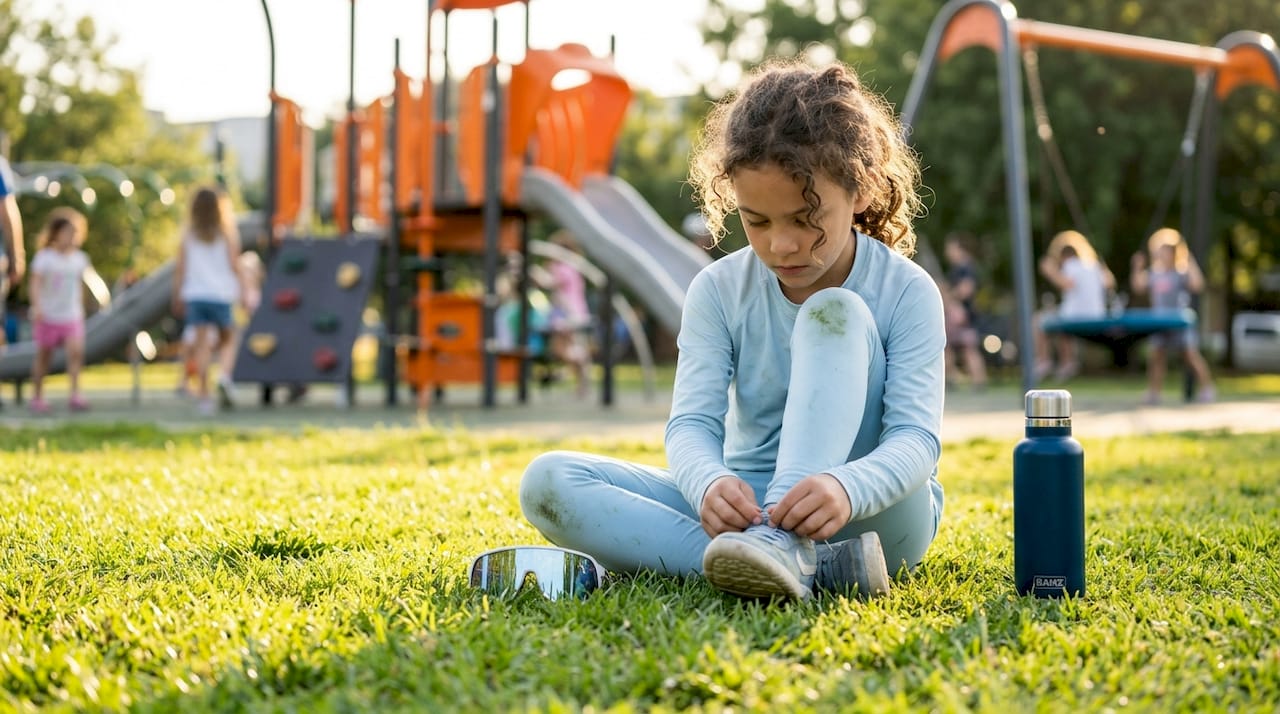
For water play, swim leggings with UPF 50+ ratings provide continuous coverage even when submerged, unlike standard swimwear. This is particularly relevant for high-altitude or water environments where UV intensity increases.
6. Packable sun hats with storage pockets
One practical feature parents often overlook is packability. A hat that folds flat and fits in a bag is a hat that actually makes it to the park. Banzworld’s packable children’s sun hats include a built-in pocket so the hat stores inside itself. This removes the “I forgot the hat” problem entirely.
7. Reversible baby sun hats
For infants and toddlers, fit and security matter most. A hat that slips off constantly provides no protection. Reversible designs with adjustable sizing give you two color options and a longer useful life as the child grows. Banzworld’s reversible baby sun hats use UPF 50+ fabric and are cut to stay on without being restrictive.
8. Toggle-secured active hats for older kids
Older kids who are running, biking, or playing sports need a hat that stays put. Toggle-secured designs use an adjustable cord under the chin to lock the hat in place. Banzworld offers toggle-secured wide-brim hats in UPF 50+ fabric that work well for active children who would otherwise pull a regular hat off.
Comparing common gear options side by side
| Gear type | UPF rating | Best for | Key feature |
|---|---|---|---|
| UPF 50+ sun shirt | UPF 50+ | All outdoor activities | Thumbholes, moisture-wicking fabric |
| Wide-brim sun hat | UPF 50+ | Beach, park, hiking | 3.5-inch+ brim, chin toggle |
| Wrap-around sunglasses | UV400 | All activities | Flexible frames, side coverage |
| Neck gaiter | UPF 50+ | Water, hiking, sports | Wet-condition protection |
| UPF swim leggings | UPF 50+ | Water activities | Stays protective when wet |
| Reversible baby hat | UPF 50+ | Infants and toddlers | Adjustable fit, soft fabric |
Pro Tip: For beach or pool days, prioritize gear rated for wet conditions. A hat or shirt that loses UPF effectiveness when wet leaves your child exposed exactly when UV reflection from water is at its highest.
Practical tips for building a sun safety routine
Getting the gear is step one. Getting your child to wear it consistently is step two, and it requires a different approach.
-
Match gear to the activity. A packable hat and lightweight UPF shirt work for a park visit. A gaiter, UPF leggings, and wrap-around sunglasses are better for a full beach day. Gear tailored to activity level increases the chance a child wears it without resistance.
-
Layer gear with sunscreen on exposed skin. Sunscreen complements UPF clothing but does not replace it. Apply SPF 15 or higher to any skin not covered by UPF fabric, including the face and hands.
-
Schedule around peak UV hours. UV intensity peaks between 10 a.m. and 2 p.m. Plan outdoor activities for the morning or late afternoon when possible. When midday outdoor time is unavoidable, full gear coverage is non-negotiable.
-
Prioritize comfort to improve compliance. A child who is hot and uncomfortable will remove their hat or shirt. Choose breathable, moisture-wicking fabrics and lightweight designs. Sun safety is most effective when all layers work together, and that only happens if the child keeps them on.
-
Use integrated features to reduce gaps. Shirts with built-in thumbholes and gaiters eliminate the wrist and neck gaps that parents often miss. This reduces the surface area requiring sunscreen and lowers the chance of a missed spot.
-
Seek shade as a supplement. UV gear reduces exposure but shade reduces it further. Combining both is the most effective approach for extended outdoor time.
My take on what most parents get wrong
I’ve watched a lot of parents load up on sunscreen and consider the job done. I get it. Sunscreen is convenient and familiar. But after seeing how quickly kids sweat it off, rub it out of their eyes, or miss patches on the back of the neck, I’ve come to believe that UPF clothing is the more reliable foundation.
The misconception I hear most often is that a regular cotton T-shirt provides meaningful coverage. It does not. That white cotton shirt your kid wears to the beach may only block a fraction of UV rays, and even less once it gets wet.
What I’ve also learned is that parents underestimate how much comfort affects compliance. A stiff, heavy UPF shirt that makes a six-year-old feel like they are wearing armor will be off within twenty minutes. The best sun protection equipment is the gear that stays on. Lightweight, stretchy, and breathable fabrics are worth the extra cost.
The other thing parents often skip is sunglasses. Eye protection rarely gets the same attention as skin protection, but UV exposure to the eyes accumulates over time. Wrap-around styles with UV400 lenses are the standard to look for, and flexible frames mean they survive a day of actual use.
Invest in a few quality pieces rather than a drawer full of cheap items that fail the first test. The long-term protection is worth it.
— Shari
Gear up with Banzworld
Banzworld carries a focused selection of UPF 50+ sun safety gear built specifically for children. The Bubzee Pocket Sun Hat features a wide brim, moisture-wicking sweatband, and a built-in pocket for easy storage. For toddlers and infants, the reversible baby sun hat offers UPF 50+ protection in an adjustable, soft design that stays on without discomfort. Pair any hat with Banzworld’s wrap-around kids’ sunglasses for full face and eye coverage. Browse the full range at usa.banzworld.com to find bundles and accessories that match your child’s outdoor activities. Combine gear with shade-seeking habits and sunscreen on exposed skin for complete protection.
FAQ
What does UPF 50+ mean on kids’ clothing?
UPF 50+ means the fabric blocks over 98% of UV radiation. It is the highest standard rating for UV protection clothing and does not require reapplication like sunscreen.
What type of hat gives the best sun protection for children?
A wide-brimmed hat with at least a 3.5-inch brim and UPF 50+ fabric provides the best coverage for the face, ears, and neck. A chin toggle or strap keeps it on during active play.
Do children really need sunglasses outdoors?
Yes. UV exposure accumulates in the eyes over time. Wrap-around sunglasses with UV400 ratings protect both the eyes and surrounding skin and are recommended for children in outdoor settings.
Can UPF clothing replace sunscreen entirely?
No. UPF clothing covers the areas it physically covers, but exposed skin still needs SPF 15 or higher sunscreen. The two work best together as part of a layered protection approach.
What is the best time to take kids outside to reduce UV exposure?
Scheduling outdoor time before 10 a.m. or after 2 p.m. reduces UV exposure significantly. UV intensity peaks during midday hours, so morning and late afternoon activities carry lower risk.