

Effective sun protection protocols are defined as a structured set of workplace controls that reduce employee UV exposure through PPE, scheduling, and behavioral training. For any organization with outdoor workers, these protocols are not optional. Sun exposure is a legal OHS requirement, placing it in the same category as chemical or physical hazards that demand formal risk management. The UV Index threshold of 3 or above is the objective trigger for activating protective measures, including SPF 30+ sunscreen, protective clothing, and shaded rest areas. This guide gives management teams a practical framework to train staff on sun protection protocols before peak UV months arrive.
What are the essential components of effective sun protection training programs?
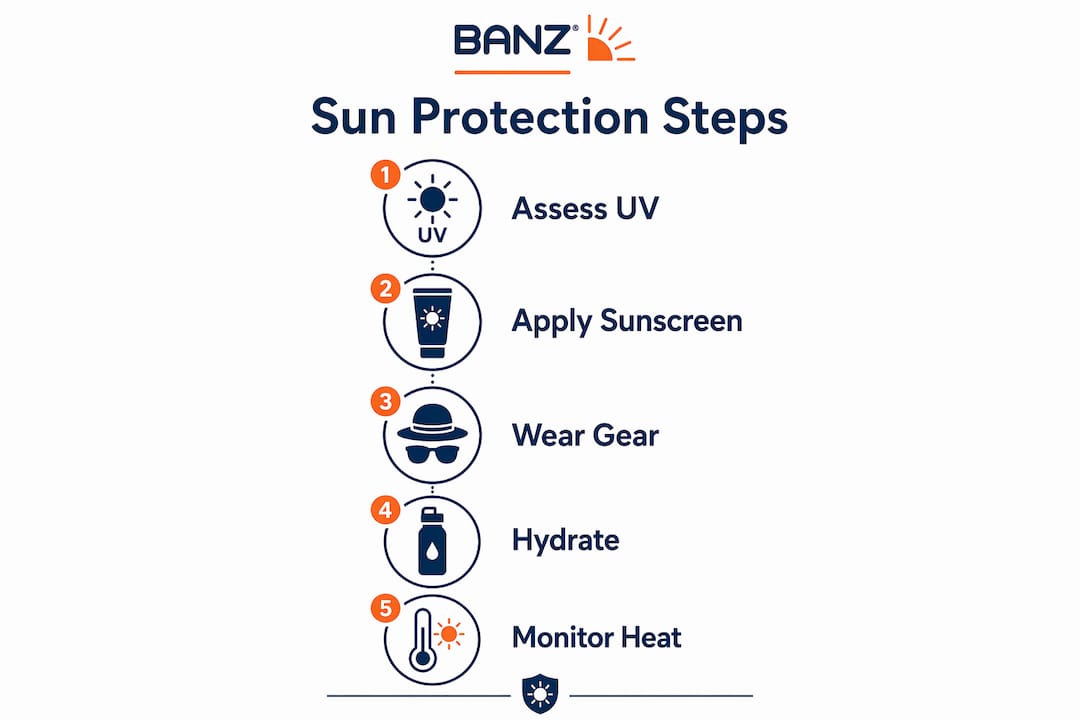
Sun safety training works when it covers UV risk thresholds, correct PPE use, and heat illness recognition in a single, structured program. Leaving any one of these out creates gaps that lead to non-compliance and preventable injury.
UV radiation risks and thresholds
Staff need to understand that UV Index 3+ triggers the need for full protective measures, regardless of how the sky looks. A clear explanation of the UV Index scale, from low (1-2) to extreme (11+), gives workers an objective reference point rather than relying on personal judgment about whether it “feels hot enough” to bother with sunscreen.
Sunscreen application and reapplication
Training must specify that SPF 30+ broad-spectrum sunscreen is applied before outdoor work begins and reapplied every two hours without exception. Workers frequently skip reapplication because they underestimate cumulative exposure during a full shift. Supervisors should build reapplication into scheduled break times to remove the decision from the individual entirely.
Heat illness recognition and hydration
Protocols must include training on recognizing heat exhaustion and heat stroke symptoms, including heavy sweating, confusion, and rapid pulse. Staff should hydrate every 20 minutes during outdoor work and take breaks every 60 to 90 minutes in shaded or air-conditioned areas. This is not a wellness suggestion. It is a compliance requirement that reduces both injury rates and lost productivity.
Protective clothing and eyewear
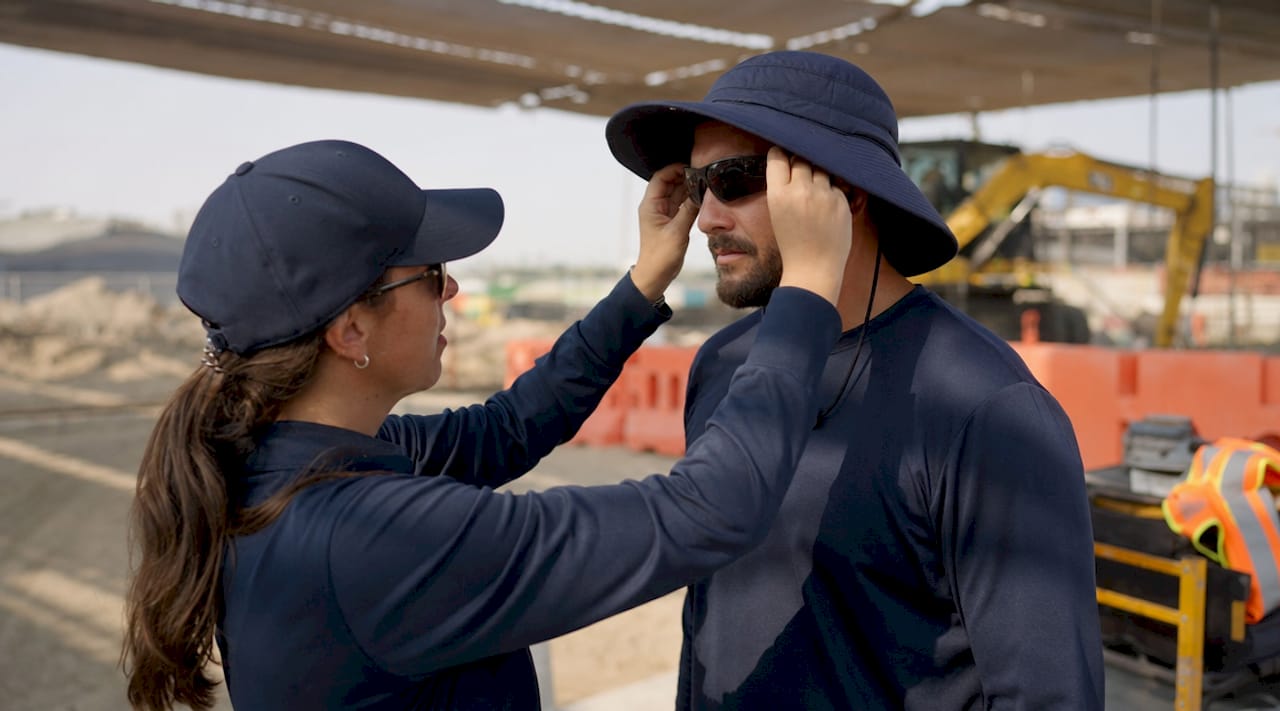
Long-sleeved shirts, broad-brim hats, and UV-protective eyewear are all part of a complete employee sun protection kit. Training should specify minimum standards, such as UPF 50+ rated garments, so workers understand that a thin cotton t-shirt does not meet the requirement. Protective eyewear is frequently overlooked in sun safety training programs; including it signals that the organization treats UV exposure as a whole-body hazard.
Reinforcement through toolbox talks and peer mentors
Supervisor-led toolbox talks and peer safety mentors are the most reliable mechanisms for sustaining compliance after initial training. A toolbox talk takes 10 to 15 minutes and can cover a single topic, such as hat fit, sunscreen coverage, or shade use. Peer mentors normalize sun-safe behavior by modeling it daily rather than waiting for a formal training session.
Pro Tip: Assign one peer safety mentor per team and rotate the role quarterly. Rotation prevents the role from becoming a burden and exposes more staff to the responsibility of modeling correct behavior.
How to structure and schedule sun safety training for consistent compliance
A seasonal training calendar removes ambiguity about when training happens and who is responsible. Without a fixed schedule, sun safety training defaults to “whenever there’s time,” which means it rarely happens before it matters.
The following calendar reflects a structured approach used in programs that have successfully trained large outdoor workforces:
- March: Hazard assessment. Conduct a site-by-site UV risk assessment. Identify high-exposure roles, peak outdoor hours, and existing PPE gaps before the season starts.
- April: Refresher training. Deliver formal sun safety training sessions. Cover UV thresholds, sunscreen protocols, clothing standards, and heat illness recognition. Document attendance for audit purposes.
- May: PPE distribution. Issue sunscreen dispensers, hats, and UV-protective eyewear to all outdoor staff. Confirm fit and comfort before peak UV months begin.
- June through August: Compliance monitoring. Run weekly observational audits to check correct PPE use during peak hours. Schedule mid-season retraining for any team showing compliance gaps.
A structured program like this supported training for 38,000 staff in South Australia by November 2025, demonstrating that scale is achievable when the calendar is fixed and accountability is clear.
Pro Tip: Document every training session, PPE distribution, and audit result. Regulators and insurers increasingly expect written records, not just verbal confirmation that training occurred.
The table below shows how to rotate monthly toolbox talk topics to prevent training fatigue while maintaining consistent coverage of staff sun safety guidelines:
| Month | Toolbox talk topic |
|---|---|
| June | Sunscreen application technique and coverage |
| July | Recognizing heat illness symptoms |
| August | Hydration schedules and break compliance |
| September | UV Index monitoring and weather misunderstandings |
Rotating toolbox talk topics prevents the repetition that causes staff to disengage. When workers hear the same content every month, they stop listening. Fresh angles on the same core message maintain attention and reinforce the full scope of sun exposure risks.
What tools and PPE should organizations provide to support training?
Training without the right equipment produces knowledge without behavior change. Staff who understand sun safety protocols but lack access to sunscreen dispensers, appropriate hats, or shaded rest areas will default to doing nothing.
The following PPE and resources are required for a complete sun protection program:
- SPF 30+ broad-spectrum sunscreen in wall-mounted or freestanding dispensers at site entry points, break areas, and near outdoor workstations. Professional-grade dispensers remove the “I forgot my sunscreen” excuse entirely.
- Long-sleeved, UPF-rated clothing as a minimum standard for outdoor roles. UPF 50+ garments block over 98% of UV radiation, compared to a standard white cotton t-shirt, which offers roughly UPF 5.
- Broad-brim hats that protect the face, neck, and ears. Baseball caps do not meet this standard. Training should specify the difference clearly.
- UV-protective eyewear rated to block UVA and UVB. Protective eyewear for outdoor workers reduces cumulative eye damage from daily UV exposure.
- Shade structures at outdoor worksites, including portable canopies or designated shaded rest areas within reasonable walking distance of work zones.
- Hydration stations with water available at all times, positioned to support the requirement to drink every 20 minutes.
Educational materials reinforce what training delivers. Laminated posters showing correct sunscreen application, UV Index charts, and heat illness symptom guides placed at break areas keep the information visible without requiring staff to remember everything from a single training session. Digital signage displaying the daily UV Index at site entry is a low-cost addition that makes the abstract concept of UV risk concrete and immediate.
What common challenges arise when training staff on sun protection?
The most common obstacle to effective sun exposure training programs is not lack of knowledge. It is resistance to changing daily habits, particularly around sunscreen use.
- Sunscreen resistance. Many workers view sunscreen as inconvenient, greasy, or unnecessary. Providing high-quality, non-greasy formulations in easy-access dispensers reduces friction. Linking sun safety to productivity outcomes, such as fewer sick days and better concentration in heat, shifts the conversation from compliance to self-interest.
- Overcast weather misunderstandings. Staff frequently assume that cloudy days eliminate UV risk. UV hazards persist under clouds, which is why the UV Index, not personal weather assessment, must be the trigger for activating protocols. Post the daily UV Index visibly so the decision is data-driven, not subjective.
- Training fatigue. A single annual training session does not sustain compliance through a five-month summer. Rotating content, using peer mentors, and running short toolbox talks monthly keeps sun safety present without becoming repetitive.
- Supervisor passivity. One-time training sessions fail when supervisors do not actively enforce protocols afterward. Supervisors must check PPE use, prompt reapplication during breaks, and address non-compliance immediately. Modeling sun-safe behavior at the leadership level is the single most effective cultural driver.
“Encouraging staff to model sun-safe habits daily creates a cultural shift that makes sun safety a routine, not an exception.” — Cancer Council SA
Pro Tip: Frame sun safety in your onboarding materials the same way you frame hard hat or high-visibility vest requirements. When it appears alongside non-negotiable PPE from day one, workers treat it as a standard expectation rather than an optional extra.
Key takeaways
Effective sun protection training requires a seasonal calendar, consistent supervisory enforcement, and accessible PPE at every outdoor worksite.
| Point | Details |
|---|---|
| UV Index 3+ is the trigger | Activate all protective measures at UV Index 3 regardless of weather appearance. |
| Reapplication is non-negotiable | SPF 30+ sunscreen must be reapplied every two hours, built into scheduled breaks. |
| Seasonal scheduling drives compliance | Run hazard assessments in March, refresher training in April, and PPE distribution in May. |
| Supervisors determine culture | Toolbox talks and peer mentors sustain compliance far beyond a single training session. |
| Documentation protects organizations | Record every training session, audit, and PPE distribution for regulatory and insurance purposes. |
Why sun safety culture starts with leadership, not laminated posters
I have reviewed sun safety programs across construction, agriculture, and events management, and the pattern is consistent. Organizations that distribute sunscreen dispensers and post UV charts but never see supervisors wearing hats have compliance rates that collapse by mid-July. The posters are there. The sunscreen is there. The behavior is not.
The programs that work treat sun exposure the way they treat fall protection or confined space entry. There is a documented risk assessment, a defined trigger (UV Index 3+), a required response, and a supervisor who checks it happened. When a site manager puts on a broad-brim hat before walking the floor, every worker on that site gets a clearer message than any toolbox talk delivers.
I also think organizations underestimate the value of integrating sun safety into broader wellness programs rather than running it as a standalone compliance exercise. When sun protection sits alongside hydration, mental health breaks, and ergonomic assessments, workers see it as part of how the organization treats them, not just a box the safety team needs to check. That shift in framing changes adoption rates more than any product upgrade or training format.
The Cancer Council SA’s SunSmart program makes this point directly: daily sun-safe habits become routine only when leadership models them consistently. If your supervisors are not wearing hats and reapplying sunscreen, your training program is incomplete regardless of how well the sessions are designed.
— Shari M. Murphy
Equip your team with gear that meets UPF 50+ standards
Training staff on sun protection protocols requires PPE that workers will actually wear. Gear that fits poorly, feels uncomfortable, or lacks proper UV ratings undermines every hour of training you deliver.
BANZ® Carewear produces sun hats and protective gear built to UPF 50+ standards, the same rating used in professional outdoor safety programs. The UPF 50+ sun hats include a built-in pocket for convenience and provide full coverage of the face, neck, and ears. For organizations outfitting teams across multiple roles and exposure levels, BANZ® also offers reversible UPF 50+ options that combine practicality with certified protection. Gear that meets the standard and gets worn consistently is the foundation of any sun protection program that holds up under audit.
FAQ
What UV Index level triggers sun protection protocols?
Sun protection protocols activate at UV Index 3 or above, regardless of cloud cover or temperature. Organizations should post the daily UV Index at site entry points so the trigger is objective and visible to all staff.
How often should sunscreen be reapplied during a work shift?
SPF 30+ broad-spectrum sunscreen must be reapplied every two hours. Building reapplication into scheduled break times removes the reliance on individual workers remembering to do it.
How do you prevent training fatigue in long sun safety programs?
Rotating toolbox talk topics monthly and using peer safety mentors prevents the repetition that causes staff to disengage. Fresh content angles on the same core message sustain attention across a full summer compliance period.
Is sun exposure a legal workplace safety requirement?
Yes. Sun exposure is a formal OHS requirement in sectors including construction and agriculture, requiring documented risk assessments and proactive controls, not just PPE distribution.
What PPE is required for a complete outdoor sun protection program?
A complete kit includes SPF 30+ sunscreen in accessible dispensers, UPF 50+ rated clothing, broad-brim hats covering the face and neck, UV-protective eyewear, and access to shaded rest areas within the worksite.