

Loud environments can push a sensory sensitive child past their limit fast. A birthday party, a sporting event, a grocery store with squeaky carts — any of these can trigger real distress. When you decide to introduce earmuffs to a sensory sensitive child, the process matters as much as the product. Done right, earmuffs give your child a tool they can rely on and actually want to use. This guide walks you through what to look for, how to prepare your child, and how to build consistent, comfortable use from the ground up.
Table of Contents
- Key Takeaways
- Understanding earmuffs for sensory sensitive children
- Preparing your child before the first wear
- Step-by-step method for introducing earmuffs
- Troubleshooting common challenges
- What consistent earmuff use actually does for your child
- My honest take on the introduction process
- BANZ® earmuffs built for sensory-sensitive kids
- FAQ
Key Takeaways
| Point | Details |
|---|---|
| Choose the right noise reduction rating | Look for earmuffs with 22–28 dB NRR, which blocks harmful noise while preserving environmental awareness. |
| Start in calm settings | Introduce earmuffs at home during quiet activities before using them in loud environments. |
| Let your child lead | Giving children control over when to wear earmuffs builds trust and improves long-term use. |
| Comfort drives compliance | Soft cushions, adjustable bands, and lightweight designs increase how often kids actually wear them. |
| Patience is the method | Gradual exposure over days or weeks produces better results than pushing for immediate acceptance. |
Understanding earmuffs for sensory sensitive children
Not all hearing protection works the same way, and the differences matter when you are choosing for a child with auditory sensitivity.
Passive earmuffs vs. noise-canceling options
Passive earmuffs use physical insulation, typically foam or cushioned cups, to block sound mechanically. They require no batteries, produce no electronic sound, and are generally more comfortable for children who are sensitive to any additional stimulation. Noise-canceling headphones work differently: they generate sound waves that counteract incoming noise electronically. Some children with autism prefer passive earmuffs because there is no hum or electronic sensation involved. Earplugs are a third option, but they pose choking risks for young children and rarely fit safely, making earmuffs the safer choice for babies and toddlers.
What noise reduction ratings mean for kids
The noise reduction rating, or NRR, tells you how many decibels of sound the earmuffs reduce. Child-specific earmuffs typically range from 22 dB to 28 dB. That range is intentional. You want to reduce harmful or overwhelming noise without cutting out all sound entirely. A child who cannot hear a parent’s voice or a safety warning becomes anxious in a different way. The 22–28 dB window handles concerts, sporting events, and busy public spaces without creating total silence.
Features to prioritize
When evaluating the best earmuffs for sensory kids, these features make the biggest practical difference:
- Soft, skin-friendly cushions that do not press uncomfortably against the ears
- Adjustable headbands that fit small heads without pinching
- Lightweight construction so the child does not feel weighed down
- Easy-clean materials for parents dealing with daily use
- Fun colors or prints that make the earmuffs feel like a personal item, not medical equipment
Comfort-focused design features like premium cushioning and adjustable sizing directly increase how often sensory-sensitive children will actually wear their earmuffs. That is the metric that matters most.
| Feature | Why it matters for sensory kids |
|---|---|
| NRR 22–28 dB | Reduces harmful noise without total sound isolation |
| Soft ear cushions | Prevents tactile discomfort during wear |
| Adjustable headband | Fits children from infancy through early teens |
| Lightweight frame | Reduces fatigue during extended wear |
| Fun designs | Increases child’s willingness to use them |
Preparing your child before the first wear
Jumping straight to a noisy event with brand-new earmuffs rarely works. Preparation is the step most parents skip, and it is the one that determines whether earmuffs become a reliable tool or end up forgotten in a drawer.
Recognizing your child’s triggers
Before choosing earmuffs, observe which sounds cause the most distress. Sudden loud sounds like sirens or balloons popping affect children differently than sustained noise like crowds or music. Knowing your child’s specific triggers helps you select the right NRR level and plan where to use earmuffs first. Research confirms that sensory earmuffs reduce physiological stress responses in children with hyper-reactivity to noise, so matching the tool to the trigger matters.
Choosing by age
BANZ® Baby Earmuffs are designed for ages 0–2 years, and BANZ® Kids Earmuffs for ages 2 and up. The structural difference is the band design. Baby earmuffs often use a softer, more flexible band that sits gently over a small head. Kids’ versions have a sturdier, adjustable band for a growing child. Getting the right size from the start prevents the fit issues that lead to rejection.
Talking about earmuffs with your child
Use simple, direct language. Tell your child that the earmuffs make loud sounds quieter so their ears feel more comfortable. Avoid framing it as something they must wear. Instead, present it as something they get to use when sounds feel too big. Let them hold the earmuffs, look at them, and ask questions. Letting children decide when to use earmuffs builds trust and supports self-regulation skills over time.
Pro Tip: Show your child a video of other kids wearing earmuffs at events they enjoy, like concerts or sports games. Seeing peers use them normalizes the experience before your child ever tries them on.
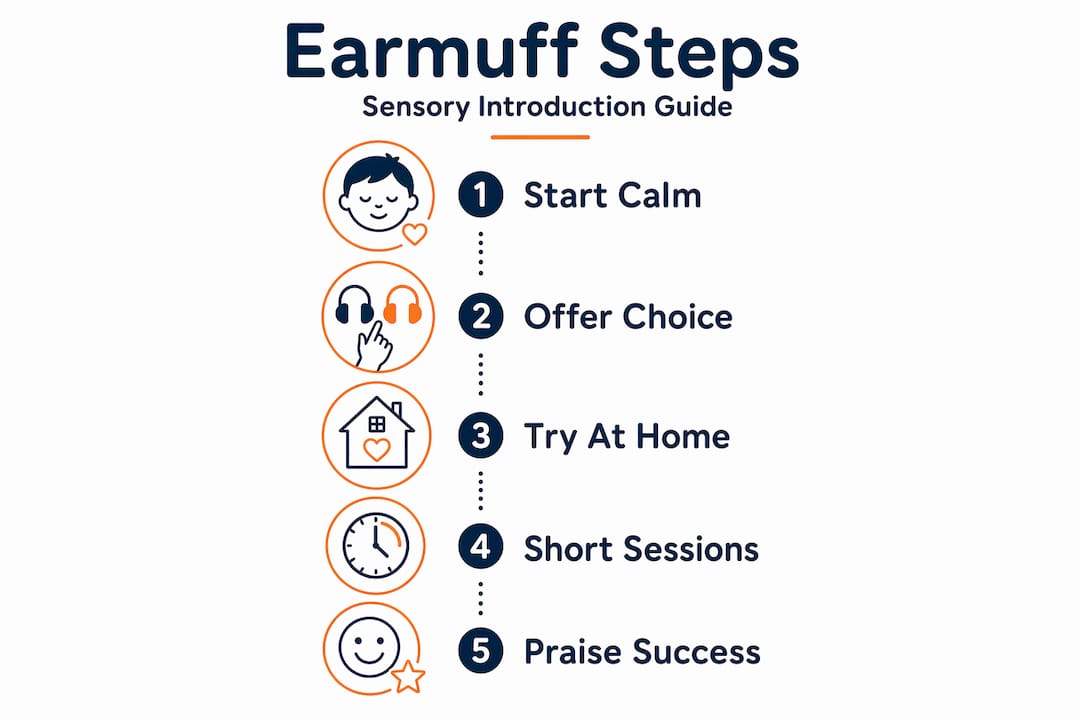
Step-by-step method for introducing earmuffs
This process works because it respects your child’s pace. Rushing any step tends to create resistance that takes much longer to undo.
-
Introduce the earmuffs as an object first. Place them on the table during a calm activity. Let your child pick them up, turn them over, and put them down. No pressure to wear them yet.
-
Model wearing them yourself. Put the earmuffs on your own head for 30 seconds. Smile. Say something like, “These make things quieter. Want to try?” This removes the unknown factor.
-
Try a short wear at home. If your child is willing, have them put on the earmuffs for one to two minutes during a quiet activity like drawing or watching a show. Keep it brief and positive.
-
Gradually increase wear time. Over several sessions, extend the time from two minutes to five, then ten. Do this at home before attempting any loud environment.
-
Introduce mild noise while wearing them. Turn on music at normal volume while your child wears the earmuffs. This shows them the earmuffs are working without overwhelming them.
-
Use them in a real but manageable situation. A moderately busy park or a restaurant is a good first real-world test. Avoid starting with the loudest event you can think of.
-
Reinforce with specific praise. Instead of “Good job,” say “You wore your earmuffs for the whole game. That was your choice and it worked.” Specific praise ties the positive feeling to the child’s own decision.
Gradual introduction starting in calm settings and increasing exposure over time is the method backed by research for reducing anxiety and building acceptance. It is not the fastest approach, but it is the one that sticks.
Pro Tip: Keep a small bag or case with the earmuffs visible in your regular gear. When children see earmuffs as a normal part of going out, they are more likely to ask for them voluntarily.
Troubleshooting common challenges
Even with the best preparation, you will hit obstacles. Here is how to handle the most common ones without losing the progress you have made.
-
Your child refuses to wear them at all. Go back to step one. Let the earmuffs sit in their space without any expectation. Sometimes a child needs two weeks of just seeing them before they are ready to try.
-
The fit feels wrong. Check the headband adjustment. Earmuffs that are too tight cause pressure discomfort; too loose and they fall off. Most kids’ earmuffs have a sliding adjustment. Make small changes and ask your child to describe what they feel.
-
Your child wears them briefly then pulls them off. That is progress, not failure. Note how long they lasted and aim for slightly longer next time. Do not make the removal a negative event.
-
Earmuffs work at home but get rejected in public. The environment itself may be the issue. Try a less overwhelming public space first and build up. Pair the outing with something the child enjoys.
-
Nothing seems to work. If your child’s auditory sensitivity is significantly affecting daily life, consult an occupational therapist who specializes in sensory processing. Earmuffs are one childhood sensory processing solution among several, and a professional can help build a broader plan.
“Building trust and letting children decide when to use earmuffs empowers self-regulation.” Sensory Ear Muffs vs Earplugs: A Parent’s Guide
What consistent earmuff use actually does for your child
The results of consistent, well-introduced earmuff use go beyond just quieter outings. Parents who stick with the gradual process typically report changes across multiple areas of their child’s daily life.
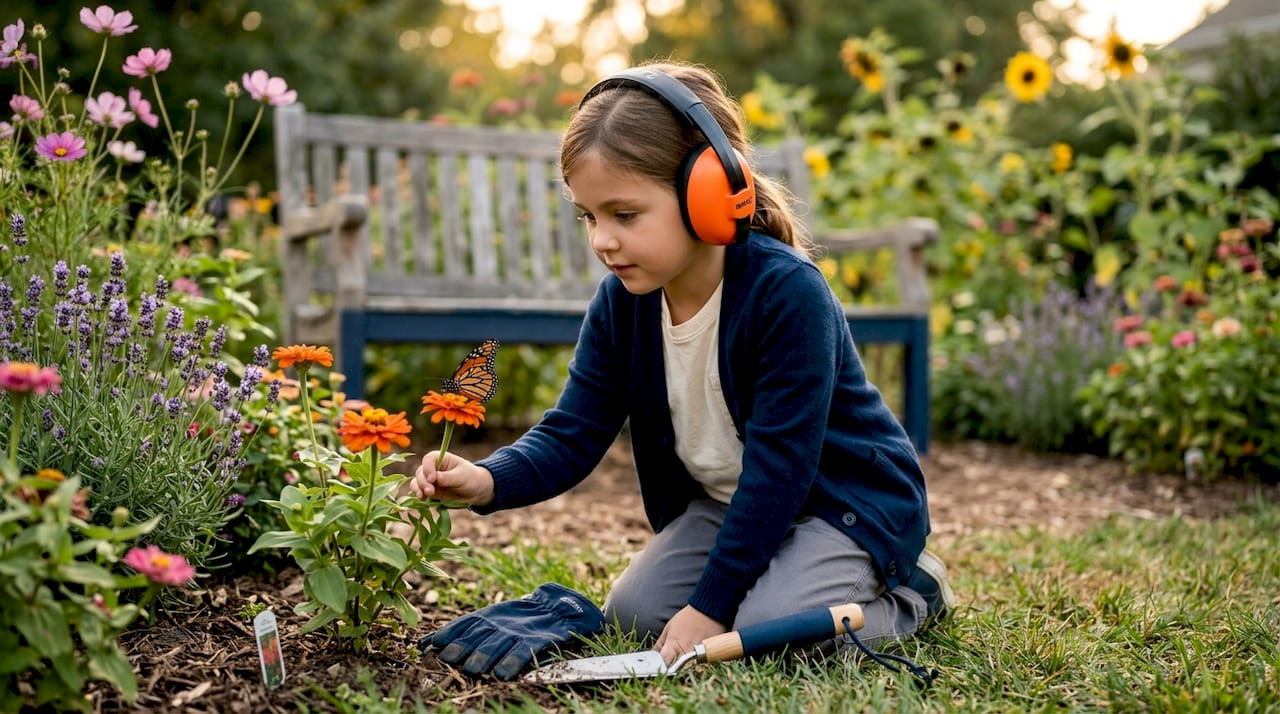
Reduced auditory stress means fewer meltdowns at events your family actually wants to attend. When a child knows they have a tool that works, they approach loud environments with less anticipatory anxiety. That shift in attitude often shows up before the earmuffs even go on.
Children also show improved focus and participation. A child who is not spending energy managing sensory overload has more capacity to engage with what is happening around them. A birthday party becomes something to enjoy rather than survive. Sensory earmuffs reduce physiological stress in children with auditory hyper-reactivity, which means the body is genuinely calmer, not just quieter.
Perhaps the most underrated benefit is self-awareness. When a child learns to recognize that a situation feels loud and reaches for their earmuffs, they are practicing self-regulation. That skill transfers to other sensory challenges over time. The earmuffs are a starting point, not a permanent fix, and that is exactly what makes them worth introducing well.
Fun designs and colors also play a real role in acceptance. Children who feel ownership over their earmuffs, because they picked the color or the pattern, are more likely to use them consistently and even ask for them proactively.
My honest take on the introduction process
I have seen parents try to shortcut the gradual introduction, and I understand why. When your child is clearly struggling with noise, you want a solution that works now. What I have learned is that the shortcut almost always costs more time in the long run.
The children who end up using earmuffs reliably are the ones whose parents treated the process like a collaboration, not a correction. They let the child touch the earmuffs before wearing them. They wore the earmuffs themselves first. They celebrated two minutes of wear like it was a full concert.
What surprised me most is how quickly children develop genuine ownership over their earmuffs once the introduction is done right. A child who initially refused to touch them will start asking, “Where are my earmuffs?” before leaving the house. That shift from resistance to self-advocacy is what the whole process is building toward.
My advice: resist the urge to push. The child’s comfort with the process is the product. Everything else follows from that.
— Shari
BANZ® earmuffs built for sensory-sensitive kids

Banzworld carries the BANZ® Carewear line, which was designed specifically with comfort and sensory needs in mind. The baby earmuffs feature soft, adjustable bands and cushioned cups that sit gently on small heads without pressure. For older children, the printed kids’ earmuffs come in designs that kids actually want to wear, which makes a real difference in daily compliance. All BANZ® earmuffs carry an independently tested NRR 26 dB rating, covering concerts, sporting events, and busy public spaces. Materials are easy to clean, durable, and sized for growing children. If you are ready to find the right fit for your child, browse the full selection at Banzworld and use the mix and match kids set to let your child choose their own style.
FAQ
What age can a child start wearing earmuffs?
Earmuffs designed for babies are safe from birth. BANZ® Baby Earmuffs are designed for ages 0–2 years, and BANZ® Kids Earmuffs for ages 2 and up.
How do I know if my child needs earmuffs for auditory sensitivity?
Signs include covering ears in loud places, crying or melting down at events with crowd noise, or showing visible distress at sounds others find tolerable. An occupational therapist can confirm sensory processing concerns.
What NRR should I look for in earmuffs for sensory kids?
A noise reduction rating between 22 dB and 28 dB is the standard range for child-specific earmuffs, blocking harmful noise levels while still allowing your child to hear voices and environmental cues.
How long does it take for a sensory sensitive child to accept earmuffs?
Most children adapt within one to three weeks when the introduction is gradual, starting with short calm sessions at home and building up to real-world use with positive reinforcement.
Can earmuffs replace other sensory coping strategies?
No. Earmuffs are one tool within a broader set of childhood sensory processing solutions. They work best when combined with other strategies, such as sensory breaks, predictable routines, and professional support when needed.
Recommended
- Mix and Match Kids Hearing Protection Earmuffs and Case – BANZ® Carewear USA
- Mix and Match Baby Hearing Protection Earmuffs and Case – BANZ® Carewear USA
- Baby Hearing Protection Earmuffs (Solids) – BANZ® Carewear USA
- Kids Hearing Protection Earmuffs - Prints – BANZ® Carewear USA
Article generated by BabyLoveGrowth