

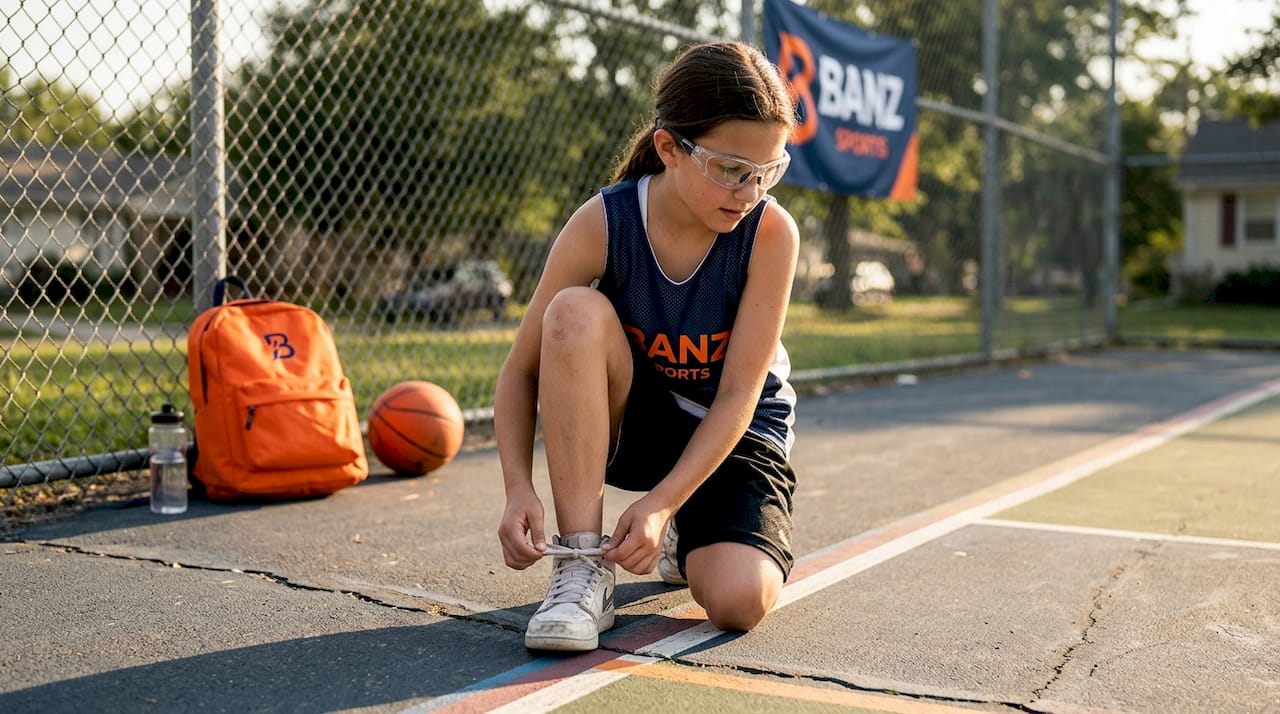
Nearly every eye injury that happens to a young athlete is preventable. Understanding how protective eyewear benefits students outdoors starts with one number: 97% of eye injuries in youth sports occur in students who were not wearing any eye protection. That means most injuries are not bad luck. They are a gap in safety gear. This guide breaks down the real risks, the right types of protection, and practical ways to make protective eyewear part of your child’s outdoor routine, whether for school sports days, recess, or weekend activities.
Table of Contents
- Key takeaways
- How protective eyewear benefits students outdoors: the real risks first
- Types of protective eyewear for active students
- Standards and selection guidelines for parents
- Practical steps to keep kids wearing their eyewear
- Outdoor time, eye health, and the role of good protection
- My take on protective eyewear and consistent use
- Protective eyewear and sun safety gear at Banzworld
- FAQ
Key takeaways
| Point | Details |
|---|---|
| Eye injuries are largely preventable | The vast majority of youth sports eye injuries happen without protective eyewear in place. |
| UV and impact protection are different | Sunglasses may block UV rays but lack the impact resistance needed for sports and active play. |
| Standards exist to guide your choice | ANSI/ISEA Z87.1-2025 sets clear criteria for impact testing, lens quality, and hazard-specific selection. |
| Fit and comfort drive consistent wear | Kids who find eyewear uncomfortable will remove it. Secure, flexible frames are non-negotiable for real protection. |
| Outdoor time supports eye health | Increased outdoor exposure reduces myopia risk, and proper eyewear makes that time safer and more comfortable. |
How protective eyewear benefits students outdoors: the real risks first
Before choosing the right eyewear, you need to know what you are protecting against. Students face a wider variety of eye hazards outdoors than most parents realize.
Impact hazards are the most acute. During school sports events, recess, and physical education classes, students are regularly in range of fast-moving balls, swinging bats or sticks, and accidental elbow or finger contact. Basketball, baseball, and racquet sports are among the highest-risk activities. The eye socket offers some natural protection, but a direct hit from a ball or a stray finger moves faster than any reflex.
Environmental hazards are less dramatic but constant. Wind throws dust and fine debris directly at the eyes. Playing fields near construction zones, sandy areas, or dry grass amplify this risk. UV radiation from the sun is also cumulative. The damage from years of unprotected outdoor exposure builds up silently, long before any symptoms appear.
Here is a quick overview of the outdoor hazards students face most often:
- Flying objects: balls, pucks, stones, and sticks during organized sports and free play
- Accidental contact: fingers, elbows, and other body parts during group games
- Airborne particles: dust, sand, grass clippings, and pollen carried by wind
- UV radiation: direct sun exposure and reflected UV from water, pavement, and sand
- Glare: bright reflected light that reduces visibility and increases squinting and eye strain
Protective eyewear use sits around 5% in sports settings despite its proven effectiveness. That gap between risk and protection is where most preventable injuries happen, particularly in children aged 10 to 19.
Types of protective eyewear for active students
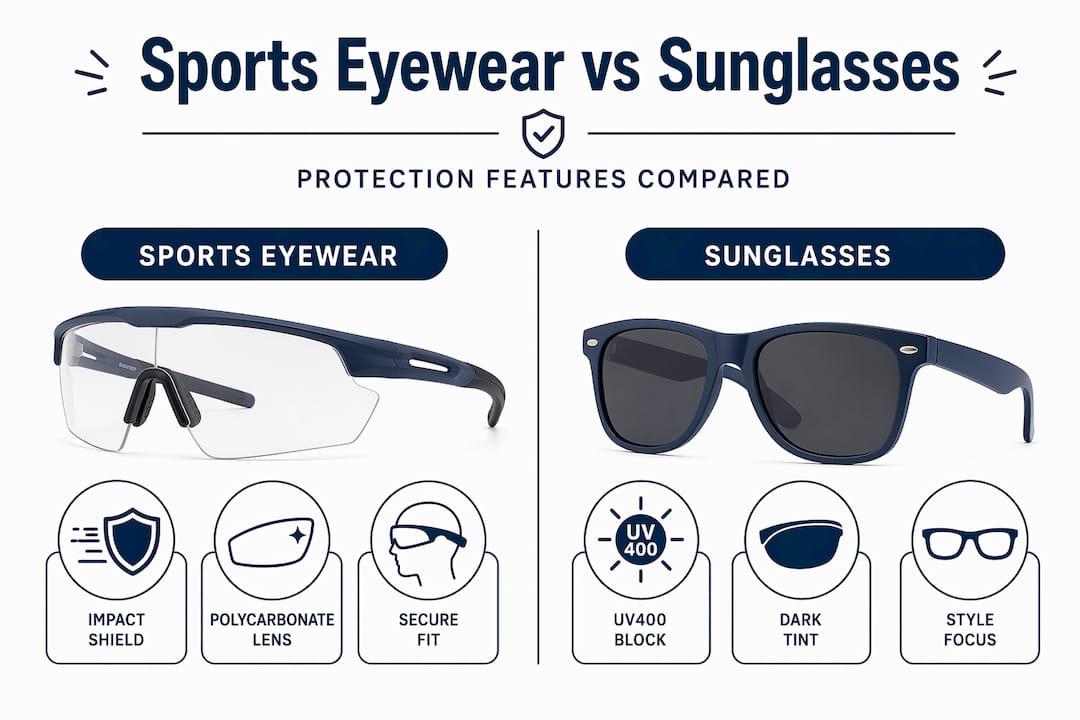
Not all eyewear is equal. The two main categories serve different purposes, and understanding the difference helps you choose the right product for each activity.
Impact-resistant sports goggles and glasses
Sports goggles and impact-rated glasses are built to absorb and deflect physical force. They use polycarbonate or Trivex lenses, which are significantly stronger than standard plastic or glass. Frames are typically wraparound, covering more of the eye area and reducing the chance that a hit from the side causes injury. These are the right choice for any activity involving a ball, stick, or physical contact.
UV-protective sunglasses
Sunglasses designed for sun protection focus on blocking harmful light. The benchmark here is UV400 protection, which means the lens blocks 100% of UVA and UVB rays. Polarized lenses go a step further by cutting reflected glare from water, pavement, and grass, which improves visual clarity during outdoor activities. For children spending long hours at outdoor school events, UV-rated sunglasses reduce both immediate discomfort and long-term sun damage.
Here is a comparison of the two main types so you can match the product to the activity:
| Feature | Impact-resistant sports eyewear | UV-protective sunglasses |
|---|---|---|
| Primary protection | Physical impact and debris | UV radiation and glare |
| Lens material | Polycarbonate or Trivex | Polycarbonate or plastic |
| UV protection | Optional, may not include UV400 | UV400 standard in quality products |
| Best use | Sports, PE class, active play | School outdoor events, field trips, recess |
| Certification needed | ANSI Z87.1 impact-rated | UV400 label, not impact-certified |
Pro Tip: Look for eyewear that combines both UV400 protection and impact resistance. These products exist and give your child coverage against both daily sun exposure and the occasional rogue ball.
Design features that keep eyewear on
Secure, non-slip frames significantly increase the chance that children actually keep their eyewear on during play. Look for adjustable straps, rubberized nose bridges, and flexible temples that bend without breaking. The flexible frames option from Banzworld is a good example of eyewear built with active kids in mind, where durability and comfort work together to support real-world use.
Standards and selection guidelines for parents
The ANSI/ISEA Z87.1-2025 standard is the most relevant benchmark for protective eyewear in the United States. Updated in 2025, it covers impact testing, lens quality, optical clarity, and hazard-specific marking. Products certified to this standard carry a “Z87” or “Z87+” marking on the frame or lens.
Here is what to look for when reading product labels:
- Z87 marking: basic impact protection, suitable for lower-risk activities
- Z87+ marking: high-impact protection, suitable for sports and high-velocity environments
- UV400 label: blocks 100% of UV rays up to 400 nanometers, the essential criterion for sun protection
- Polarized label: reduces glare from reflective surfaces, adds comfort but does not add UV or impact protection on its own
One point that trips up many parents: a dark tint does not mean UV protection. Dark lenses without UV400 certification can actually increase eye damage by causing the pupil to dilate more while providing no UV barrier. Always verify the UV400 rating rather than relying on tint color.
UV and impact protection are separate properties. A pair of UV400 sunglasses will not protect your child from a ball to the face. Equally, impact-rated sports goggles may not include UV blocking. The right choice depends on the specific activity and its associated risks.
Hazard-based selection, as emphasized in ANSI/ISEA Z87.1-2025, means matching the eyewear to the actual risks of each outdoor activity rather than defaulting to whatever is available.
Practical steps to keep kids wearing their eyewear
Getting the right eyewear is step one. Getting your child to actually wear it consistently is the bigger challenge. These steps address the most common barriers parents face.
- Start with a proper fit. Eyewear that slides down a child’s nose or pinches behind the ears will be removed within minutes. Schedule a fitting where your child can try options and confirm comfort before you buy.
- Involve your child in the choice. Kids who pick their own eyewear color or style are more likely to wear it. Within safety parameters, let them have a preference.
- Set the habit early. Treat eyewear the same way you treat sunscreen or a helmet. It goes on before outdoor activity, every time, without negotiation.
- Explain the reason simply. Children aged 8 and up understand cause and effect. A brief explanation of why their eyes need protection is more effective than a rule without context.
- Model the behavior yourself. Wearing sunglasses or protective eyewear when you are outdoors sends a clear signal that this is a normal safety practice, not a punishment.
Pro Tip: Pair eyewear with other outdoor safety gear so it becomes part of a routine rather than a standalone item. Putting on a hat and sunglasses together takes five seconds and covers two major UV exposure risks simultaneously. Check out kids’ wrap around sunglasses for styles that combine impact resistance with UV coverage.
Comfort and fit are the primary factors in whether children maintain consistent use. If the eyewear is uncomfortable, no amount of encouragement will make it a habit.
Outdoor time, eye health, and the role of good protection
There is a strong evidence base showing that outdoor activity is beneficial for children’s vision development. A 2026 BMC Public Health study found that children with increased outdoor exposure had a myopia incidence of 29.4% compared to 56.6% in the control group with less outdoor time. More time outside, with proper sun protection in place, supports healthier eye development overall.
| Outcome | Increased outdoor exposure group | Control group |
|---|---|---|
| Myopia incidence | 29.4% | 56.6% |
| Axial elongation | Slowed progression | Faster progression |
| UV risk management | Protective eyewear recommended | Variable, no standard protocol |
Outdoor safety guidance from health authorities consistently supports outdoor play as beneficial while recommending practical protective measures. The goal is not to reduce outdoor time. It is to make that time as safe as possible so children can spend more of it outside.
Schools and parents working together on outdoor eye safety create a consistent message for children. When teachers reinforce the habit during PE class and parents enforce it at home, protective eyewear becomes a normalized part of how kids get ready to go outside.
My take on protective eyewear and consistent use
I’ve worked with enough parents on outdoor safety topics to know the most common mistake: buying good protective eyewear and then treating it as optional. The pair sits in a backpack while the child plays without it. That pattern eliminates every benefit the product offers.
In my experience, the families who get the best outcomes are the ones who treat protective eyewear the same way they treat a bike helmet. Not a suggestion. Not a nice-to-have. A required piece of equipment for the activity. The shift in framing makes all the difference.
What I’ve also seen is that parents often underestimate the UV risk compared to the impact risk. The immediate drama of an eye injury is visible. The cumulative UV damage from years of unprotected outdoor time is invisible until it becomes a problem in adulthood. Both deserve attention. Eyewear that addresses both at once is the most practical solution for most school activities.
The routine use of protective eyewear is what actually prevents injuries. A product worn occasionally offers occasional protection. The goal is daily habit, not perfect gear sitting unused.
— Shari
Protective eyewear and sun safety gear at Banzworld
Banzworld carries protective eyewear and sun safety products designed specifically for active children. The retro-shape wrap around sunglasses offer UV400 protection with a wraparound design that stays on during play. For complete sun coverage at outdoor school events, pair eyewear with the reversible UPF 50+ sun hats that block harmful UV rays from above. For broader outdoor sun safety ideas and what to combine with protective eyewear, the Arizona summer safety guide offers practical gear guidance. Browse the full range at Banzworld to find the right combination of protection for your child’s specific outdoor activities.
FAQ
What percentage of youth eye injuries are preventable?
97% of eye injuries in youth sports occur in individuals not wearing protective eyewear, meaning the vast majority are preventable with the right gear.
Do regular sunglasses count as protective eyewear for sports?
No. UV-rated sunglasses block sun damage but are not impact-rated. UV and impact protection are distinct properties, and sports activities require ANSI Z87.1-certified impact-resistant lenses.
What does UV400 mean on children’s eyewear?
UV400 means the lenses block 100% of ultraviolet rays up to 400 nanometers, covering both UVA and UVB exposure. It is the standard rating to look for in any sun protection eyewear for children.
How do I get my child to keep their eyewear on?
Choose eyewear with flexible frames, a secure fit, and a style your child likes. Comfort is the primary driver of consistent wear. Frame the eyewear as required equipment, not optional gear.
Can outdoor time actually improve my child’s vision?
Yes. Research shows children with increased outdoor exposure had significantly lower myopia rates, with 29.4% incidence versus 56.6% in those spending less time outside. Protective eyewear makes that outdoor time safer without reducing it.