

TL;DR:
- Wearing hearing protection is vital for families to preserve long-term hearing health during loud outdoor activities. Consistent use reduces the risk of permanent damage and helps parents stay calm and present, improving overall family experience. Practical strategies include familiarizing children with gear at home and using visual signals to communicate without removing protection.
Hearing protection is the single most effective tool families have for preserving hearing health and improving emotional engagement during loud outdoor activities. Understanding why hearing protection elevates family experience goes beyond preventing damage. It shapes how parents communicate, how children participate, and how everyone feels after a noisy event. BANZ has worked with over 2 million families across six continents to make this protection practical, comfortable, and consistent. The science is clear, and the benefits reach further than most parents expect.
Why hearing protection elevates family experience over time
Noise-induced hearing loss is permanent and cumulative. Every loud event without protection adds to a total that cannot be reversed. Research shows that consistent use over 3 years produces significant protective effects, and each additional year of continuous use delivers a 0.3 dB reduction in hearing threshold increases. That number compounds. A child who starts wearing ear protection at age four and continues through adolescence builds a meaningful buffer against long-term hearing damage.
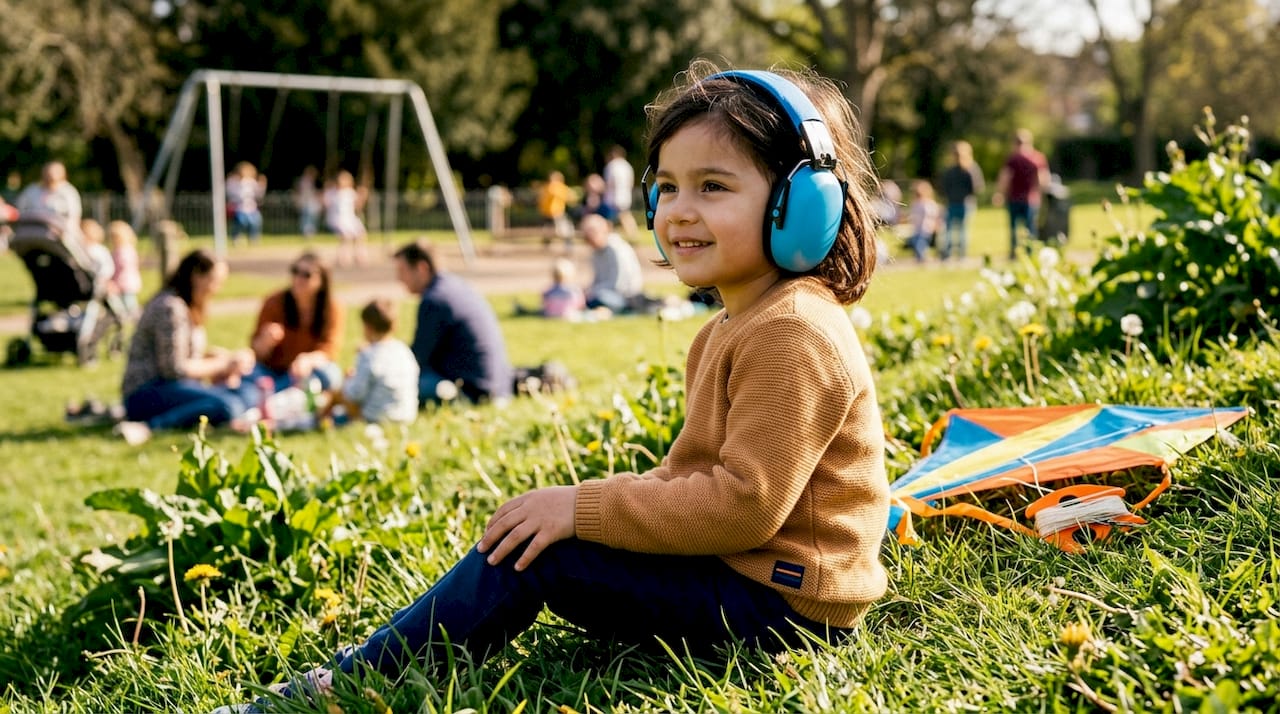
Children face greater risk than adults in the same environment. Their smaller ear canals amplify incoming sound, which means the same concert or air show hits harder for a six-year-old than for a parent standing next to them. Experts recommend ear muffs rated NRR 20–26 dB for children, a range that blocks harmful peaks while still allowing kids to hear voices and ambient sounds at safe levels. That balance matters. Over-protection that cuts off all sound creates its own problems, including disorientation and refusal to wear the gear.
Adults benefit from the same long-term logic. Parents who wear protection consistently at loud events preserve their own hearing thresholds, which directly affects their ability to communicate clearly with their children as they age. Hearing health in children and adults within the same family is interconnected. When one person loses hearing acuity, the whole family adjusts its communication patterns.
Pro Tip: Start tracking your family’s noise exposure with the free BANZ Protect app, which monitors real-time noise levels so you know exactly when protection becomes necessary.
| Scenario | Recommended action |
|---|---|
| Concerts and live music | NRR 25+ dB for children; NRR 20+ for adults |
| Air shows and motorsports | NRR 26 dB for children; paired foam plugs for adults |
| Fireworks displays | Full ear muff coverage for all ages, including infants |
| Sporting events with crowd noise | NRR 20 dB minimum for children under 10 |
How do families communicate while wearing hearing protection?
The biggest complaint parents raise about hearing protection is that it makes talking harder. That concern is valid. 55% of hearing protector users remove their devices to communicate in noisy environments. The problem is that removing protection, even briefly, defeats its purpose during peak noise moments. The same research found that 98% of users agreed that devices allowing communication without removal would improve both safety and compliance. That gap between intent and behavior is where most families lose their protection benefit.
Hearing loss itself compounds the problem. When someone already has reduced hearing, noise makes communication harder, which creates a cycle of loosening or removing protection to hear better, which then increases exposure. Families need strategies that keep protection in place while maintaining connection.
Practical steps that work:
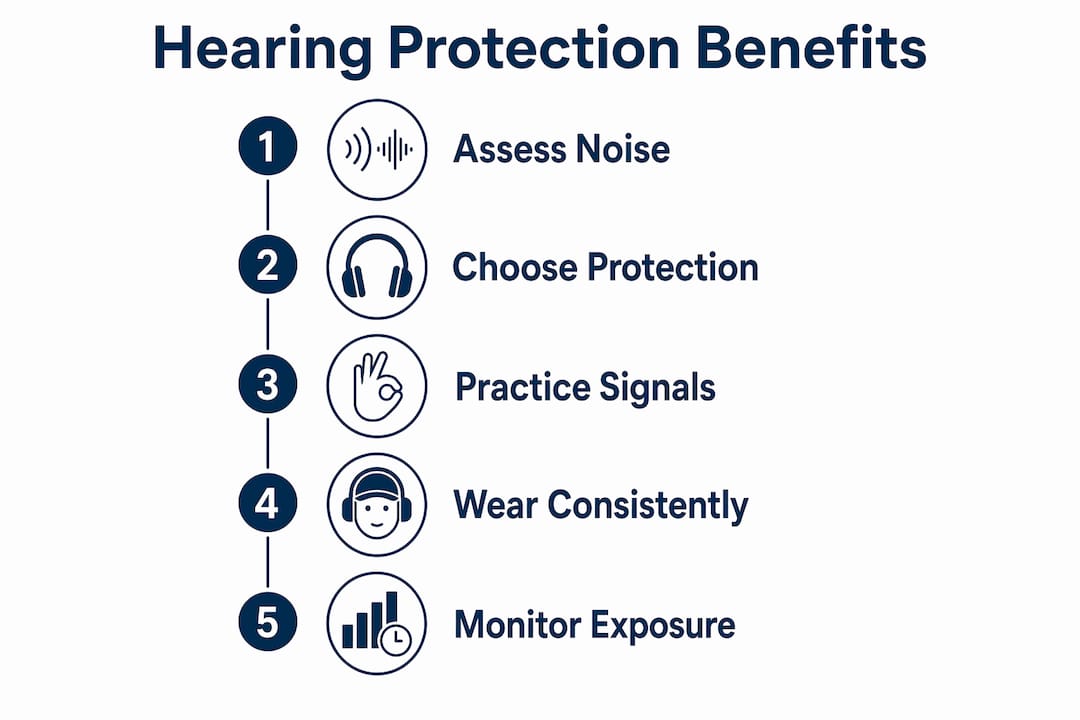
- Use visual signals and hand gestures for common requests like “bathroom break,” “water,” or “let’s move.”
- Position family members side by side rather than face to face, which reduces the need to shout across noise.
- Choose ear muffs with a lower NRR for adults (NRR 20–22 dB) at events where speech intelligibility matters more than maximum attenuation.
- Designate a quiet zone at the venue, such as a lobby or restroom corridor, for any conversation that requires full attention.
- Brief children before the event on what signals mean so they respond without needing verbal instruction.
Pro Tip: Before any loud family outing, run a five-minute “signal practice” at home. Assign three hand signals for the most common needs. Kids respond faster when the system is already familiar.
The goal is not silence. The goal is controlled noise reduction that keeps everyone protected without cutting off the social thread that makes family outings worth having.
Practical steps for using hearing protection at family outings
Selecting the right gear is the first decision, but getting children to wear it consistently is the real challenge. Introducing ear muffs at home during calm activities, like reading or watching a movie, helps children become comfortable with the sensation before they face the added stimulation of a loud event. Familiarity reduces resistance. A child who has worn ear muffs for 20 minutes at home is far more likely to keep them on at a fireworks show.
- Choose the right NRR. Children need NRR 20–26 dB ear muffs. Adults at most family events do well with NRR 20–25 dB. Check the label before purchasing.
- Fit before the event. Adjust the headband at home. A loose fit reduces protection by several dB. A tight fit causes discomfort and removal.
- Add retention cords. For active children, retention cords attach the ear muffs to clothing or a stroller, preventing loss during movement. Families with children who are deaf or hard of hearing should also pair protection with high-visibility clothing so caregivers can track them in crowds.
- Use high-visibility gear. Bright colors on ear muffs and clothing help parents spot children quickly in dense crowds, reducing anxiety and improving safety.
- Plan for unexpected noise. Carry ear muffs in a bag even when the event seems moderate. Unexpected PA announcements, vehicle backfires, or crowd surges can spike noise levels without warning.
For families with children who have sensory sensitivities, the right sensory ear muffs reduce auditory overload without creating pressure discomfort. BANZ designs products specifically for this need, with softer cushions and lighter headband tension suited to children who are sensitive to touch.
You can also check retention cords and accessories designed to keep hearing protection secure during water play and high-activity outdoor events.
How hearing protection helps parents stay calm and present
Hearing protection for parents is an emotional regulation tool. A child’s intense crying reaches frequencies that trigger a stress response in the adult nervous system. Earplugs reduce the intensity of that sensory input, which gives parents the mental space to respond rather than react. The difference between those two states is the difference between a calm redirect and a raised voice.
This matters most at events where noise is sustained and unavoidable. Amusement parks, sports stadiums, and outdoor concerts create hours of continuous sound pressure. Without protection, parents absorb that load and often reach a point of frustration that spills into their interactions with their children. With protection, the sensory load stays manageable.
“Using hearing protection shifts parenting from suffering through intense noise to responding with clarity. That shift improves every interaction at a loud event, from the first ride to the drive home.”
The benefits extend beyond the event itself. Parents who manage sensory overload better during outings report fewer post-event conflicts and more positive memories of the experience. Noise reduction for family events is not just a physical safety measure. It is a direct input into the emotional quality of the day.
Key takeaways
Hearing protection preserves long-term hearing health and improves emotional engagement, making it the most practical investment families can make for loud outdoor activities.
| Point | Details |
|---|---|
| Long-term use compounds benefits | Each year of consistent use reduces hearing threshold increases by 0.3 dB, with significant protection after 3 years. |
| Children need NRR 20–26 dB | Smaller ear canals amplify sound, making children more vulnerable and requiring properly rated protection. |
| Communication barriers are solvable | Visual signals and side-by-side positioning keep families connected without removing protection. |
| Introduce gear at home first | Calm familiarization sessions before loud events improve acceptance and consistent wear. |
| Parents benefit emotionally | Earplugs reduce sensory overload, supporting calmer and more patient responses during stressful moments. |
Hearing protection changed how I think about family outings
I used to treat ear protection as something for construction workers or musicians. It took one particularly loud Fourth of July, watching my kids flinch at every burst while I stood there absorbing the same sound with no buffer, to change that view entirely.
What surprised me most was not the physical relief. It was the emotional shift. With ear muffs on, I stopped bracing for the next loud moment. I started actually watching my kids enjoy the show instead of managing my own stress response. That is the part most articles skip. They focus on decibels and NRR ratings, which matter, but they miss the social dimension. When you are not overwhelmed, you are present. When you are present, the outing becomes a memory worth keeping.
The families I have seen get the most out of loud events are not the ones with the most expensive gear. They are the ones who normalized protection early, made it part of the routine, and treated it the same way they treat sunscreen. Not optional. Not embarrassing. Just part of going outside.
Hearing protection as self-care and family care is a framing shift worth making. The earmuff guide for family events at BANZ covers this well, and it is worth reading before your next outing.
— Shari M. Murphy
BANZ hearing protection for every family outing
BANZ builds hearing protection specifically for families, from newborns at their first outdoor concert to school-age children at motorsports events.
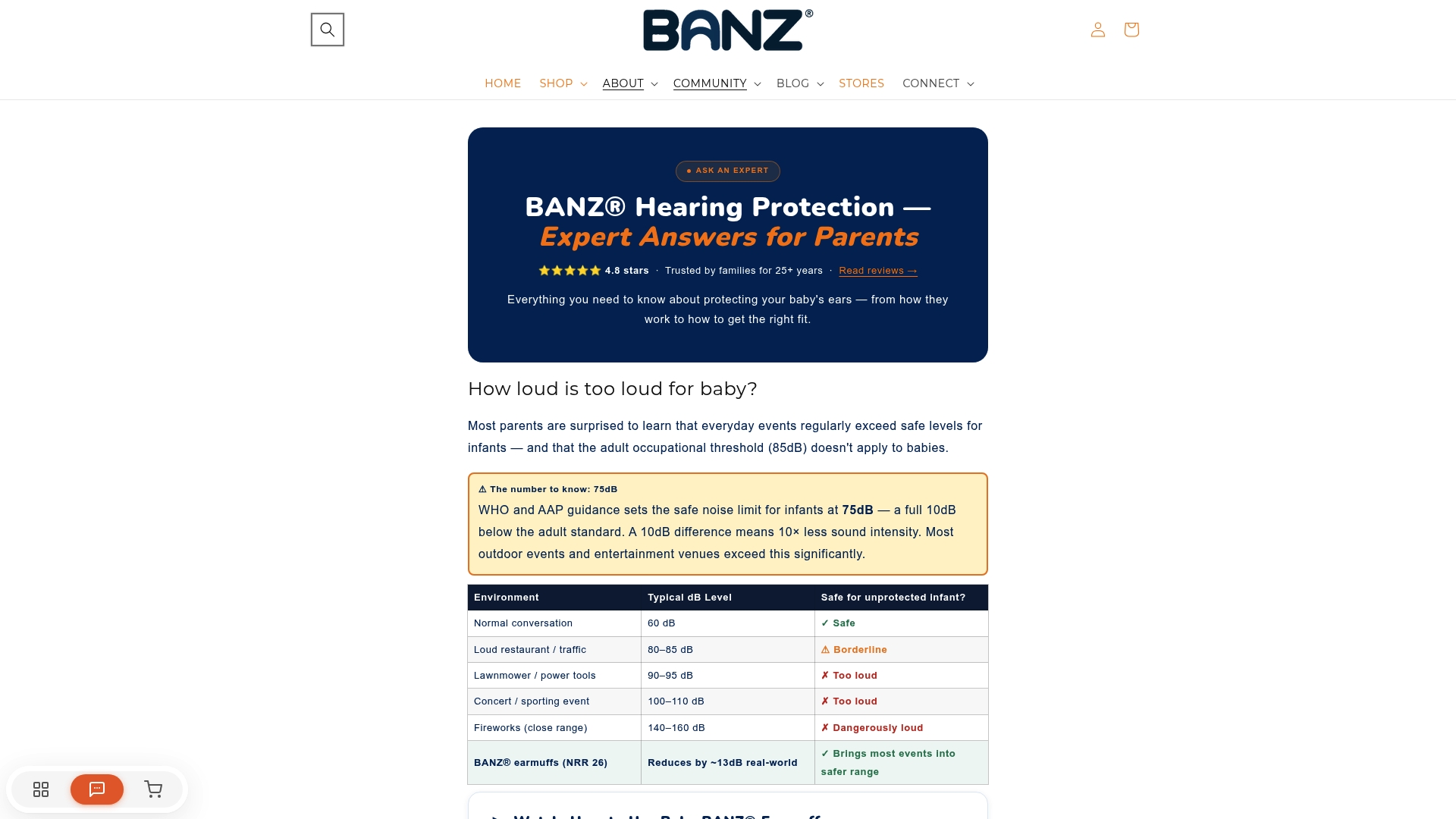
Every product in the BANZ lineup is designed with fit, comfort, and retention in mind, because protection only works when children actually wear it. The baby and kids ear protection collection covers NRR-rated ear muffs for infants through older children, with options suited to sensory-sensitive kids and high-activity environments. The free BANZ Protect app adds real-time noise monitoring so parents know when protection is needed before damage starts. For parents who want to understand ratings before they buy, the NRR vs. SNR guide explains exactly what those numbers mean and how to choose the right level for your child’s age and the event you are attending.
FAQ
What is noise-induced hearing loss in children?
Noise-induced hearing loss is permanent damage caused by exposure to sounds above safe levels, and it accumulates with each unprotected exposure. Children are more vulnerable than adults because their smaller ear canals amplify incoming sound.
What NRR rating do kids need at loud events?
Experts recommend ear muffs with an NRR of 20–26 dB for children. That range blocks harmful noise peaks while preserving enough ambient sound for safe awareness and communication.
How do I get my child to keep ear muffs on?
Introduce ear muffs at home during quiet activities like reading or watching a movie. Familiarity with the sensation before a loud event significantly improves acceptance and consistent wear.
Can parents benefit from wearing hearing protection too?
Yes. Earplugs reduce sensory overload from sustained loud environments, which supports calmer emotional responses and more patient parenting during high-stimulation outings.
How early should children start wearing hearing protection?
Hearing protection is appropriate from infancy. BANZ offers NRR-rated ear muffs designed for newborns and infants, making protection practical from the first loud outdoor event.
