

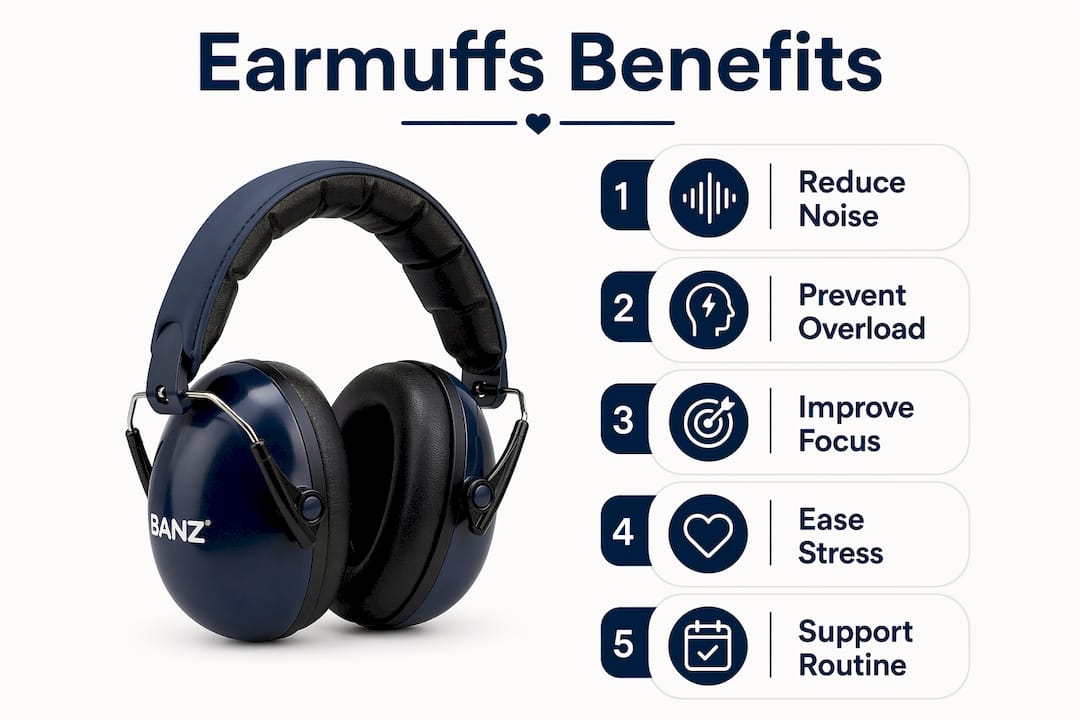
Las orejeras ayudan a los problemas de procesamiento sensorial al reducir físicamente el volumen y la imprevisibilidad del sonido entrante, lo que evita la sobrecarga del sistema nervioso que muchos niños con sensibilidades sensoriales experimentan a diario. Para los niños con trastorno del procesamiento sensorial (TPS) o trastorno del espectro autista, la entrada auditiva no solo es más fuerte, sino que es menos controlable y más angustiante que para sus compañeros neurotípicos. Las orejeras BANZ, diseñadas específicamente para niños desde la infancia hasta la edad escolar, brindan a los padres una herramienta práctica y respaldada por evidencia para reducir esa angustia antes de que se intensifique. Esta guía explica la ciencia, la investigación y las estrategias del mundo real que hacen de la protección auditiva una verdadera ayuda para la regulación sensorial.
Por qué las orejeras ayudan con los problemas de procesamiento sensorial: el mecanismo principal
Las orejeras funcionan creando una barrera física alrededor de la oreja que atenúa las ondas sonoras entrantes antes de que lleguen al tímpano. El resultado es una reducción medible del volumen percibido, clasificada por el sistema de clasificación de reducción de ruido (NRR, por sus siglas en inglés). Un NRR más alto significa una mayor atenuación. Para los niños con diferencias en el procesamiento sensorial, esto es importante porque la sensibilidad auditiva implica no solo el volumen, sino también la imprevisibilidad y la superposición del ruido de fondo. Las orejeras se dirigen precisamente a esos picos angustiantes.
Lo que los padres suelen entender mal es esperar un silencio total. Las orejeras proporcionan una reducción parcial del ruido, no un apagón de audio completo. Un niño que usa orejeras en una cafetería ruidosa aún puede escuchar a una maestra llamarlo por su nombre. Las orejeras reducen el desorden abrumador mientras preservan los sonidos que importan. Este amortiguamiento selectivo es precisamente lo que las hace útiles para la regulación sensorial en lugar del aislamiento sensorial.
Factores clave que determinan la eficacia en el mundo real:
- Clasificación NRR: Las clasificaciones más altas (22 a 31 dB) son apropiadas para eventos ruidosos como conciertos o fuegos artificiales. Las clasificaciones moderadas (18 a 22 dB) se adaptan a entornos cotidianos como aulas y supermercados.
- Ajuste y sellado: Un mal ajuste de las orejeras reduce drásticamente la atenuación del ruido. Una brecha en el sellado debido al cabello, las gafas o un tamaño incorrecto puede reducir la eficacia a la mitad.
- Tamaño de la copa y fuerza de sujeción: Las orejeras para niños necesitan una presión de sujeción más suave y copas más pequeñas. Las orejeras para adultos colocadas en la cabeza de un niño rara vez sellan correctamente.
- Tipo de ruido: Las orejeras funcionan mejor contra ruidos impredecibles y en capas, como el ruido de la multitud, la maquinaria o los golpes repentinos. Son menos críticas para sonidos constantes y predecibles.
Consejo profesional: Verifique el sellado cada vez que su hijo se ponga las orejeras. Pase un dedo por el borde del cojín para confirmar el contacto total con la piel. Un sellado adecuado es el factor más importante para que las orejeras funcionen realmente.
Para una mirada más profunda a la mecánica, BANZ tiene un desglose fácil de entender para los padres sobre cómo las orejeras reducen el sonido que cubre la atenuación de la frecuencia en un lenguaje sencillo.
¿Qué dice la investigación sobre las orejeras y la sobrecarga sensorial?
La evidencia que conecta la reducción del ruido con mejores resultados sensoriales y conductuales está creciendo. Un estudio de 2026 encontró que una mayor exposición al ruido reducía las puntuaciones de orientación infantil, y que la reducción de los estímulos auditivos mejoraba los resultados fisiológicos y conductuales en bebés sensibles. La implicación es directa: menos ruido equivale a un sistema nervioso más regulado, incluso en los primeros meses de vida.
Para los niños mayores, un estudio de 2025 confirmó que las características sensoriales se correlacionan negativamente con los problemas emocionales y conductuales en preescolares. Los niños con sensibilidades sensoriales más fuertes mostraron mayores tasas de ansiedad, desregulación emocional y desafíos conductuales. Manejar la entrada sensorial no es una medida de confort. Es una intervención conductual con resultados medibles.
Los programas del mundo real lo respaldan. La Oficina del Sheriff del Condado de Flagler en Florida ahora equipa a los agentes con kits de apoyo sensorial que incluyen orejeras para usar durante los encuentros con personas neurodivergentes en crisis. Que las agencias encargadas de hacer cumplir la ley adopten las orejeras como una herramienta de desescalada indica la seriedad con la que los profesionales se toman la sobrecarga auditiva como un desencadenante de angustia.
La siguiente tabla resume los hallazgos clave de la investigación y su significado práctico para los padres:
| Hallazgo de investigación | Lo que significa para su hijo |
|---|---|
| Un ruido más alto reduce las puntuaciones de orientación infantil | Reducir la exposición al sonido apoya el desarrollo del sistema nervioso desde el nacimiento |
| Las características sensoriales se correlacionan con problemas de conducta | Manejar la entrada auditiva puede reducir los berrinches y los episodios de ansiedad |
| Orejeras utilizadas en kits de intervención en crisis | Los profesionales reconocen las orejeras como una herramienta legítima de regulación sensorial |
| El mal ajuste reduce significativamente la atenuación del ruido | El tamaño y el sellado correctos son innegociables para un beneficio real |
| El ruido impredecible es más angustiante que el ruido constante | Las orejeras son más efectivas en entornos sonoros caóticos y variables |
El patrón en estos hallazgos es consistente. La sobrecarga auditiva es un factor estresante fisiológico, no una elección conductual. Reducirla con protección auditiva produce mejoras reales y medibles en cómo se sienten y se comportan los niños.
¿Cómo encajan las orejeras en una estrategia más amplia de regulación sensorial?
Las orejeras son una herramienta, no un tratamiento. Las herramientas sensoriales funcionan mejor cuando se integran en rutinas más amplias y estrategias de comportamiento en lugar de usarse como soluciones independientes. Un niño que solo encuentra orejeras durante un berrinche las asociará con la angustia. Un niño que las usa de manera predecible antes de un evento ruidoso aprende a usarlas de manera proactiva.
Los terapeutas ocupacionales que se especializan en el trastorno del procesamiento sensorial suelen elaborar lo que llaman una "dieta sensorial", un conjunto programado de entradas sensoriales y adaptaciones distribuidas a lo largo del día. Las orejeras encajan en este marco como una adaptación auditiva, utilizada junto con estrategias como mantas pesadas, herramientas de inquietud, pausas para el movimiento y espacios tranquilos. El objetivo es mantener el sistema nervioso del niño dentro de un rango regulado antes de que ocurra la sobrecarga, no recuperarse de ella después del hecho.
Las orejeras se diferencian de los auriculares con cancelación de ruido y los tapones para los oídos de formas importantes:
- Orejeras vs. auriculares con cancelación de ruido: Los auriculares con cancelación de ruido utilizan electrónica activa para cancelar los sonidos de baja frecuencia. Las orejeras utilizan atenuación física pasiva, que es más fiable en todas las frecuencias y no requiere batería ni carga. Para los niños pequeños, las orejeras pasivas son más sencillas y duraderas.
- Orejeras vs. tapones para los oídos: Los tapones para los oídos se insertan en el canal auditivo y pueden resultar intrusivos o incómodos para los niños con sensibilidad sensorial. Las orejeras se colocan sobre la oreja, lo que las hace más fáciles de poner y quitar de forma independiente. Esto es importante para la autorregulación: un niño que puede manejar sus propias orejeras adquiere una sensación de control.
- La consistencia importa: El uso consistente y predecible de las herramientas sensoriales las hace más efectivas. El uso irregular reduce tanto el beneficio práctico como la confianza del niño en la herramienta.
Consejo profesional: Incorpore el uso de orejeras en una rutina previa al evento. Antes de una fiesta de cumpleaños, una asamblea escolar o un viaje al supermercado, póngase las orejeras en casa, donde el niño se sienta seguro. Esto crea una asociación positiva antes de que comience el entorno estresante.
Consejos prácticos para elegir y usar orejeras para su hijo
Seleccionar las orejeras adecuadas e introducirlas correctamente determina si su hijo las acepta o las rechaza. Siga estos pasos para hacerlo bien desde el principio.
-
Ajuste las orejeras a la edad y tamaño de la cabeza de su hijo. BANZ ofrece orejeras para bebés de 0 a 18 meses y orejeras para niños de 2 años en adelante. Los modelos para bebés tienen una presión de sujeción más suave y copas más pequeñas. Usar un modelo para adultos o para niños mayores en un bebé no sellará correctamente y puede causar incomodidad.
-
Introduzca las orejeras gradualmente. Introduzca suavemente las orejeras primero en un entorno tranquilo y silencioso. Deje que su hijo las sostenga, las use durante 30 segundos y se las quite por su cuenta. Obligarlos durante un momento estresante crea resistencia.
-
Identifique los desencadenantes de ruido específicos de su hijo. El ruido de la multitud, los golpes repentinos, la música y el zumbido de la climatización afectan a los niños de manera diferente. Las orejeras son más efectivas contra los picos auditivos impredecibles, por lo que saber qué entornos desencadenan a su hijo le ayudará a desplegar las orejeras en los momentos adecuados.
-
Monitoree las señales de sobrecarga antes de que se intensifiquen. Esté atento a que se cubra las orejas, un aumento de la irritabilidad, el aislamiento o los comportamientos de estimulación. Estas son señales tempranas de que el entorno auditivo se está volviendo inmanejable. Ponerse las orejeras en esta etapa, en lugar de después de un berrinche, es mucho más efectivo.
-
Estrategias alternativas según el entorno. Para entornos de bajo ruido de larga duración, como una biblioteca o un aula, un descanso tranquilo en un espacio de baja estimulación puede servir mejor a su hijo que las orejeras. Para eventos de alto ruido de corta duración, como fuegos artificiales o conciertos, las orejeras son la elección clara.
Puntos clave
Las orejeras reducen la sobrecarga sensorial al amortiguar los picos auditivos impredecibles, y su eficacia depende del ajuste correcto, el uso consistente y la integración en una rutina más amplia de regulación sensorial.
| Punto | Detalles |
|---|---|
| Mecanismo principal | Las orejeras atenúan los picos de sonido sin crear un silencio total, preservando las señales importantes. |
| Apoyo a la investigación | Los estudios vinculan la reducción del ruido con mejores resultados conductuales y fisiológicos en niños con sensibilidad sensorial. |
| El ajuste es innegociable | Un mal sellado reduce significativamente la atenuación del ruido; verifique el ajuste en cada uso. |
| Parte de un kit de herramientas sensoriales | Las orejeras funcionan mejor junto con las estrategias de terapia ocupacional, no como una solución independiente. |
| Selección apropiada para la edad | Las orejeras para bebés y niños difieren en el tamaño de la copa y la fuerza de sujeción; elija el modelo según la edad de su hijo. |
Lo que he aprendido al observar a los padres usar orejeras en la práctica
Los padres suelen recurrir a las orejeras como último recurso, después de un berrinche en una fiesta de cumpleaños o un evento escolar que terminó mal. Ese enfoque reactivo funciona, pero se pierde la mayor parte del beneficio. Los niños que he visto que obtienen el mayor provecho de la protección auditiva son aquellos cuyos padres trataron las orejeras como una herramienta proactiva y programada en lugar de una medida de emergencia.
La otra cosa que me gustaría refutar es la idea de que las orejeras son una muleta. Algunos padres se preocupan de que usarlas demasiado constantemente impida que su hijo desarrolle tolerancia al ruido. Esa preocupación es comprensible, pero la secuencia está equivocada. Un niño en sobrecarga sensorial no puede aprender, adaptarse o desarrollar tolerancia. Un niño cuyo sistema nervioso está regulado sí puede. Las orejeras crean el estado regulado que hace posible el crecimiento.
Ninguna herramienta única se adapta a todos los niños. Algunos niños aceptan las orejeras de inmediato. Otros necesitan semanas de introducción gradual. Algunos prefieren los tapones para los oídos o simplemente necesitan entornos más tranquilos en lugar de protección auditiva. El objetivo es observar las respuestas específicas de su hijo y ajustarse en consecuencia. Lo que funciona es lo que su hijo realmente usará.
Combinar las orejeras con apoyo emocional, una comunicación clara sobre por qué ayudan y rutinas predecibles produce los mejores resultados. Las orejeras se encargan del entorno auditivo. Usted se encarga de todo lo demás.
— Shari M. Murphy
Orejeras BANZ para niños con sensibilidad sensorial

BANZ diseña protección auditiva específicamente para niños, con modelos que cubren desde bebés recién nacidos hasta la edad escolar. Cada producto está fabricado para un ajuste correcto, una presión de sujeción adecuada y una atenuación real del ruido. No todas las orejeras para niños cumplen con los mismos estándares. Las orejeras BANZ tienen clasificaciones NRR probadas y son utilizadas por más de 2 millones de familias en seis continentes.
Explore la gama completa en la página de orejeras para niños y bebés de BANZ para encontrar el ajuste adecuado para la edad y el perfil sensorial de su hijo. Si su hijo necesita opciones personalizables, el set de orejeras para niños que se pueden combinar le permite emparejar colores y estuches para que usarlas se sienta como una elección en lugar de una obligación.
Preguntas frecuentes
¿Por qué las orejeras ayudan a los niños con trastorno del procesamiento sensorial?
Las orejeras reducen el volumen y la imprevisibilidad del sonido entrante, lo que previene la sobrecarga auditiva que desencadena respuestas de estrés en niños con trastorno del procesamiento sensorial. Al amortiguar los picos de ruido angustiantes mientras se preservan los sonidos importantes, ayudan a los niños a mantenerse regulados en entornos ruidosos.
¿Las orejeras bloquean todo el sonido para un niño que las usa?
No. Las orejeras proporcionan una reducción parcial del ruido, no un silencio total. Un niño todavía puede escuchar la voz de un maestro o que lo llamen por su nombre, mientras que el desorden de ruido circundante se reduce significativamente.
¿Qué clasificación NRR debo buscar en las orejeras para la sobrecarga sensorial?
Para eventos de mucho ruido como fuegos artificiales o conciertos, busque un NRR de 25 dB o superior. Para entornos cotidianos como aulas o tiendas, un NRR de 18 a 22 dB es apropiado. El ajuste importa tanto como la clasificación. Una orejera con un NRR más bajo y bien ajustada supera a un modelo con un NRR más alto y mal ajustado.
¿Son mejores las orejeras que los auriculares con cancelación de ruido para los niños con sensibilidad sensorial?
Las orejeras utilizan atenuación pasiva, que funciona en todas las frecuencias sin baterías ni electrónica. Para los niños pequeños, esto las hace más fiables y duraderas que los auriculares con cancelación de ruido. Los auriculares con cancelación de ruido son más efectivos para los zumbidos de baja frecuencia, pero menos consistentes para los sonidos repentinos de alta frecuencia.
¿Cómo consigo que mi hijo acepte usar orejeras?
Introduzca las orejeras gradualmente en un ambiente tranquilo y silencioso antes de usarlas en entornos estresantes. Deje que su hijo las manipule, las pruebe brevemente y se las quite de forma independiente. Crear asociaciones positivas en momentos de bajo estrés es el camino más fiable para una aceptación consistente.