

TL;DR:
- A sun safe play area uses shade, surface choices, and proper timing to protect children from UV rays. Many parents overlook reflected UV bounce and seasonal changes, which increase exposure risk. Layering overhead shade with clothing, sunscreen, and scheduled breaks creates the most effective sun protection environment.
A sun safe play area is an outdoor space designed to shield children from UV radiation through deliberate placement, shade structures, and surface choices. 54.7% of high school students reported at least one sunburn in a single year, which shows that casual sun awareness is not enough. The American Academy of Pediatrics recommends proactive design, not just sunscreen, as the foundation of child sun safety. Getting this right means thinking about your yard before you buy a single piece of equipment.
How to set up a sun safe play area: assessing your space first
The first step is understanding exactly how the sun moves across your yard. Walk outside at 9:00 AM, 12:00 PM, and 3:00 PM on a clear day and mark where shadows fall. This gives you a working picture of which zones are naturally shaded and which are exposed during peak UV hours.
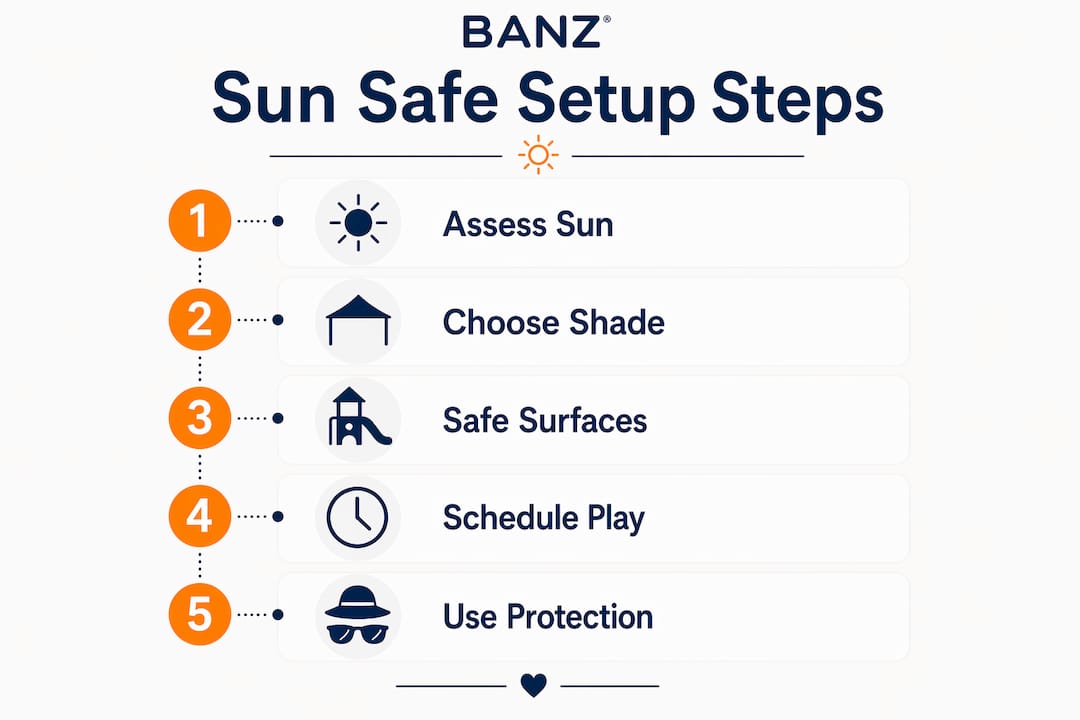
Peak UV exposure runs from 10:00 AM to 4:00 PM. Any play equipment placed in full sun during those hours puts children at direct risk. Sun mapping tracks the sun’s path across your yard across different seasons, helping you place equipment where existing trees and structures already provide cover.
Before you finalize any layout, check these factors:
- Yard dimensions. Measure the usable area so you know what size shade structure fits without crowding the space.
- Existing natural shade. Note mature trees, fences, and walls that already block direct sun.
- Sun “danger zones.” Mark spots that receive unbroken sun from 10:00 AM to 4:00 PM. These are your highest-priority areas for shade coverage.
- Seasonal sun angle. The sun sits lower in winter and higher in summer, which shifts shadow patterns significantly.
- HOA or local rules. Some homeowner associations restrict permanent structures. Check before purchasing a pergola or shade sail.
Pro Tip: Sun mapping also reduces costs. When you use existing trees and landscape features effectively, you rely less on purchased shade structures.
What shade structures work best for a children’s play area?
Shade structures fall into four main categories: umbrellas, shade sails, pergolas, and gazebos. Each has different strengths depending on your budget, yard size, and how permanent you want the solution to be.
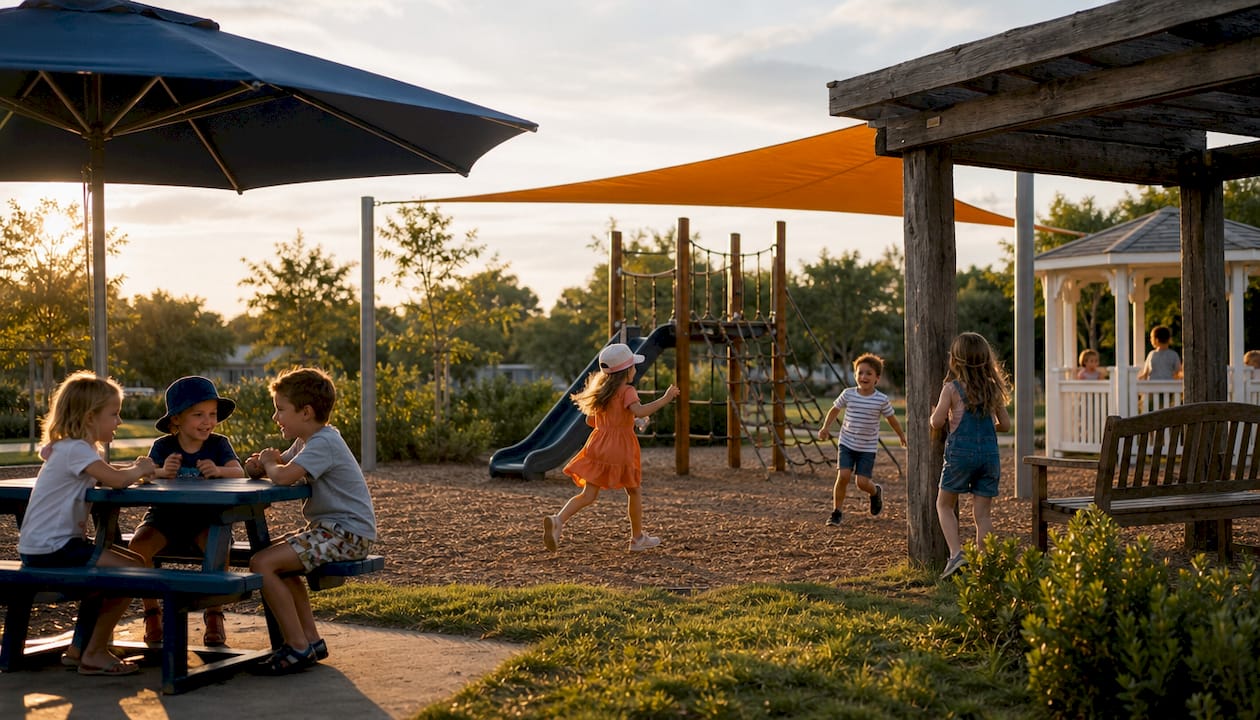
Umbrellas are the most flexible option. Cantilever models extend coverage without a center pole blocking the play zone. The trade-off is stability. A 9-foot umbrella requires a base weight of 40–60 lb to prevent wind hazards. Undersized bases are the most common installation mistake parents make.
Shade sails cover large areas at a lower cost than pergolas. UV-resistant polyethylene fabric blocks a significant portion of UV rays while allowing airflow. Proper tensioning is critical. A loose sail collects water and sags, reducing both coverage and lifespan.
Pergolas and louvered roofs are the most durable permanent option. Louvered aluminum pergolas provide consistent UV protection and improve ventilation, which prevents heat buildup beneath the structure. Powder-coated aluminum resists rust and UV degradation far better than painted wood.
Gazebos offer full overhead and partial side coverage. They work well for younger children who need a contained, shaded zone. The downside is fixed placement. Once anchored, a gazebo is difficult to reposition as your yard’s needs change.
Pro Tip: Angle play structures 15–30 degrees off the sunset line. This reduces glare during low sun angles in early morning and late afternoon, making supervision easier for caregivers.
When choosing any structure, prioritize adjustability. A shade sail with multiple anchor points or a tilting umbrella lets you track the sun as it moves through the day and across seasons.
What surface materials are safest under play equipment?
The ground beneath play equipment affects both injury risk and heat exposure. Hard surfaces like concrete and asphalt absorb heat and transmit it directly to children’s skin. They also provide no cushioning during falls.
The three most recommended shock-absorbing surfaces are:
- Engineered wood fiber. Loose-fill material that compresses on impact. Requires a depth of at least 9 inches under swings and climbers to meet safety guidelines.
- Rubber mulch. Durable, low-maintenance, and slower to compact than wood fiber. Darker colors absorb more heat, so choose lighter shades or keep this surface in full shade.
- Foam or rubber tiles. Interlocking tiles work well for smaller, contained play zones. They are easier to clean and replace than loose-fill options.
Metal slides and dark plastic equipment can reach dangerously high surface temperatures in direct sun, risking burns on contact. Placing all metal and dark-colored equipment under shade coverage is non-negotiable.
| Surface type | Heat absorption | Shock absorption | Maintenance level |
|---|---|---|---|
| Engineered wood fiber | Low | High | Medium |
| Rubber mulch | Medium | High | Low |
| Foam/rubber tiles | Low to medium | Medium | Low |
| Concrete | Very high | None | Low |
| Sand | Medium | Medium | High |
Avoid sharp rocks, gravel, and any toxic plants near the play zone perimeter. Check your local plant list for species that cause skin irritation or are poisonous if ingested.
How do timing, clothing, and sunscreen complete your sun protection plan?
Physical shade handles direct UV exposure. Clothing, sunscreen, and timing handle the rest. These layers work together. Relying on any single one leaves gaps.
Schedule outdoor play before 10:00 AM and after 4:00 PM whenever possible. When midday play is unavoidable, build in shaded breaks every 30–45 minutes. Children do not self-regulate sun exposure, so structured breaks matter.
For sunscreen, the American Academy of Pediatrics is specific: children younger than 6 months must avoid all direct and indirect sunlight. Children 6 months and older need sunscreen reapplied every 90–120 minutes during outdoor play. Mineral-based sunscreens containing zinc oxide or titanium dioxide are preferred for young children because they physically block UV rays and are less likely to irritate sensitive skin.
For clothing, follow these steps:
- Choose UPF-rated fabrics. A UPF 50+ garment blocks over 98% of UV radiation. Standard cotton offers minimal protection when wet. Learn more about clothing color and UV blocking to make better fabric choices.
- Add a wide-brim hat. A hat with a 3-inch brim protects the face, ears, and back of the neck. Read the BANZ guide on sun hats for UV protection for sizing and style guidance.
- Include UV-blocking sunglasses. Children’s eyes are more sensitive to UV damage than adult eyes. Wraparound styles provide the best coverage.
- Mark the shaded zone clearly. Use colored pavers, rope borders, or painted lines so children know where to stay during peak hours.
Pro Tip: Combining vertical shade with UPF-rated clothing and adjusted playtime addresses both direct and reflected UV exposure. No single layer is enough on its own.
Common mistakes when creating a shaded play area
Most sun safety failures come from a small set of avoidable errors. Knowing them in advance saves time, money, and risk.
- Undersized or unanchored shade structures. Poor anchoring is the leading cause of wind-related shade structure accidents. Always match base weight to the manufacturer’s specification.
- Ignoring reflected UV rays. UV rays reflect off light-colored concrete, sand, and water, meaning overhead shade alone underestimates total UV exposure. Add side screens or wind blinds to reduce lateral UV bounce.
- Leaving metal equipment in direct sun. Metal slides and dark plastic surfaces heat to unsafe temperatures quickly. Shade placement must cover the entire equipment footprint, not just the seating area.
- Failing to account for seasonal sun angle changes. A shade sail that works perfectly in july may leave gaps in september as the sun’s angle drops. Reassess coverage at the start of each season.
- Inconsistent sunscreen application. Skipping reapplication after 90 minutes is as risky as skipping the first application entirely.
- No gate or boundary system. Toddlers move fast. Positioning a play area gate facing the house reduces escape attempts and makes sunscreen reapplication easier during supervision transitions.
“Overhead shade is the starting point, not the finish line. Reflected UV from nearby hard surfaces, inconsistent sunscreen use, and unshaded equipment surfaces are where most sun safety plans fall short. Address all three, or the structure you built gives false confidence.”
Key takeaways
A sun safe play area requires layered protection: strategic shade placement, appropriate surfaces, UPF-rated clothing, and timed outdoor play all working together.
| Point | Details |
|---|---|
| Map sun exposure first | Observe shadow patterns at 9:00 AM, 12:00 PM, and 3:00 PM before placing any equipment. |
| Match shade structure to permanence needs | Umbrellas suit flexible setups; louvered pergolas deliver consistent, long-term UV coverage. |
| Choose shock-absorbing, light-colored surfaces | Engineered wood fiber or light rubber mulch reduces both fall injury risk and heat absorption. |
| Layer sunscreen with UPF clothing | Reapply mineral-based sunscreen every 90–120 minutes and add UPF 50+ garments and wide-brim hats. |
| Audit for reflected UV and seasonal gaps | Check coverage from lateral UV bounce and reassess shade placement at the start of each season. |
What I’ve learned from watching parents get this wrong
By Shari M. Murphy
Most parents I’ve spoken with focus entirely on the overhead shade and consider the job done. They buy a shade sail, install it over the swing set, and feel confident. Then they wonder why their child still comes in with a red neck and shoulders.
The overlooked factor is almost always reflected UV. Light-colored concrete patios, sand pits, and even light-colored fencing bounce UV rays upward and sideways. A child sitting under a shade sail on a concrete patio still receives significant UV exposure from below and from the sides. Side screens and careful surface choices matter as much as what’s overhead.
The second thing I’ve noticed is that parents underestimate how quickly the sun’s position changes across seasons. A setup that works in june needs to be reassessed in september. I recommend a 10-minute walkthrough at the start of each season, checking shadow coverage at noon. It takes almost no time and catches gaps before they cause harm.
Finally, the BANZ Protect app gives caregivers real-time UV index readings. That kind of data removes the guesswork from timing outdoor play. Pair it with a well-designed space and you have a genuinely protective setup, not just the appearance of one.
— Shari M. Murphy
BANZ® sun safety resources for your outdoor play setup
BANZ® has helped over 2 million families across six continents protect their children from UV exposure and loud environments. The BANZ® kids sun safety resource library brings together guides from the EPA, CDC, and WHO in one place, covering sunscreen selection, UV clothing, and outdoor play timing.
BANZ® products include UPF 50+ sun hats, protective clothing, and UV-blocking sunglasses designed specifically for children’s active outdoor use. The free BANZ Protect app provides real-time UV monitoring so you know exactly when conditions require extra protection. For parents building or refining a shaded play space, the safe outdoor seating guide from Sitpack also covers practical tips on anchoring and positioning outdoor furniture within sun-protected zones.
FAQ
What is a sun safe play area?
A sun safe play area is an outdoor space designed to minimize children’s UV exposure through shade structures, safe surface materials, and scheduled play timing. It goes beyond sunscreen to address the full range of UV risk factors in a child’s environment.
When should children avoid outdoor play due to UV risk?
Peak UV hours run from 10:00 AM to 4:00 PM. The American Academy of Pediatrics recommends limiting unprotected outdoor play during these hours and scheduling shaded breaks every 30–45 minutes when midday play is unavoidable.
How often should sunscreen be reapplied during outdoor play?
Children 6 months and older need sunscreen reapplied every 90–120 minutes during outdoor activity. Mineral-based formulas with zinc oxide or titanium dioxide are preferred for young children with sensitive skin.
What is the safest surface material under a swing set?
Engineered wood fiber at a minimum depth of 9 inches provides strong shock absorption and low heat retention under swings and climbers. Light-colored rubber mulch is a durable alternative, especially in fully shaded areas.
How do I know if my shade structure is safely anchored?
A 9-foot umbrella requires a base weight of 40–60 lb to resist wind hazards. Check the manufacturer’s anchoring specification for your specific structure and inspect all anchor points at the start of each season for wear or loosening.