

Los protectores auditivos hacen más que simplemente cubrir tus oídos. Comprender cómo los protectores auditivos reducen el sonido, explicado a través de la física real, te ayuda a elegir la protección adecuada y a usarla correctamente. La mayoría de las personas asumen que cualquier par de protectores auditivos hará el trabajo. La verdad es más específica: qué tan bien funcionan depende de los materiales, el ajuste y el tipo de ruido con el que estés lidiando. Ya seas un padre que protege a un niño en un evento ruidoso o un profesional que maneja la exposición al ruido en el trabajo, conocer la mecánica detrás de la protección auditiva te ayuda a tomar decisiones que realmente importan.
Tabla de contenidos
- Puntos clave
- Cómo los protectores auditivos reducen el sonido: la física esencial
- Qué afecta realmente el rendimiento de los protectores auditivos en la vida real
- Protectores auditivos pasivos vs. activos y cómo se comparan
- Elegir y usar protectores auditivos para niños y en entornos específicos
- Mi opinión sobre la brecha de protección de la que nadie habla
- Protege la audición de tu hijo con BANZ® Carewear
- Preguntas frecuentes
Puntos clave
| Punto | Detalles |
|---|---|
| El sellado físico lo es todo | Los protectores auditivos bloquean el sonido creando un sellado acústico alrededor del oído, no solo cubriéndolo. |
| El NRR es un número de laboratorio | La atenuación en el mundo real es consistentemente más baja que la clasificación de reducción de ruido (NRR) etiquetada debido a problemas de ajuste. |
| Los factores de ajuste rompen la protección | Las gafas, el vello facial y los cojines desgastados reducen la calidad del sellado y disminuyen significativamente la reducción de ruido real. |
| Pasivo vs. activo importa | Los protectores auditivos pasivos bloquean todo el sonido físicamente; los tipos activos cancelan el ruido de baja frecuencia electrónicamente. |
| Los niños necesitan el tamaño correcto | Los protectores auditivos mal ajustados en niños ofrecen mucha menos protección de lo que sugiere la etiqueta. |
Cómo los protectores auditivos reducen el sonido: la física esencial
El término técnico para lo que hacen los protectores auditivos es atenuación pasiva. Bloquean físicamente la energía sonora para que no llegue al canal auditivo. Sin pilas, sin componentes electrónicos. Solo materiales y presión trabajando juntos.
Esto es lo que realmente sucede. La copa exterior rígida refleja las ondas sonoras lejos del oído. El revestimiento de espuma dentro de la copa absorbe la energía sonora que sí logra atravesar la pared de la copa. El sello del cojín alrededor del borde de la copa presiona contra tu cabeza para cerrar el espacio entre la copa y tu piel. La presión de la diadema y el revestimiento de la copa trabajan juntos para determinar cuánto sonido se bloquea en la práctica.
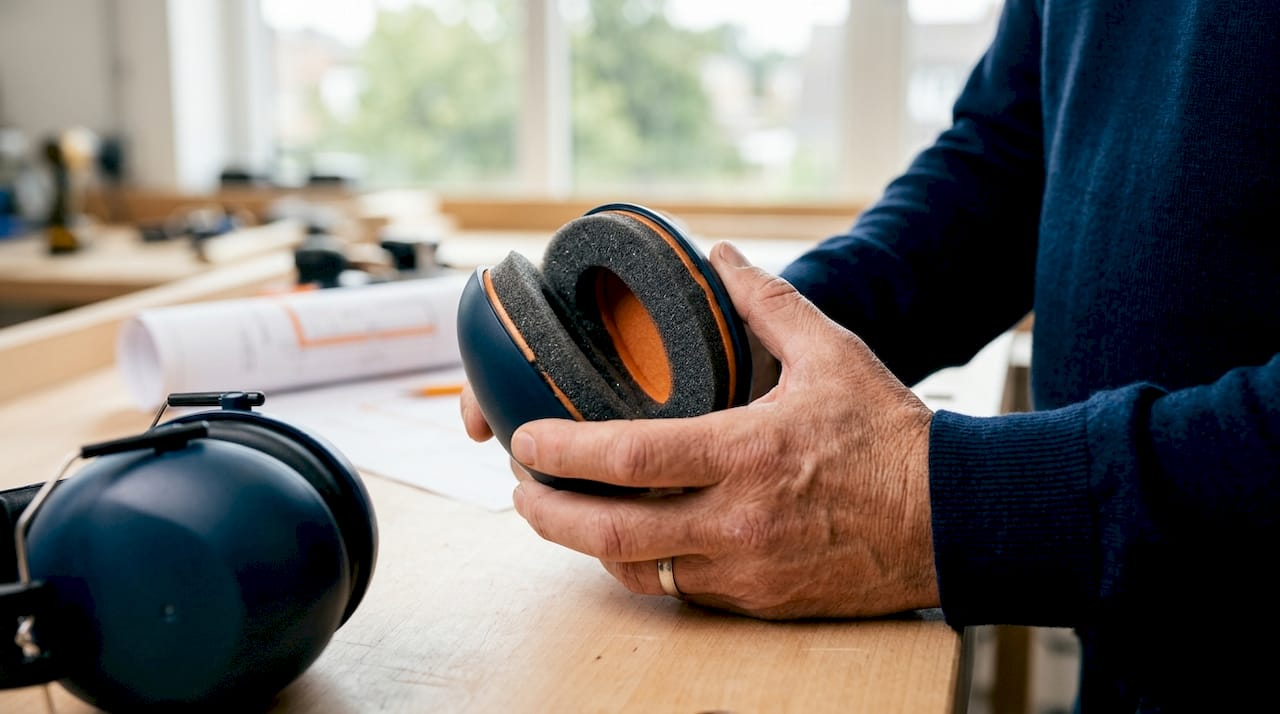
El sonido viaja como ondas de presión. Cuando esas ondas golpean la densa copa exterior, la mayor parte de la energía se refleja. Lo que penetra la pared de la copa golpea la espuma acústica en el interior, que convierte la energía sonora en una pequeña cantidad de calor a través de la fricción. El resultado es que significativamente menos energía sonora llega al canal auditivo.
Bajo condiciones de laboratorio controladas, un protector auditivo pasivo estándar suele lograr una atenuación NRR de alrededor de 23 dB. Para ponerlo en perspectiva, una reducción de 23 dB convierte una fuente de ruido de 100 dB en aproximadamente 77 dB en el oído. Esa es la diferencia entre una motosierra y un restaurante concurrido.
Consejo profesional: El grosor de la espuma por sí solo no determina la protección. La compresión de la copa contra la cabeza y la ausencia de huecos alrededor del sello importan mucho más que el grosor del acolchado interior.
Tres cosas impulsan la atenuación pasiva:
- Reflexión: La carcasa exterior rígida rebota las ondas sonoras antes de que entren.
- Absorción: La espuma acústica interior convierte la energía sonora penetrante en calor insignificante.
- Barrera mecánica: La masa y la rigidez de la pared de la copa resisten la vibración de la presión sonora.
Los tres trabajan simultáneamente. Si se elimina cualquiera de ellos, la protección disminuye notablemente.
Qué afecta realmente el rendimiento de los protectores auditivos en la vida real
El NRR etiquetado es un número máximo, no una garantía. Se mide en condiciones de laboratorio ideales con probadores capacitados que logran un ajuste perfecto. Los lugares de trabajo reales y los eventos reales no son laboratorios.
La OSHA utiliza una fórmula de reducción para estimar la exposición real: se toma el NRR etiquetado, se resta 7, luego se divide por 2 y se resta eso del nivel de ruido ambiental. Esa simple operación matemática muestra que la protección real es aproximadamente la mitad del número etiquetado en muchos casos. Los trabajadores sin capacitación en ajuste suelen lograr un 50% o menos del NRR etiquetado.
El mayor culpable es la pérdida de sellado. Estas son las causas más comunes:
- Gafas: Las varillas de las gafas atraviesan el sello del cojín, creando un hueco que permite que el sonido entre directamente.
- Vello facial: Las barbas y las patillas impiden que el cojín se ajuste perfectamente a la piel.
- Volumen del cabello: El cabello grueso entre el cojín y la piel rompe el sello acústico.
- Movimiento de la cabeza: El movimiento repetido desplaza las copas de su posición, especialmente con una tensión de diadema más ligera.
- Cojines desgastados: Los cojines de espuma se comprimen y endurecen con el tiempo, perdiendo su capacidad de adaptarse a la forma de la cabeza.
Las fallas del sellado reducen la atenuación real de manera más significativa que simplemente elegir un dispositivo con una clasificación NRR más baja. En otras palabras, un protector auditivo de alta calificación con un sello roto te protege menos que un protector auditivo de calificación moderada usado correctamente.
Los protectores auditivos superan a los tapones para los oídos de una manera importante: la consistencia. Los tapones para los oídos requieren una técnica de inserción correcta cada vez. Los protectores auditivos son más fáciles de colocar correctamente, lo cual es una de las razones por las que tienden a ofrecer una protección más confiable en un grupo de usuarios.
Consejo profesional: Verifica el estado del cojín cada tres o seis meses. Presiona tu dedo en la espuma del cojín. Si no recupera su forma rápidamente, reemplaza los cojines. La espuma degradada es una de las principales causas de fallas silenciosas en la protección.
Protectores auditivos pasivos vs. activos y cómo se comparan
No todos los protectores auditivos funcionan de la misma manera. Las dos categorías principales son pasivos y activos, y comprender la diferencia te ayuda a elegir la herramienta adecuada para el entorno.
Protectores auditivos pasivos
Los protectores auditivos pasivos utilizan solo materiales físicos para bloquear el sonido. No tienen componentes electrónicos ni fuente de energía. Atenúan todas las frecuencias, aunque funcionan mejor en frecuencias medias y altas que en frecuencias bajas. Las ondas sonoras de baja frecuencia son largas y transportan mucha energía, lo que las hace más difíciles de bloquear con solo masa física.
Protectores auditivos con reducción activa de ruido
Los protectores auditivos con reducción activa de ruido (ANR) añaden componentes electrónicos a la barrera física. Pequeños micrófonos en el exterior de las copas captan el sonido entrante. El circuito genera una onda sonora desfasada 180 grados, lo que cancela el ruido entrante antes de que llegue a tu oído. Este enfoque es particularmente efectivo para ruidos constantes y de baja frecuencia, como el zumbido del motor o los sistemas de climatización.
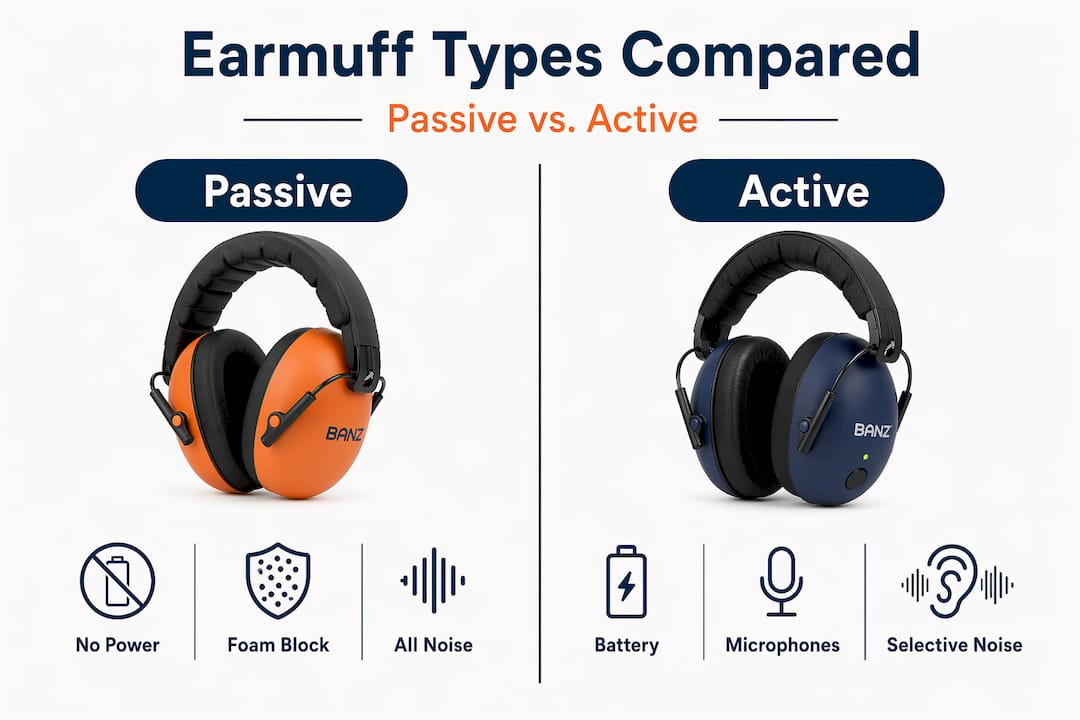
Los protectores auditivos activos suelen lograr alrededor de 26 dB NRR y permiten un acceso selectivo al sonido, lo que significa que algunos modelos permiten el paso del habla mientras bloquean el ruido peligroso. Esto es útil para los trabajadores que necesitan comunicarse en un lugar de trabajo.
Aquí tienes una comparación directa:
| Característica | Protectores auditivos pasivos | Protectores auditivos activos |
|---|---|---|
| Fuente de energía | Ninguna | Requiere batería |
| Mejor para | Ruido de banda ancha y alta frecuencia | Ruido de baja frecuencia y estado estacionario |
| Comunicación | Bloquea todo el sonido | Algunos modelos permiten el habla |
| Costo | Menor | Mayor |
| Mantenimiento | Solo reemplazo de cojines | Mantenimiento de batería y electrónica |
| NRR típico | ~23 dB | ~26 dB |
Cuándo usar ambos a la vez
La combinación de protectores auditivos con tapones para los oídos, denominada doble protección, se recomienda cuando el ruido ambiental supera los 105 dBA o cuando un solo dispositivo no puede reducir la exposición por debajo de los niveles seguros. La OSHA exige protección auditiva para los trabajadores expuestos a 85 dBA o más durante un turno de 8 horas. En niveles muy altos, la doble protección añade aproximadamente de 5 a 10 dB de atenuación adicional más allá del dispositivo de mayor clasificación por sí solo.
Para los niños en conciertos, eventos de deportes de motor o sitios de construcción, los protectores auditivos pasivos son casi siempre la opción correcta. Son simples, confiables y no requieren manejo de baterías.
Elegir y usar protectores auditivos para niños y en entornos específicos
Los oídos de los niños son más vulnerables al daño por ruido que los oídos de los adultos, y las consecuencias de la exposición repetida al ruido pueden afectar el desarrollo auditivo. Conseguir el ajuste adecuado importa más que la marca en la caja.
Sigue estos pasos para seleccionar y usar protectores auditivos correctamente para niños:
- Adapta el tamaño a la cabeza del niño. Los protectores auditivos para bebés y para niños no son intercambiables. Una copa diseñada para un niño pequeño no sellará correctamente en la cabeza más grande de un niño de cinco años. Consulta las guías de edad y circunferencia de la cabeza del fabricante.
- Verifica la tensión de la diadema. La diadema debe sujetar las copas firmemente contra la cabeza sin causar molestias. Demasiado floja significa huecos; demasiado apretada significa que el niño se quitará los protectores auditivos.
- Despeja el camino del cabello. Retira el cabello del área del sello antes de colocar los protectores auditivos. Incluso el cabello fino de bebé puede romper el sello acústico si queda atrapado debajo del cojín.
- Inspecciona antes de cada uso. Busca cojines agrietados o aplastados. Verifica que la diadema no esté doblada. Una revisión rápida toma diez segundos y confirma que la protección realmente funciona.
- Reemplaza los cojines según el horario. Para los niños que usan protectores auditivos regularmente, reemplazar los cojines cada seis a doce meses mantiene el sello confiable.
Para entornos específicos, el tipo de ruido importa. En un espectáculo de fuegos artificiales, el ruido de impulso máximo puede superar los 140 dB. Un protector auditivo pasivo con un NRR de 25 o superior es apropiado. En un estadio o concierto, el ruido sostenido suele oscilar entre 90 y 110 dB, y un protector auditivo estándar para niños lo maneja bien si se ajusta correctamente.
Consejo profesional: Deja que los niños usen sus protectores auditivos en casa antes del evento. La familiaridad reduce la resistencia y significa que es menos probable que se los quiten en el peor momento.
Los entornos de ruido recreativo, como las pistas de karts y los eventos de deportes de motor, se encuentran entre las fuentes de riesgo auditivo más ignoradas para los niños. Los motores a corta distancia superan regularmente los 100 dB, y la exposición puede ocurrir durante períodos prolongados.
Mi opinión sobre la brecha de protección de la que nadie habla
He pasado años analizando cómo se desempeña realmente la protección auditiva fuera de los informes de laboratorio, y la brecha entre lo que la gente cree que obtiene y lo que realmente obtiene es mayor de lo que la mayoría se da cuenta.
Según mi experiencia, el mayor problema no es el propio protector auditivo. Es la suposición de que ponerse los protectores auditivos significa que el trabajo está hecho. He visto a padres en eventos ruidosos ajustar los protectores auditivos de sus hijos una vez y nunca volver a revisarlos, sin darse cuenta de que un solo movimiento por un golpe o por meterse el pelo puede reducir la atenuación real en 10 dB o más.
Lo que he aprendido es que la verificación del ajuste no es opcional. Es la diferencia entre la protección y la ilusión de protección. El número NRR en la caja es útil para comparar productos. No es una promesa.
Para los padres específicamente, diría esto: compren protectores auditivos diseñados para la edad y el tamaño de cabeza adecuados, revisen los cojines regularmente y hagan una verificación rápida antes de cada uso. Ese hábito de 30 segundos vale más que gastar dinero extra en un dispositivo de mayor calificación que no se ajusta correctamente.
Los protectores auditivos que mejor funcionan son los que permanecen puestos y sellan correctamente. Todo lo demás es secundario.
— Shari
Protege la audición de tu hijo con BANZ® Carewear
Elegir los protectores auditivos adecuados para tu hijo comienza con productos fabricados para el tamaño y la comodidad de la cabeza de los niños desde el primer día. Banzworld ofrece la gama BANZ® Carewear de protectores auditivos para bebés y niños, diseñados con el tamaño de copa, la densidad de cojín y la tensión de diadema correctos para los usuarios más jóvenes.

Los protectores auditivos para bebés de BANZ® están clasificados para bebés y niños pequeños que asisten a eventos ruidosos, desde partidos deportivos hasta reuniones familiares cerca de fuegos artificiales. Para niños mayores, los protectores auditivos para niños ofrecen una copa más grande y una diadema ajustable para crecer con tu hijo. Ambas opciones están disponibles en colores lisos y estilos combinables con un estuche de transporte para facilitar el traslado. Explora la gama completa en Banzworld y añade protección auditiva a tu carrito hoy mismo.
Preguntas frecuentes
¿Cómo bloquean el sonido físicamente los protectores auditivos?
Los protectores auditivos bloquean el sonido creando un sellado acústico alrededor de la oreja utilizando copas rígidas y cojines forrados de espuma. La copa exterior refleja las ondas sonoras, la espuma interior absorbe la energía penetrante y el sellado del cojín evita que el sonido evite completamente la copa.
¿Qué significa NRR en los protectores auditivos?
NRR significa "Noise Reduction Rating" (Clasificación de Reducción de Ruido), un número medido en laboratorio que indica la máxima reducción de decibelios que un dispositivo puede proporcionar. La atenuación en el mundo real es típicamente más baja porque las condiciones de ajuste en el uso diario difieren de las pruebas controladas.
¿Son seguros los protectores auditivos para bebés y niños pequeños?
Sí, los protectores auditivos diseñados específicamente para bebés y niños pequeños son seguros y se recomiendan para entornos ruidosos. La clave es usar el tamaño adecuado para la edad, de modo que las copas sellen correctamente alrededor de una cabeza más pequeña.
¿Cuándo se deben combinar protectores auditivos y tapones para los oídos?
Se recomienda la doble protección cuando los niveles de ruido superan los 105 dBA o cuando un solo dispositivo no puede reducir la exposición a un nivel seguro. La combinación añade aproximadamente de 5 a 10 dB más allá del dispositivo de mayor clasificación por sí solo.
¿Los auriculares con cancelación activa de ruido cuentan como protección auditiva?
No. Los auriculares con cancelación de ruido para consumidores no son dispositivos de protección auditiva certificados. Reducen electrónicamente algo de ruido ambiental de baja frecuencia, pero no están probados ni clasificados según los estándares de exposición al ruido ocupacional o industrial.
Recomendado
- Protectores auditivos para bebés (colores lisos) – BANZ® Carewear USA
- Protectores auditivos para niños - Colores lisos – BANZ® Carewear USA
- Protectores auditivos para niños y estuche combinables – BANZ® Carewear USA