

La protección solar es una necesidad médica para los niños en los programas de verano, no una precaución opcional. Los niños inscritos en campamentos, programas de educación al aire libre y ligas deportivas de verano pasan mucho más tiempo bajo la luz solar directa que durante el año escolar. Esa exposición prolongada tiene consecuencias reales para la salud, desde quemaduras solares inmediatas hasta un mayor riesgo de cáncer de piel a lo largo de la vida. Comprender por qué los programas de verano requieren protección solar le ayudará a tomar mejores decisiones sobre qué equipo lleva su hijo, qué preguntas hacer al personal del programa y cómo desarrollar hábitos que duren más allá de agosto.
Por qué los programas de verano requieren protección solar más que los entornos cotidianos
Los horarios de los campamentos incluyen rutinariamente caminatas, sesiones de natación, deportes de equipo y excursiones, acumulando horas de exposición a los rayos UV de una manera que un día escolar típico nunca lo hace. Un niño en un campamento diurno puede pasar de seis a ocho horas consecutivas al aire libre. Esa es una dosis de rayos UV fundamentalmente diferente a un recreo de 20 minutos.
Tres factores ambientales hacen que los entornos de los programas de verano sean especialmente de alto riesgo:
- Superficies reflectantes. Los rayos UV se reflejan en el agua, la arena y el cemento, intensificando la exposición incluso cuando un niño está sentado a la sombra cerca de una piscina o playa. Una mesa de picnic a la sombra junto a una cancha de cemento sigue proporcionando una carga significativa de rayos UV.
- Conceptos erróneos sobre la capa de nubes. Hasta el 80% de los rayos UV llegan a las personas en días nublados. Las mañanas nubladas en el campamento no son mañanas de bajo riesgo.
- Programación en horas pico. Muchos programas realizan sus bloques al aire libre más activos entre las 10 a.m. y las 4 p.m., que es exactamente cuando las lecturas del índice UV son más altas.
Consejo profesional: Compruebe el índice UV de la ubicación de su campamento cada mañana utilizando la aplicación gratuita BANZ Protect, que proporciona monitoreo de UV en tiempo real para que pueda ajustar el nivel de protección de su hijo antes de que salga de casa.
¿Cuáles son los riesgos para la salud de la exposición a los rayos UV para los niños?
La exposición a los rayos UV durante la infancia tiene consecuencias que se extienden décadas hacia el futuro. Una cuarta parte de la exposición solar de por vida ocurre durante la infancia, lo que significa que el daño acumulado en el campamento de verano contribuye directamente al riesgo de cáncer de piel en la edad adulta. Esa estadística replantea cada tarde sin protección en la piscina como una decisión de salud a largo plazo, no solo como un problema de comodidad a corto plazo.
Las quemaduras solares con ampollas durante la infancia aumentan el riesgo de melanoma en la edad adulta. La Academia Estadounidense de Pediatría confirma que incluso una sola quemadura grave en la juventud crea un daño celular duradero que se acumula con el tiempo.
Los riesgos inmediatos también son graves. Las quemaduras solares causan dolor, descamación de la piel e inflamación a las pocas horas de la sobreexposición. Los niños también corren un mayor riesgo de enfermedades relacionadas con el calor durante la actividad prolongada al aire libre, particularmente cuando la exposición a los rayos UV se combina con el esfuerzo físico y una hidratación inadecuada. La deshidratación y el agotamiento por calor pueden desarrollarse rápidamente en un niño que corre, nada y juega bajo el sol directo durante horas sin pausas adecuadas a la sombra.
Los niños más pequeños se enfrentan a riesgos mayores. Los bebés menores de 6 meses deben evitar por completo la luz solar directa e indirecta, prefiriendo barreras físicas como la ropa y la sombra al protector solar debido al riesgo de golpe de calor y la sensibilidad de la piel. Los niños pequeños y en edad preescolar tienen la piel más fina que los niños mayores, lo que los hace más vulnerables a la penetración y quemaduras de los rayos UV.
Medidas clave de protección solar que los programas de verano requieren y recomiendan
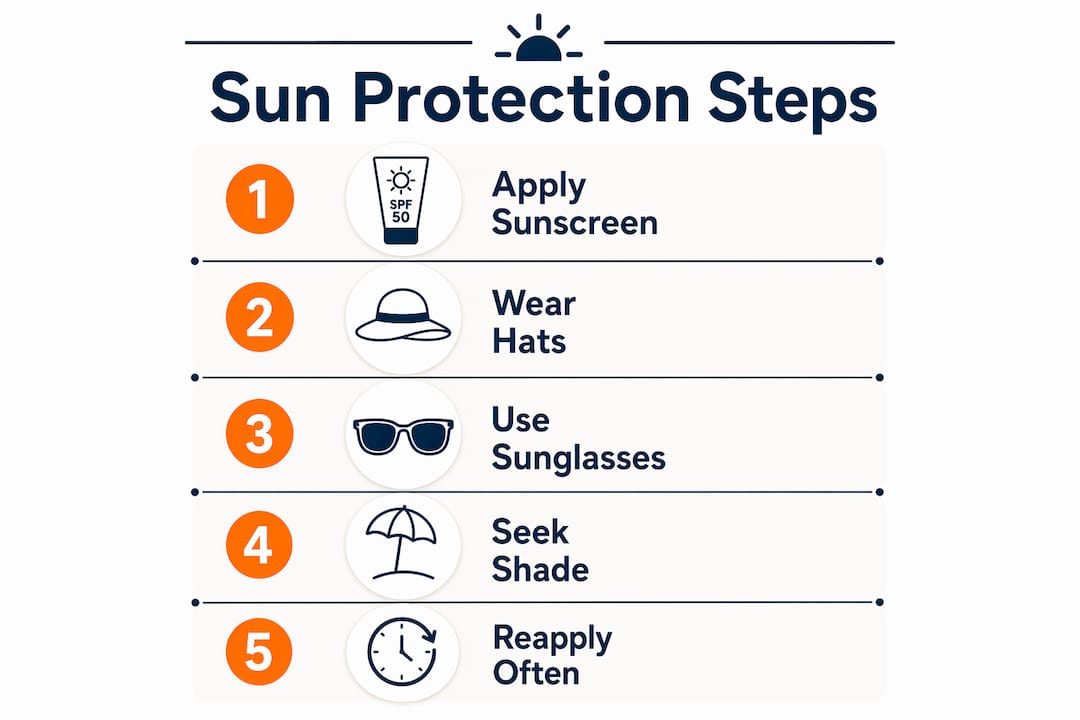
La protección UV eficaz para los niños en los programas de verano combina múltiples capas. Ninguna medida por sí sola es suficiente. El CDC confirma que el protector solar funciona mejor como parte de un enfoque combinado que incluye sombra y ropa protectora.
Aquí está el protocolo estándar que la mayoría de los programas siguen y lo que debe verificar antes del primer día de su hijo:
- Protector solar de amplio espectro, SPF 30 o superior. Aplíquelo de 15 a 30 minutos antes de salir al exterior. Vuelva a aplicarlo cada 90 minutos a dos horas, e inmediatamente después de nadar o sudar mucho. El SPF 15 es el mínimo, pero el SPF 30 o superior es el estándar para programas al aire libre prolongados.
- Ropa protectora UPF 50+. Una camiseta de algodón estándar proporciona aproximadamente UPF 5 cuando está seca y menos cuando está mojada. La tela UPF 50+ bloquea más del 98% de la radiación UV y mantiene esa calificación a través del agua y el sudor.
- Sombreros de ala ancha. Un sombrero con un ala de al menos tres pulgadas protege la cara, las orejas y la parte posterior del cuello, que se encuentran entre las áreas más comúnmente quemadas en los niños.
- Gafas de sol con bloqueo UV. Los ojos son vulnerables al daño UV, incluidas las cataratas y la fotoqueratitis. Las gafas protectoras diseñadas para niños deben bloquear del 99 al 100% de los rayos UVA y UVB.
- Programación de sombra. Los programas deben limitar la exposición al aire libre sin sombra durante las horas pico de UV y usar estructuras de sombra, árboles o áreas cubiertas para los períodos de descanso y las comidas.
| Método de protección | Mejor caso de uso |
|---|---|
| Protector solar SPF 30+ | Toda la piel expuesta al sol directo; volver a aplicar después del agua |
| Ropa UPF 50+ | Programas al aire libre de día completo; reemplaza el protector solar en áreas cubiertas |
| Sombrero de ala ancha | Protección para la cara, las orejas y el cuello durante cualquier actividad al aire libre |
| Gafas de sol UV | Protección ocular durante el juego en el agua, deportes y actividades al aire libre |
| Programación de sombra | Reduce la dosis acumulada de UV durante las horas pico (10 a.m. a 4 p.m.) |
Consejo profesional: Envíe a su hijo al campamento con el protector solar ya aplicado. Muchos programas tienen políticas que impiden que el personal aplique protector solar a los niños sin consentimiento por escrito. Comenzar el día protegido elimina por completo esa brecha.
Desafíos para mantener la protección solar en niños
Conocer las prácticas correctas y ejecutarlas consistentemente son dos problemas diferentes. Los datos de encuestas muestran que muchos niños no usan regularmente sombreros, protector solar o ropa protectora sin recordatorios, lo que es exactamente la razón por la que los programas estructurados son necesarios en lugar de opcionales.
Las brechas más comunes en la protección solar en el mundo real incluyen:
- Zonas olvidadas. Las orejas, la nuca, la parte superior de los pies y el dorso de las manos se suelen saltar durante la autoaplicación. El personal del campamento capacitado en seguridad solar sabe cómo recordar a los niños estas zonas específicamente.
- Degradación por el juego en el agua. Incluso el protector solar resistente al agua pierde eficacia después de 40 a 80 minutos en el agua. Los programas que incluyen natación necesitan un protocolo de reaplicación vinculado a la salida de la piscina, no solo una aplicación por la mañana.
- Sudor y fricción. La actividad física hace que el protector solar se desgaste más rápido de lo que sugiere la etiqueta. La ropa que roza la piel, el secado con toalla y el sudor reducen la capa protectora.
- Resistencia de los niños mayores. Los preadolescentes y adolescentes suelen saltarse el protector solar por razones sociales. Los programas que normalizan la protección solar como una rutina grupal, en lugar de señalar a niños individuales, ven una mejor adherencia.
Las rutinas estructuradas de protección solar en los campamentos contrarrestan la aplicación inconsistente de los niños al integrar la reaplicación en los puntos de transición naturales: antes de la formación, antes de nadar, después del período de descanso. Esto elimina la carga de los niños individuales y la sitúa dentro de la estructura diaria del programa.
Consejo profesional: Pregunte al director del programa de su hijo específicamente cuándo se reaplica el protector solar durante el día. Si la respuesta es vaga o se limita a la llegada por la mañana, esa es una laguna que merece la pena abordar directamente con el personal.
Cómo los padres y cuidadores pueden apoyar la seguridad solar en los programas de verano
Su papel no termina con la entrega. Los resultados más efectivos en seguridad solar en programas de verano ocurren cuando los padres y los programas trabajan con el mismo plan. Esto es lo que puede hacer por su parte:
- Envíe el equipo adecuado. Empaque una botella etiquetada de protector solar de amplio espectro SPF 30+, un gorro para el sol UPF 50+ y gafas de sol con bloqueo UV todos los días. No asuma que el programa suministra estos artículos.
- Comuníquese con el personal. Pregunte sobre la política escrita de seguridad solar del programa. Confirme si el personal aplica protector solar, si se requieren formularios de consentimiento y cómo se programa la reaplicación.
- Enséñele a su hijo por qué es importante. Los niños que entienden la razón detrás de una regla la siguen de manera más consistente. Una explicación simple, "el protector solar evita que su piel se queme y duela", es suficiente para los niños más pequeños. Los niños mayores responden a un encuadre a largo plazo sobre la salud de la piel.
- Conozca las señales de advertencia. Las quemaduras solares aparecen como piel roja, cálida y sensible y pueden no alcanzar su punto máximo hasta 12 a 24 horas después de la exposición. El agotamiento por calor se presenta como sudoración intensa, debilidad, piel fría o pálida y náuseas. Ambos requieren atención inmediata.
- Compruebe el equipo de seguridad solar al aire libre que su hijo realmente usa. El equipo que no le queda bien o le resulta incómodo se queda en la bolsa. Pruebe los sombreros y las gafas de sol antes de que comience el programa para que su hijo se sienta cómodo usándolos.
El daño UV se acumula con el tiempo, y los hábitos formados durante la infancia se transmiten al comportamiento adulto. Los años de los programas de verano son una ventana de alto aprovechamiento para construir esos hábitos con estructura y repetición.
Puntos clave
Los programas de verano requieren protección solar porque los horarios prolongados al aire libre de los niños, combinados con superficies reflectantes y horas pico de UV, crean una exposición acumulativa a los UV que causa tanto daño inmediato como un mayor riesgo de cáncer de piel a lo largo de la vida.
| Punto | Detalles |
|---|---|
| La exposición a los rayos UV es mayor en el campamento | Los horarios prolongados al aire libre proporcionan una dosis de rayos UV mucho mayor que un día escolar típico. |
| Las quemaduras en la infancia aumentan el riesgo de cáncer | Una cuarta parte de la exposición solar de por vida ocurre en la infancia; las quemaduras con ampollas aumentan el riesgo de melanoma. |
| La protección en capas funciona mejor | El protector solar, la ropa UPF, los sombreros y las gafas de sol juntos superan cualquier medida individual. |
| La reaplicación no es negociable | El protector solar debe reaplicarse cada 90 minutos a dos horas, especialmente después de nadar. |
| Padres y programas comparten la responsabilidad | Enviar el equipo adecuado y comunicarse con el personal cierra las brechas que los programas estructurados no pueden cubrir por sí solos. |
Lo que he aprendido de observar el éxito y el fracaso de las rutinas de seguridad solar
He pasado años revisando cómo los campamentos y programas al aire libre manejan la seguridad solar, y el patrón es consistente. Los programas que tratan la protección solar como una actividad programada, de la misma manera que programan las comidas y los períodos de descanso, producen resultados notablemente mejores que los programas que dependen de que los niños o los padres se autogestionen.
El error más persistente que veo en los padres es la suposición del día nublado. Una mañana gris en el campamento parece de bajo riesgo. No lo es. La radiación UV no requiere luz solar visible para causar daño, y la falsa sensación de seguridad en los días nublados lleva a saltarse las aplicaciones de protector solar que se acumulan a lo largo del verano.
También creo que la diferenciación por edades está subestimada. Los padres a menudo aplican la misma lógica de protección solar a un niño de 10 años que a uno de 3, cuando las necesidades prácticas son bastante diferentes. Los niños mayores necesitan educación y formación de hábitos. Los niños más pequeños necesitan barreras físicas y rutinas gestionadas por adultos. Los bebés necesitan sombra y ropa, no protector solar.
Lo más efectivo que un padre puede hacer es modelar el comportamiento. Si su hijo lo ve aplicándose protector solar antes de las actividades al aire libre, usando un sombrero y poniéndose gafas de sol, lo absorben como un comportamiento normal. Los programas refuerzan el hábito. Los padres lo establecen.
— Shari M. Murphy
Equipo que su hijo necesita para programas de verano seguros bajo el sol
BANZ fabrica equipo de protección solar específicamente para niños, desde bebés hasta niños mayores. Los sombreros de sol reversibles UPF 50+ bloquean más del 98% de la radiación UV y resisten los días activos del campamento, el juego en el agua y los lavados repetidos. Para los campistas más pequeños, los sombreros de sol para bebés con UPF 50+ proporcionan una protección de cobertura total diseñada para la delicada piel de los bebés. Combine cualquiera de los sombreros con las gafas de sol envolventes para niños de BANZ para una cobertura completa de la cara y los ojos. Cada producto se envía listo para el primer día de campamento.
Preguntas frecuentes
¿Por qué los programas de verano requieren políticas de protección solar?
Los programas de verano requieren políticas de protección solar porque los niños pasan muchas horas al aire libre durante las horas pico de UV, creando una exposición acumulativa que causa quemaduras solares, enfermedades por calor y un mayor riesgo de cáncer de piel a largo plazo. Las políticas estructuradas compensan la aplicación inconsistente de protector solar y equipo de protección por parte de los niños.
¿Qué SPF de protector solar deben usar los niños en el campamento?
La Academia Estadounidense de Pediatría recomienda protector solar de amplio espectro con SPF 30 o superior para niños en programas al aire libre. Aplíquelo de 15 a 30 minutos antes de salir al exterior y vuelva a aplicarlo cada 90 minutos a dos horas, especialmente después de nadar.
¿Necesitan los niños protección solar en días nublados en el campamento?
Sí. Hasta el 80% de los rayos UV penetran la capa de nubes, lo que significa que los días nublados aún proporcionan una exposición UV significativa. Los niños en programas al aire libre necesitan protector solar, sombreros y ropa protectora independientemente de si el cielo está soleado o nublado.
¿Qué equipo de protección solar debo enviar con mi hijo al campamento?
Envía protector solar de amplio espectro con SPF 30+, un sombrero de ala ancha con UPF 50+ y gafas de sol con protección UV. Etiqueta todo con el nombre de tu hijo y confirma con el personal del programa cómo y cuándo se maneja la reaplicación durante el día.
¿Están seguros los bebés en los programas de verano al aire libre sin protector solar?
Los bebés menores de 6 meses deben evitar por completo la luz solar directa e indirecta. La sombra y la ropa con clasificación UPF son los principales métodos de protección para este grupo de edad, ya que su piel es demasiado sensible para la mayoría de las formulaciones de protectores solares y su regulación del calor no está completamente desarrollada.
Recomendado
- Por qué las actividades en la playa requieren protección UV adicional – BANZ® Carewear USA
- Ejemplos de equipo de seguridad solar para niños al aire libre en 2026 – BANZ® Carewear USA
- Capas de protección solar para niños pequeños: ejemplos reales – BANZ® Carewear USA
- Cómo las gafas protectoras benefician a los estudiantes al aire libre – BANZ® Carewear USA