

Los ojos de los niños pequeños absorben mucha más radiación ultravioleta que los de los adultos; sin embargo, la mayoría de los padres tratan la protección solar como una preocupación cutánea y ahí la dejan. Comprender cómo la exposición a los rayos UV afecta los ojos de los niños pequeños es más importante de lo que muchos cuidadores creen. El daño es en gran parte invisible, a menudo tardío y se acumula silenciosamente durante años de juegos al aire libre. Esta guía cubre la ciencia detrás de lo que la radiación UV hace dentro del ojo de un niño pequeño, las afecciones que puede desencadenar, cómo reconocer las señales de advertencia y los pasos específicos que puede tomar cada vez que su hijo pequeño sale.
Tabla de Contenidos
- Conclusiones clave
- Cómo la exposición a los rayos UV afecta los ojos de los niños pequeños de manera diferente a los adultos
- Afecciones relacionadas con la luz ultravioleta en niños pequeños
- Cómo proteger los ojos de los niños pequeños del sol
- Mitos comunes sobre la protección ocular UV para niños pequeños
- Monitoreo y respuesta a los síntomas
- Mi opinión sobre una brecha de prevención que la mayoría de las familias no ven
- Equipo que hace que la protección ocular UV diaria sea práctica
- Preguntas frecuentes
Conclusiones clave
| Punto | Detalles |
|---|---|
| Los ojos de los niños pequeños absorben más rayos UV | Los lentes y las córneas jóvenes transmiten más rayos UV a la retina que los ojos de los adultos. |
| El daño a menudo se retrasa | Los síntomas de la fotoqueratitis aparecen horas después de la exposición, no de inmediato. |
| Los días nublados aún representan un riesgo | Los rayos UV penetran las nubes y la sombra, por lo que se necesita protección independientemente de las condiciones del cielo. |
| La protección en capas funciona mejor | Los sombreros, las gafas de sol, la sombra y la ropa con protección UV reducen juntos el riesgo de exposición. |
| Comience la protección con un Índice UV de 3 | El daño ocular y cutáneo puede ocurrir en 10 minutos cuando el Índice UV alcanza 3 o más. |
Cómo la exposición a los rayos UV afecta los ojos de los niños pequeños de manera diferente a los adultos
La radiación ultravioleta se divide en tres categorías: UVA, UVB y UVC. Los rayos UVC son filtrados por la atmósfera antes de llegar al suelo. Los rayos UVA y UVB son los que llegan a los ojos de su hijo pequeño durante cualquier actividad al aire libre.
En un adulto, el cristalino del ojo ha tenido años para desarrollarse y se amarillea ligeramente con la edad, lo que en realidad ayuda a filtrar los rayos UV antes de que lleguen a la retina. El cristalino de un niño pequeño es claro y casi transparente. Esto significa que una proporción mucho mayor de radiación UV pasa directamente a la parte posterior del ojo. Las estimaciones sugieren que los ojos de los niños pequeños transmiten una cantidad sustancialmente mayor de energía UV a la retina que los ojos de los adultos, y algunas investigaciones apuntan a un factor del 70% o más.
Esto es lo que la radiación UV hace a las estructuras oculares de un niño pequeño:
- Córnea: La radiación UVB daña la superficie exterior de la córnea, causando una afección llamada fotoqueratitis, a veces descrita como una quemadura solar del ojo. El mecanismo es similar a la quemadura solar en la piel, con células que absorben energía UV y se inflaman.
- Cristalino: Los rayos UV dañan las proteínas y los lípidos del cristalino, causando estrés oxidativo que se acumula a lo largo de los años. Este es el camino hacia la formación de cataratas, que pueden aparecer mucho antes en alguien con una fuerte exposición a los rayos UV durante la infancia.
- Retina: Los rayos UVA penetran más profundamente que los UVB y pueden llegar a la mácula, el área de la retina responsable de la visión central nítida. La exposición repetida contribuye al daño macular con el tiempo.
- Conjuntiva: La membrana delgada que cubre la parte blanca del ojo puede desarrollar pterigión, un crecimiento provocado por la exposición repetida a los rayos UV, que eventualmente puede afectar la visión si no se trata.
Un detalle que sorprende a muchos padres: los síntomas de un único episodio agudo de sobreexposición a los rayos UV no aparecen de inmediato. Los síntomas de fotoqueratitis como dolor y enrojecimiento suelen desarrollarse horas después del evento de exposición. Su hijo pequeño puede pasar una mañana en la playa, parecer completamente bien a la hora del almuerzo y luego despertarse de una siesta con molestias.
Consejo profesional: Verifique el Índice UV antes de salir, no solo el pronóstico del tiempo. Los niveles de UV dependen de la altitud, la estación y los niveles de ozono, no de la nubosidad.
Afecciones relacionadas con la luz ultravioleta en niños pequeños
Los padres necesitan una imagen clara de lo que realmente están tratando de prevenir. Estas son las afecciones relacionadas con los riesgos de exposición a los rayos UV para los niños.
-
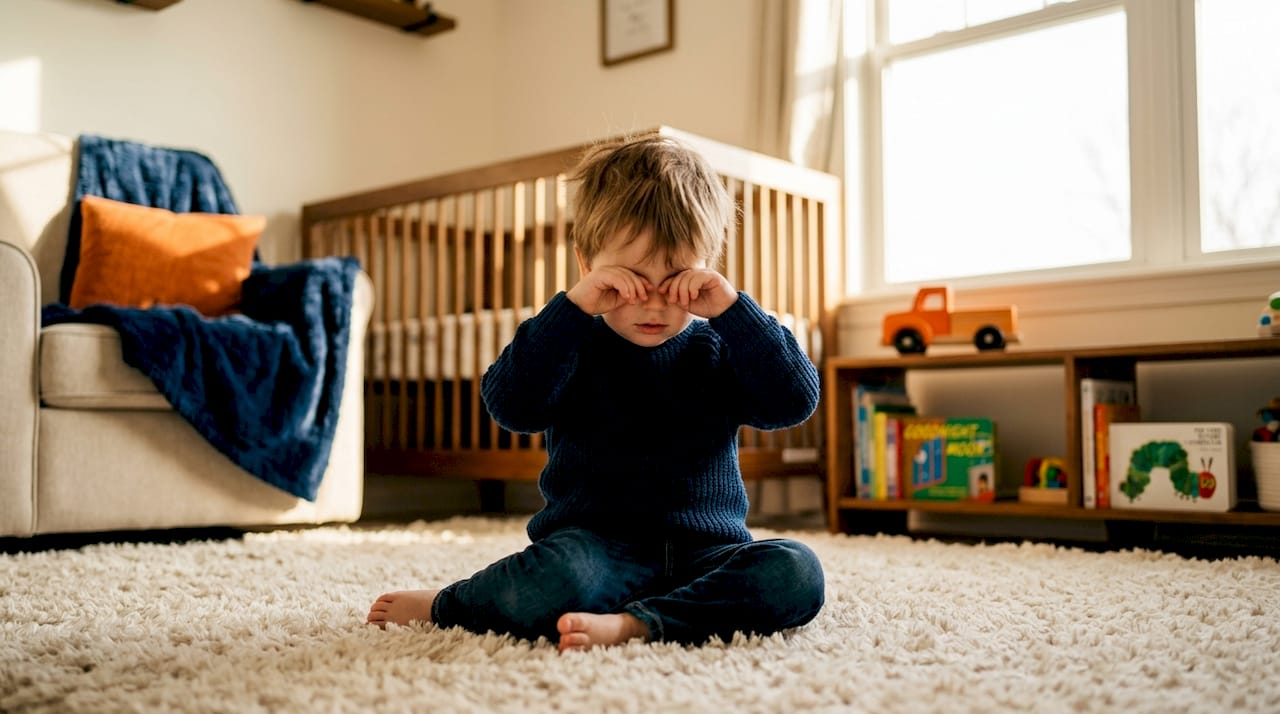
Fotoqueratitis. Esta es la afección aguda, la más probable que aparezca después de un único evento de alta exposición. Los síntomas aparecen horas después de la sobreexposición a los rayos UV y pueden incluir dolor ocular, enrojecimiento, sensación de arenilla, lagrimeo excesivo y sensibilidad a la luz. En los niños pequeños, esto a menudo se presenta como frotarse los ojos, irritabilidad y resistencia a la luz mucho después de que termine la salida.
-
Cataratas. La mayoría de las personas asocian las cataratas con la vejez. Existen cataratas pediátricas, y la exposición acumulada a los rayos UV durante la infancia es un factor que contribuye. El estrés oxidativo en el cristalino debido a los rayos UV se acumula a lo largo de los años, por lo que los hábitos establecidos ahora importan mucho después de que termine la etapa de niño pequeño.
-
Pterigión. Un crecimiento carnoso que comienza en la parte blanca del ojo y puede crecer hacia la córnea. Está fuertemente asociado con una alta exposición a los rayos UV, particularmente en poblaciones con largas horas de infancia al aire libre. Es incómodo y, en casos avanzados, afecta la visión y requiere extirpación quirúrgica.
-
Daño macular. La exposición acumulada a los rayos UVA a lo largo de la vida contribuye a la descomposición de las células de la retina en la región macular. La base de este daño puede comenzar en la infancia.
El ojo de un niño pequeño no es una versión más pequeña del ojo de un adulto en términos de filtrado UV. Es un sistema estructuralmente diferente y mucho más permeable, por lo que los niños necesitan más protección, no menos.
El punto crítico sobre el daño ocular por rayos UV en niños es el tiempo. Debido a que los niños pequeños no pueden expresar el dolor ocular con claridad y porque los síntomas a menudo llegan horas después de la exposición, los padres con frecuencia no saben que ha ocurrido ningún daño. El seguimiento de los eventos de exposición a los rayos UV, especialmente los de alta intensidad, como días de playa, días de piscina o viajes a la montaña, le ayuda a conectar los puntos si los síntomas aparecen más tarde.
Cómo proteger los ojos de los niños pequeños del sol
La protección multicapa es el estándar. Ningún elemento es suficiente por sí solo.
Opciones de protección comparadas
| Método de protección | Beneficio UV para los ojos | Limitación |
|---|---|---|
| Sombrero de sol de ala ancha | Reduce la radiación UV directa sobre los ojos | No bloquea los rayos UV reflejados por la arena o el agua |
| Gafas de sol envolventes | Bloquea los rayos UV directos y angulados por todos los lados | Debe ajustarse correctamente y permanecer en el niño |
| Sombra (árbol o sombrilla) | Reduce significativamente la carga total de UV | Los rayos UV reflejados de las superficies aún llegan a los ojos |
| Ropa con protección UV | Reduce los rayos UV de la piel; la sombra del cuello y el ala ayuda a los ojos | Beneficio indirecto solo para los ojos |
 El Hospital Royal Children recomienda que la protección comience cuando el Índice UV alcance 3 o más. El daño puede ocurrir en 10 minutos a ese nivel. El Índice UV en la mayor parte de los Estados Unidos continentales supera regularmente el 3 durante seis o más meses al año.
Al elegir gafas de sol para un niño pequeño, busque estas características específicas:
- Diseño de montura envolvente. Esto bloquea la entrada de rayos UV por los lados y la parte superior de la montura, no solo de frente.
- Etiquetado completo UV400 o "bloquea el 100% de los rayos UV". Esto significa que el lente bloquea tanto los rayos UVA como los UVB hasta 400 nanómetros. La "protección UV" sin especificar es demasiado vaga.
- Lentes polarizados. La polarización reduce el deslumbramiento de superficies reflectantes como el agua, la nieve y el pavimento. Esto es importante porque los rayos UV reflejados son un factor importante en la fotoqueratitis.
- Ajuste seguro y cómodo. Las gafas de sol que su hijo pequeño se niega a usar no ofrecen ninguna protección. Las monturas flexibles y las almohadillas nasales suaves ayudan con el cumplimiento.
Combine las gafas de sol para niños pequeños con un sombrero de sol UPF 50+ que tenga un ala de al menos 3 pulgadas alrededor. El sombrero reduce la carga de UV superior; las gafas de sol manejan los ángulos que el sombrero no puede.
Consejo profesional: En días nublados, los rayos UV aún penetran y los rayos UV reflejados en superficies de colores claros pueden ser igual de intensos. Los rayos UV penetran las nubes, así que haga de las gafas de sol parte de la rutina diaria al aire libre, no solo para los días de playa.
Mitos comunes sobre la protección ocular UV para niños pequeños
Muchas de las barreras para una protección constante se deben a suposiciones incorrectas. Estas son las que surgen con mayor frecuencia.
-
“No hace tanto sol, estaremos bien.” Los cielos nublados no detienen la radiación UV. Las nubes dispersan los rayos UV pero no los eliminan. Los valores del índice UV en días nublados aún pueden superar el 3, lo que significa que existe un riesgo real para los ojos de un niño pequeño.
-
“Solo estamos a la sombra.” La sombra de un árbol o una sombrilla reduce los rayos UV directos pero no los reflejados de las superficies circundantes. La arena, el agua, el hormigón y la nieve rebotan los rayos UV hacia la cara de un niño pequeño.
-
“Solo jugaron afuera durante 20 minutos.” El cálculo de la exposición a los rayos UV funciona de forma acumulativa. Veinte minutos con un índice UV de 6 durante 200 días al año suman más de 40 horas de exposición significativa a los rayos UV anualmente, todo ello afectando a ojos con un filtrado natural muy limitado.
-
“Si les doliera, lo dirían.” El inicio tardío de la fotoqueratitis significa que la molestia llega horas después, a menudo durante la noche. Un niño pequeño que parece cómodo después de una sesión al aire libre puede estar experimentando un daño corneal que no se manifestará hasta que intente dormir.
-
“El sombrero es suficiente.” Los sombreros son valiosos, pero no bloquean los rayos UV reflejados que provienen de abajo o en ángulo. Se necesita un enfoque de protección combinado que incluya gafas de sol para una cobertura ocular adecuada.
Lograr que un niño pequeño use gafas de sol requiere constancia. Empiece joven, modele el comportamiento usted mismo y elija monturas que le resulten cómodas. Algunos niños se adaptan a ellas de inmediato una vez que experimentan cuánto ayuda la reducción del deslumbramiento.
Monitoreo y respuesta a los síntomas
Saber qué observar después de pasar tiempo al aire libre es tan importante como la prevención.
-
Observe a su hijo pequeño durante 6 a 12 horas después de una exposición significativa a los rayos UV. Preste atención a si se frota los ojos, entrecierra los ojos en interiores, se resiste a la luz normal o se queja de dolor ocular en niños pequeños mayores.
-
Si sospecha de fotoqueratitis, diríjase a una habitación oscura y aplique un paño frío y húmedo sobre los ojos cerrados. Evite frotarse. No aplique gotas para los ojos a menos que lo indique un médico.
-
Comuníquese con su pediatra o un oftalmólogo pediátrico si los síntomas persisten más allá de unas pocas horas, si el dolor parece intenso o si la visión parece afectada. No espere a que los síntomas se resuelvan solos si el episodio fue un evento claro de alta exposición a los rayos UV, como un día de playa sin protección.
-
Mantenga un registro de los eventos significativos de exposición a los rayos UV. Anote la fecha, la duración, el índice UV si lo verificó y si se utilizó protección. Una línea de tiempo de exposición detallada ayuda a los médicos a realizar un diagnóstico preciso cuando los síntomas aparecen sin una causa obvia.
-
Después de cualquier incidente ocular relacionado con los rayos UV, refuerce los hábitos de protección. Los niños que han experimentado fotoqueratitis una vez no son inmunes a ella nuevamente. Utilice el episodio como una lección práctica en la rutina al aire libre de la familia.
Consejo profesional: Descargue una aplicación de monitoreo UV en tiempo real antes de que empiece el verano. La aplicación gratuita BANZ Protect de Banzworld rastrea los niveles de índice UV en tiempo real, para que sepa exactamente cuándo se necesita protección cada día.
Mi opinión sobre una brecha de prevención que la mayoría de las familias no ven
He pasado mucho tiempo analizando cómo las familias abordan la protección al aire libre, y el patrón que veo repetidamente es este: los padres aplican protector solar cuidadosamente, visten a los niños con camisetas de protección contra erupciones cutáneas y luego les dan un sombrero y consideran que el trabajo está hecho. Los ojos casi no reciben atención dedicada.
Lo que me sorprende es que el riesgo ocular es, en cierto modo, mayor que el riesgo cutáneo para un niño pequeño, precisamente porque el cristalino es tan transparente y el daño tan invisible. La piel se pone roja. Se ve la quemadura. El daño ocular de un día en el parque no le da esa retroalimentación. Un niño pequeño frotándose los ojos a la hora de acostarse después de una tarde soleada podría estar cansado, podría estar reaccionando al polen o podría estar experimentando el inicio de fotoqueratitis por una exposición UV sin protección más temprano ese día. Las señales son fáciles de pasar por alto.
También he notado que las familias tienden a subestimar el daño acumulativo. Piensan en eventos de exposición individuales en lugar de la carga total que se acumula durante meses y años. Reducir la exposición repetida a los rayos UV reduce el riesgo de cataratas de manera mucho más efectiva que monitorear los síntomas que aparecen décadas después. La prevención aquí no es dramática. Es un par de gafas de sol que ajustan bien y un sombrero, siempre, antes del segundo verano de su hijo pequeño.
— Shari
Equipo que hace que la protección ocular UV diaria sea práctica
Contar con el equipo adecuado elimina las dificultades de las rutinas de protección diarias. Banzworld ofrece una gama de productos específicamente diseñados para los riesgos de exposición a los rayos UV a los que se enfrentan los niños pequeños.
Las gafas de sol envolventes polarizadas Bubzee ofrecen protección UV400 completa con una montura envolvente que bloquea los rayos UV desde todos los ángulos. Se mantienen cómodamente en su lugar, lo cual es el factor que realmente determina la cantidad de protección que recibe su hijo. Combínelas con el sombrero de sol de bolsillo Bubzee para una cobertura superior UPF 50+ que se pliega en su propio bolsillo para facilitar el almacenamiento. Para los niños pequeños más jóvenes, el sombrero de sol reversible para bebés ofrece protección UPF 50+ con dos estilos en uno. Los tres productos funcionan como un sistema de capas, que es exactamente lo que la investigación recomienda para proteger los ojos y la piel de los niños pequeños al aire libre.
Preguntas frecuentes
¿Cuánto más UV absorben los ojos de los niños pequeños en comparación con los adultos?
El cristalino de un niño pequeño es transparente y ofrece un filtrado UV mínimo, lo que permite que una cantidad significativamente mayor de radiación llegue a la retina en comparación con el cristalino amarillento y filtrador de UV de un adulto. Las estimaciones sugieren que los ojos de los niños pueden transmitir hasta un 70% más de energía UV a la retina.
¿Cuáles son los signos de daño ocular por rayos UV en niños pequeños?
Los síntomas de la fotoqueratitis incluyen enrojecimiento ocular, dolor, lagrimeo excesivo y sensibilidad a la luz, pero estos suelen aparecer horas después de la exposición a los rayos UV, en lugar de inmediatamente. En los niños pequeños, observe si se frotan los ojos, entrecierran los ojos en interiores o si están inusualmente irritables después de pasar tiempo al aire libre.
¿Necesitan los niños pequeños gafas de sol en días nublados?
Sí. La radiación UV penetra la capa de nubes y aún puede alcanzar niveles dañinos incluso cuando el sol no es visible. Las gafas de sol deben ser parte de cualquier rutina al aire libre cuando el Índice UV es 3 o superior, independientemente de las condiciones del cielo.
¿A qué nivel de Índice UV debe comenzar la protección ocular para niños pequeños?
El Royal Children’s Hospital aconseja que la protección debe comenzar con un Índice UV de 3, ya que el daño a los ojos y la piel puede ocurrir en 10 minutos a ese nivel. En la mayoría de las regiones de EE. UU., este umbral se supera durante la mayor parte del año.
¿Puede la exposición a los rayos UV causar problemas de visión a largo plazo en niños pequeños?
Sí. Con el tiempo, los rayos UV dañan las proteínas del cristalino, lo que contribuye a la formación temprana de cataratas, y la exposición repetida también puede causar daño macular y el crecimiento de pterigios. Estas afecciones se desarrollan gradualmente, por lo que la protección constante durante la primera infancia es importante.
Recomendado
- Gafas de sol envolventes para niños pequeños – BANZ® Carewear USA
- Gafas de sol envolventes para niños pequeños - Bubzee Polarized Wrap Around – BANZ® Carewear USA
- Gafas de sol envolventes para niños pequeños - Bubzee Wrap Around – BANZ® Carewear USA
- Gafas de sol envolventes para niños pequeños - Retro Wrap Around – BANZ® Carewear USA