

Elegir el sombrero de sol adecuado para niños pequeños implica medir con precisión la cabeza de su hijo, seleccionar una tela UPF 50+ que bloquee más del 99% de los rayos UV y elegir un estilo que se mantenga puesto durante el juego activo. Las tallas genéricas basadas en la edad fallan más a menudo de lo que los padres esperan porque la circunferencia de la cabeza de los niños pequeños varía mucho a la misma edad. Esta guía explica cómo medir correctamente, qué estilos de sombreros ofrecen la mejor protección solar para los niños, cómo mantener un sombrero puesto en un niño inquieto y cómo combinar las características del sombrero con actividades al aire libre específicas. Marcas como BANZ, Jan & Jul y Sunday Afternoons abordan el ajuste y la protección de manera diferente, y saber qué buscar lo pone a usted en control.
Cómo medir la cabeza de su hijo pequeño para el mejor ajuste del sombrero de sol
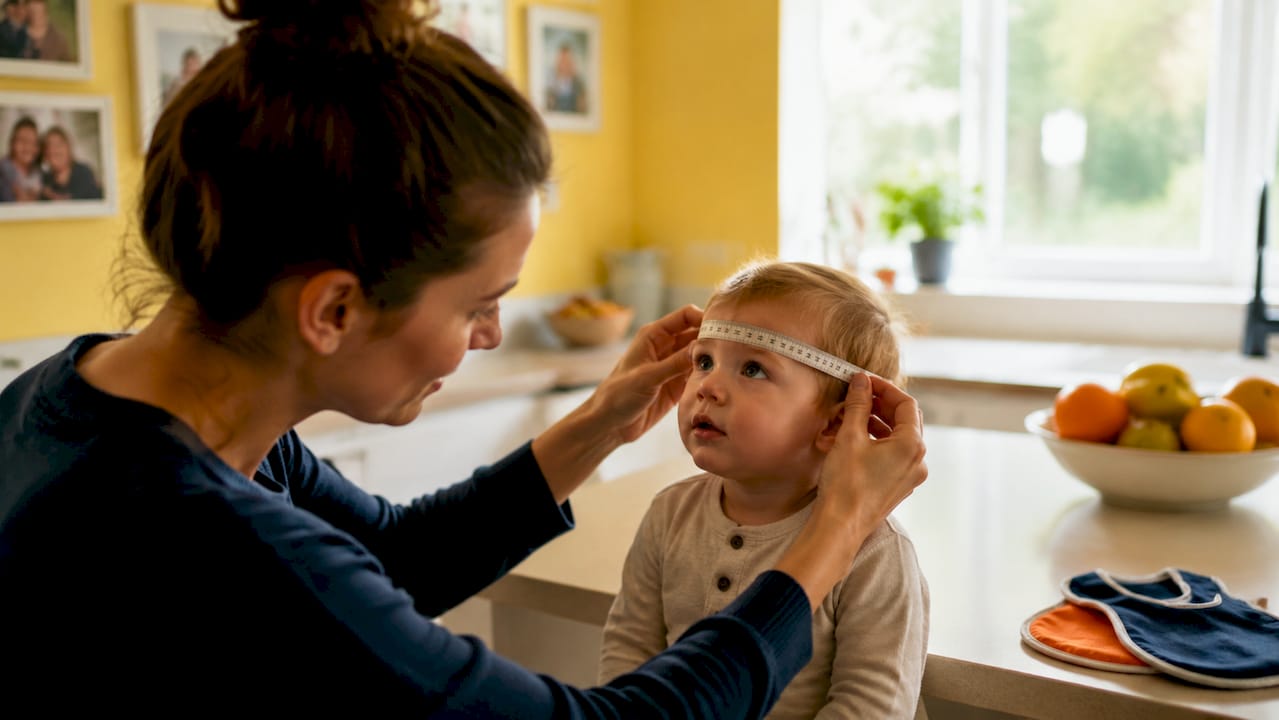
La medición precisa de la cabeza es la forma más fiable de elegir un sombrero de sol para niños pequeños que se ajuste. Las etiquetas de talla basadas en la edad son pautas del fabricante, no garantías. Un niño de dos años puede tener la circunferencia de la cabeza de un niño de cuatro años, y depender únicamente de la etiqueta lleva a sombreros que se deslizan sobre los ojos o aprietan incómodamente.
Siga estos pasos para obtener una medición precisa:
- Utilice una cinta métrica suave y flexible. Una cinta de costura de tela funciona mejor. Una regla rígida no seguirá la curva de la cabeza.
- Coloque la cinta aproximadamente un octavo de pulgada por encima de las orejas y a través de la mitad de la frente. Este es el punto más ancho de la cabeza.
- Estire la cinta de forma ajustada, pero no apretada. Desea que quede plana contra la piel sin comprimir.
- Registre la medida en centímetros. La mayoría de las tablas de tallas de sombreros para niños pequeños utilizan centímetros, no pulgadas.
- Compare su número directamente con la tabla de tallas de la marca, no con una tabla de edad universal. BANZ, Jan & Jul y Sunday Afternoons publican sus propias tablas de tallas.
Una vez que tenga la medida, compárela con la tabla de la marca específica antes de agregarla al carrito. La talla varía hasta dos centímetros entre marcas para la misma edad indicada.
Consejo profesional: Cuando la medida de su hijo pequeño se encuentre entre dos tallas, elija la talla más grande y use el cordón ajustable o la banda con tope del sombrero para ajustar el espacio adicional. Un sombrero ligeramente grande con un ajuste seguro es mejor que un sombrero demasiado pequeño en todo momento.
¿Qué tipos de sombreros de sol para niños pequeños ofrecen la mejor protección?
No todos los estilos de sombreros protegen por igual. Comprender las diferencias le ayuda a elegir el tipo adecuado para las actividades de su hijo pequeño y su nivel de riesgo.
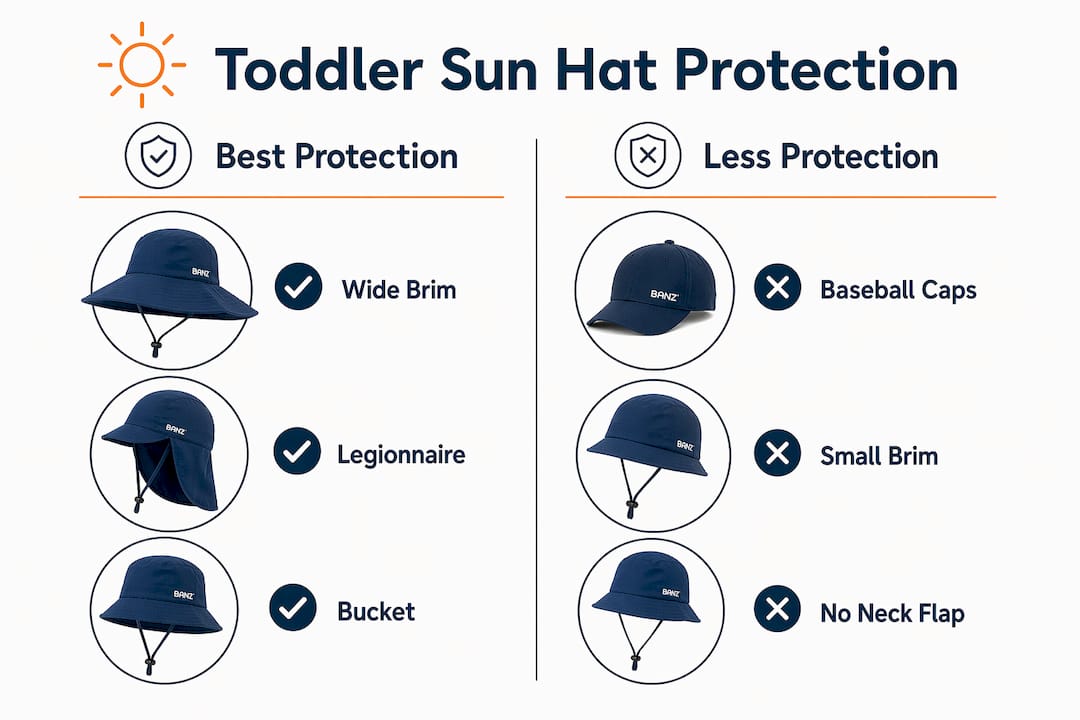
Los sombreros de ala ancha son la mejor opción en general. Los alas de al menos 6 centímetros protegen la cara, las orejas y la nuca simultáneamente. Esto es importante porque las orejas y la nuca son algunas de las zonas más comúnmente quemadas por el sol en los niños pequeños.
Los sombreros legionarios añaden una solapa trasera al ala estándar, cubriendo completamente el cuello y la parte inferior de las orejas. Son el estilo preferido para exposiciones prolongadas al aire libre, días de playa y sol de mediodía. La solapa se mantiene en su lugar sin requerir que el niño pequeño mantenga la cabeza en un ángulo específico.
Los sombreros de pescador ofrecen un ala de 360 grados que es más corta que la de un sombrero de ala ancha, pero aún cubre más que una gorra de béisbol. Son flexibles, se pueden guardar y son fáciles de poner. La seguridad del ajuste depende en gran medida de las características de tamaño interno del sombrero.
Las gorras de béisbol dejan las orejas y el cuello completamente expuestos. Los expertos desaconsejan las gorras de béisbol para períodos prolongados al aire libre porque la falta de cobertura es demasiado significativa para los niños pequeños que pasan horas fuera.
| Estilo de sombrero | Cobertura solar | Seguridad del ajuste | Mejor actividad |
|---|---|---|---|
| Ala ancha | Cara, orejas, cuello | Moderada a alta | Parque, paseos en cochecito, actividades al aire libre en general |
| Legionario | Cara, orejas, cuello completo | Alta | Playa, senderismo, sol de mediodía |
| Gorro de cubo | Cara, orejas parciales | Moderada | Actividades al aire libre informales, viajes |
| Gorra de béisbol | Solo la cara | Alta | No recomendado para protección solar |
La tabla anterior muestra que los estilos legionario y de ala ancha superan consistentemente a otros tipos de sombreros en cuanto a protección solar para niños. La preferencia de estilo importa, pero la cobertura debe ser el primer filtro.
Cómo conseguir un ajuste seguro en un niño pequeño inquieto o activo
Un sombrero que se cae cada cinco minutos no ofrece ninguna protección. La seguridad del ajuste para niños pequeños activos depende de tres cosas: el tamaño ajustable, el diseño de la correa para la barbilla y la comodidad de la tela.
Características clave a buscar:
- Cordones internos ajustables o bandas con tope. Estos le permiten personalizar el ajuste después de la compra. Los topes y cordones evitan que se deslice al correr, trepar y realizar movimientos bruscos de la cabeza sin requerir un ajuste general apretado.
- Correas de barbilla de liberación rápida. Una correa de barbilla suave y de liberación rápida mantiene el sombrero puesto durante el juego activo, mientras se suelta bajo presión para evitar la asfixia. Esta es una característica de seguridad innegociable para niños pequeños menores de tres años.
- Tela ligera y transpirable. Las telas pesadas o ásperas hacen que los niños pequeños se quiten los sombreros. Los paneles de ventilación de malla y los forros que absorben la humedad reducen la acumulación de calor y hacen que usar el sombrero sea más cómodo en climas cálidos.
- Estructura de perfil bajo. Los sombreros con una estructura interna mínima se ajustan más a la cabeza y se mueven con el niño pequeño en lugar de desplazarse de forma independiente.
El cumplimiento es tanto un desafío conductual como un desafío de ajuste. Permitir que los niños pequeños elijan el color o el patrón de su sombrero aumenta la probabilidad de que lo usen de forma constante. Darle a un niño de dos años la opción entre dos opciones aprobadas crea una aceptación sin renunciar a los estándares de protección solar.
Para probar el ajuste antes de comprometerse: coloque el sombrero en la cabeza de su niño pequeño y pídale que mueva la cabeza de lado a lado. El sombrero no debe deslizarse sobre los ojos ni hacia atrás. Luego, abroche la correa de la barbilla y verifique que quepan dos dedos cómodamente debajo. Si el sombrero pasa ambas pruebas, el ajuste es correcto.
Consejo profesional: Incorpore el uso del sombrero a la rutina al aire libre antes de salir de casa, no en la puerta. Los niños pequeños se resisten a las transiciones. Ponerse el sombrero durante la fase de "preparación" reduce significativamente la resistencia.
Combinación de las características del sombrero de sol con actividades al aire libre específicas
El sombrero adecuado para una zona de juegos acuáticos no es el mismo que para una ruta de senderismo. Las características de diseño específicas para cada actividad determinan si un sombrero sigue siendo funcional y cómodo durante toda la salida.
- Juegos acuáticos y días de playa. Elija tejidos de nailon o poliéster de secado rápido. Las alas de espuma estructurada mantienen su forma cuando están mojadas, lo que evita que el ala se caiga sobre los ojos de su hijo pequeño en medio de un chapoteo. Evite el algodón para ambientes acuáticos porque permanece mojado durante horas y pierde su forma.
- Senderismo y paseos por senderos. Priorice las mezclas de algodón transpirables o los tejidos técnicos con clasificaciones UPF 50+. Los paneles de ventilación en la corona reducen la acumulación de calor durante la actividad física sostenida. Un estilo legionario añade cobertura al cuello en senderos expuestos donde la sombra es limitada.
- Paseos en cochecito y salidas informales. Un sombrero de pescador suave o un sombrero de ala ancha funcionan bien aquí. El niño pequeño es menos activo, por lo que la seguridad del ajuste es menos crítica que la comodidad. Las alas suaves también se pliegan sin dañarse, lo que las hace fáciles de guardar.
- Juegos en climas cálidos. Las bandas interiores que absorben la humedad evitan que el sudor gotee en los ojos. Busque sombreros con un forro interior completo en lugar de solo una tira de banda para el sudor.
| Actividad | Material recomendado | Tipo de ala | Característica clave |
|---|---|---|---|
| Juegos acuáticos | Nailon o poliéster de secado rápido | Estructura de espuma | Retención de forma cuando está mojado |
| Senderismo | Mezcla de algodón transpirable o tejido técnico | Ancha o legionaria | Paneles de ventilación |
| Paseos en cochecito | Algodón suave o mezcla de algodón | Ala ancha suave | Plegable, ligero |
| Juegos en climas cálidos | Tejido técnico que absorbe la humedad | Cualquier estilo UPF 50+ | Forro interior que absorbe la humedad |
El cuidado del sombrero de sol afecta directamente a la protección. Lavar un sombrero en agua caliente o secarlo a máquina a alta temperatura degrada el tejido UPF con el tiempo. Lávelo a mano con agua fría y séquelo al aire libre para preservar la clasificación UPF. Reemplace los sombreros que muestren decoloración, estiramiento o daño estructural, ya que estas son señales de que las fibras que bloquean los rayos UV se han deteriorado.
Los sombreros de sol son una capa de una estrategia completa de protección solar. Combínelos con protector solar de amplio espectro SPF 30 o superior en la piel expuesta, ropa protectora contra los rayos UV y sombra durante las horas pico de radiación UV, entre las 10 a. m. y las 4 p. m.
Puntos clave
El sombrero de sol para niños pequeños más eficaz combina una calificación UPF 50+, un ala de al menos 6 centímetros, un tamaño ajustable y una correa de barbilla de liberación rápida para brindar protección y un ajuste que se mantiene.
| Punto | Detalles |
|---|---|
| Mida antes de comprar | Utilice una cinta flexible por encima de las orejas y a través de la mitad de la frente; compare con las tablas de tallas específicas de la marca. |
| Se requiere UPF 50+ | El tejido UPF 50+ bloquea más del 99% de los rayos UV, lo que lo convierte en el estándar mínimo para los sombreros de sol para niños pequeños. |
| El estilo del sombrero determina la cobertura | Los estilos de ala ancha y legionario protegen la cara, las orejas y el cuello; las gorras de béisbol no. |
| Las características ajustables aseguran el ajuste | Los cordones, las cintas ajustables y las correas de barbilla de liberación rápida mantienen los sombreros puestos de forma segura en niños pequeños activos. |
| Combine el sombrero con la actividad | Las telas de secado rápido y los bordes de espuma son adecuados para juegos acuáticos; las mezclas transpirables son adecuadas para senderismo y clima cálido. |
Lo que he aprendido después de años de observar a los padres elegir sombreros de sol para niños pequeños
La mayoría de los padres se centran en el estilo al elegir un sombrero y se frustran cuando el sombrero se cae a los pocos minutos. El problema del ajuste casi siempre tiene solución, pero requiere medir primero y comprar después. He visto a padres comprar tres sombreros diferentes en una temporada porque se saltaron el paso de la cinta métrica.
El estándar UPF 50+ no es un lenguaje de marketing. Es una calificación probada y certificada que le indica exactamente cuánta radiación UV bloquea la tela. Un sombrero sin esa certificación es una conjetura. Dado que la piel de los niños pequeños es significativamente más sensible al daño UV que la piel de los adultos, esa distinción importa más que el color o el precio.
Mi recomendación honesta después de trabajar con padres en esto: compre un sombrero bien hecho con una correa de barbilla de liberación rápida, tamaño ajustable y una calificación UPF 50+ certificada en lugar de dos sombreros más baratos que cumplen menos requisitos. Los sombreros BANZ aparecen constantemente en la lista de productos que los padres informan que sus hijos pequeños realmente usan, que es la métrica de rendimiento real. Los mejores sombreros de sol para niños pequeños no son los más caros ni los más elegantes. Son los que su hijo usa cada vez que sale al exterior.
Considere el uso del sombrero como una parte fija de la rutina al aire libre, no como un extra opcional. Los niños pequeños aceptan las rutinas. Cuanto más constante sea usted, menos resistencia encontrará.
— Shari M. Murphy
Sombreros de sol diseñados para el ajuste de los niños pequeños y protección UPF 50+ en BANZ
BANZ diseña sombreros de sol específicamente para la forma en que los niños pequeños se mueven, resisten y juegan al aire libre. Cada sombrero de la gama BANZ tiene una calificación UPF 50+ certificada, lo que significa que el tejido bloquea más del 99% de los rayos UV en cada uso.
Los sombreros de sol de bolsillo BANZ cuentan con alas anchas, tallas ajustables y correas para la barbilla de liberación rápida, diseñadas según los estándares de seguridad para niños menores de tres años. Los estilos reversibles ofrecen a los niños pequeños dos opciones de diseño en un solo sombrero, lo que ayuda con el cumplimiento diario. BANZ también ofrece sombreros reversibles UPF 50+ para niños en una variedad de tallas, desde bebés hasta niños mayores, para que pueda encontrar el ajuste adecuado a medida que su hijo crece. Explore la gama completa en BANZ para encontrar un sombrero que su hijo pequeño realmente quiera usar.
Preguntas frecuentes
¿Cuál es la forma correcta de medir la cabeza de un niño pequeño para un sombrero de sol?
Utilice una cinta métrica suave colocada a un octavo de pulgada por encima de las orejas y a través de la mitad de la frente. Registre la medida en centímetros y compárela directamente con la tabla de tallas de la marca, en lugar de depender de las etiquetas de edad.
¿Qué clasificación UPF debe tener un sombrero de sol para niños pequeños?
UPF 50+ es el mínimo recomendado. El tejido UPF 50+ bloquea más del 99% de los rayos UV, proporcionando el nivel más alto de protección certificada para la piel de los niños pequeños durante las actividades al aire libre.
¿Por qué mi hijo pequeño no se queda con el sombrero de sol puesto?
El ajuste y la comodidad son las causas más comunes. Verifique que el sombrero no esté demasiado ajustado o demasiado pesado, y confirme que la correa de la barbilla esté ajustada correctamente. Darle a su hijo pequeño la opción entre dos sombreros también mejora significativamente el cumplimiento del uso.
¿Son buenos los sombreros de pescador para la protección solar de los niños pequeños?
Los sombreros de pescador brindan una cobertura de 360 grados y son una opción sólida para uso informal al aire libre. Para una exposición solar prolongada, un sombrero de ala ancha o un estilo legionario con una solapa para el cuello ofrecen una protección más completa para las orejas y el cuello.
¿Con qué frecuencia debo reemplazar el sombrero de sol de mi hijo pequeño?
Reemplace el sombrero cuando note decoloración, estiramiento de la tela o daño estructural. Estos cambios indican que las fibras UPF se han degradado y el sombrero ya no proporciona protección certificada. Lavar con agua fría y secar al aire prolonga considerablemente la vida útil del sombrero.
Recomendado
- Capas de protección solar para niños pequeños: ejemplos reales – BANZ® Carewear USA
- Los mejores sombreros de sol para bebés 2026: Las mejores opciones – BANZ® Carewear USA
- Sombreros de sol reversibles para niños pequeños con protección UPF 50+ (en liquidación) – BANZ® Carewear USA
- Las mejores soluciones de sombra para niños pequeños al aire libre en 2026 – BANZ® Carewear USA