

Yes — how sun exposure affects eye development is a two-sided story. Daily outdoor light helps lower your child’s risk of developing myopia, while cumulative UV exposure raises their lifetime risk of cataracts, macular degeneration, and other serious eye conditions. The American Academy of Ophthalmology (AAO), American Optometric Association (AOA), and Prevent Blindness all recommend UV400-rated eyewear that absorbs 100% of UVA and UVB rays, paired with a wide-brim hat, as the baseline protection for children outdoors.
Start here:
- Choose sunglasses labeled UV400 or 100% UV protection — not just tinted lenses
- Add a wide-brim hat to block overhead rays
- Aim for a daily amount of bright outdoor time that supports healthy eye development, with protection in place.
- For noisy outdoor events, add NRR-rated earmuffs alongside sun gear
Pro Tip: Check the label before you buy. A dark lens with no UV rating can actually increase UV exposure by causing the pupil to dilate while offering zero UV filtering.
Table of Contents
- How sunlight and UV radiation shape your child’s eyes — and what can go wrong
- What actually protects children’s eyes outdoors
- How to choose the right sunglasses and gear for your child
- When to see an eye-care professional
- What your child eats also protects their eyes
- How much outdoor time actually helps — and when to schedule it
- Selecting children’s sunglasses built for durability and safety
- Key Takeaways
- The protection gap most parents miss
- BANZ: sun and hearing protection that meets the specs
- Authoritative sources for parents and clinicians
How sunlight and UV radiation shape your child’s eyes — and what can go wrong
UV radiation causes both immediate and long-term eye damage, and children are especially vulnerable because their crystalline lenses transmit more UV than adult lenses do.
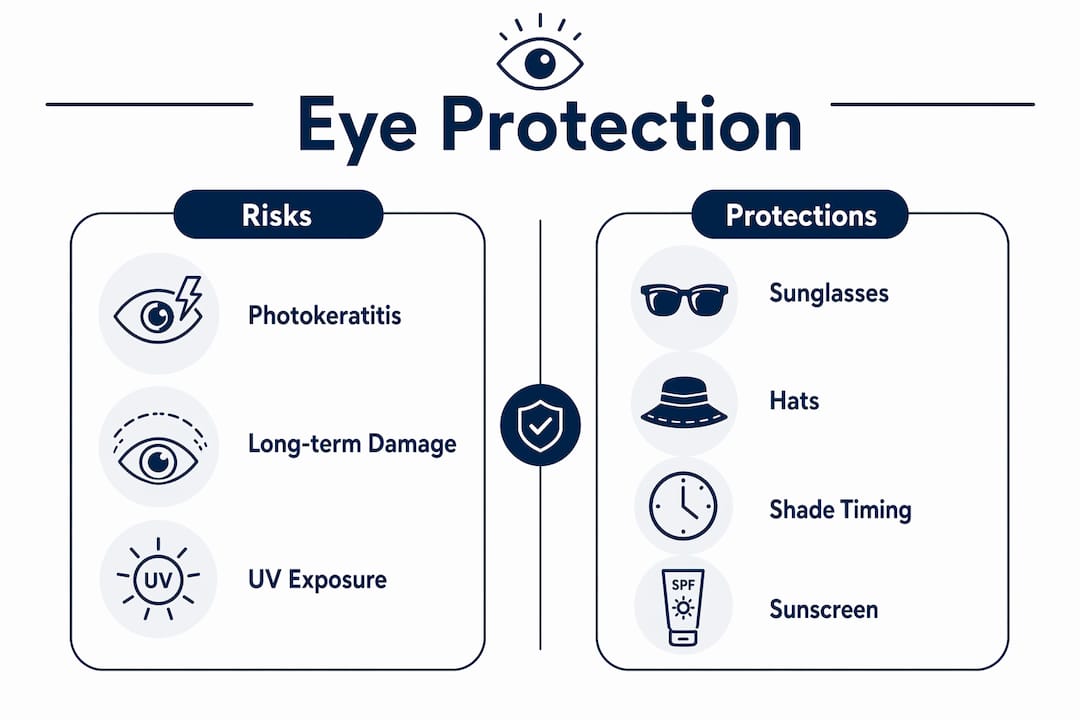
Short-term: photokeratitis. This is essentially a sunburn of the eye’s surface. Symptoms include redness, a gritty or burning sensation, tearing, and severe light sensitivity. The AOA notes that symptoms are typically temporary but can be painful enough to require medical attention if they persist.
Long-term cumulative risks. UV-A and UV-B exposure accumulates over a lifetime. The conditions linked to that buildup include cataracts, macular degeneration, pterygium (a tissue growth on the eye’s surface), and eyelid skin cancers. Childhood UV exposure contributes directly to that lifetime total, which is why protection now matters more than most parents realize.
The myopia connection. This is where the evidence gets genuinely useful for parents. Research published in Investigative Ophthalmology & Visual Science (IOVS/ARVO) found that higher daily light exposure is linked to significantly less axial eye growth in children. Axial elongation is the mechanism behind myopia progression. Practically, that means bright outdoor time — above 3,000 lux, which is typical daylight — for roughly 90–100 minutes per day is associated with measurable reductions in how fast the eye grows in length.
Statistic: A cluster-randomized trial in Taiwan found that outdoor light exposure was associated with a 54% lower risk of myopia progression compared with children who spent less time outside.
Year-round and reflective-surface risk. Clouds filter visible light but not UV. Snow, sand, and water reflect UV back toward the face, amplifying exposure significantly. The AAO warns that reflected UV from these surfaces raises the risk of snow blindness and other UV injuries — a fact worth remembering at the beach in July and on the ski slope in February. For winter-specific guidance, see why kids need sun protection on the slopes.
Pro Tip: If your child plays sports near water or snow, consider lenses with a mirrored coating for glare comfort — but only after confirming the UV400 rating is present.
What actually protects children’s eyes outdoors
Protection works best in layers. No single item covers every angle — literally.
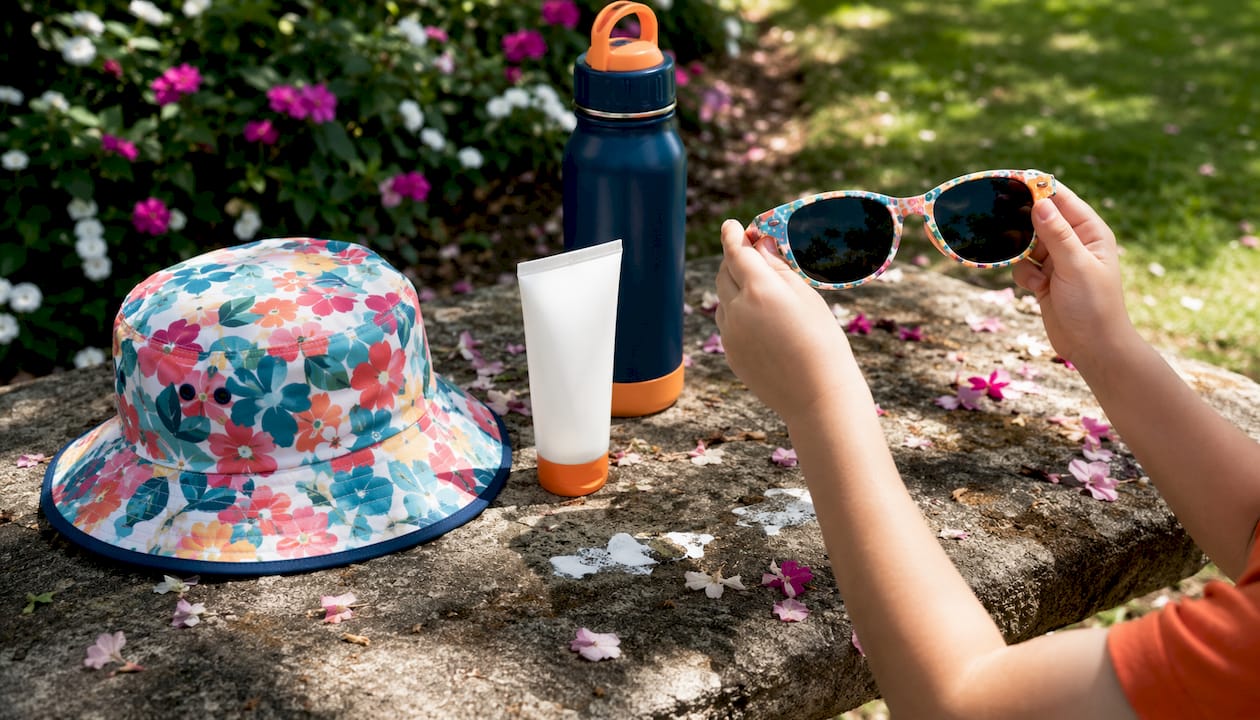
Sunglasses: the non-negotiable spec. The AAO and Prevent Blindness both require eyewear labeled to absorb 100% of UV rays or marked UV400. For active kids, the AOA recommends polycarbonate or Trivex lenses for impact resistance. Wraparound or close-fitting frames matter because peripheral UV can still reach the eye from the sides. See outdoor sun safety gear examples for real product options.
Hats. A wide-brim hat reduces the UV reaching the eyes from above. Prevent Blindness notes that hats and wraparound eyewear together outperform either alone because peripheral UV bypasses a hat’s brim. UPF 50+ fabric adds skin protection for the face and neck. For hat selection, the UV protective legionnaire hat guide covers fit and coverage specifics.
Shade and timing. UV peaks between 10 AM and 4 PM. Scheduling the bulk of outdoor play outside those hours reduces peak exposure without cutting into the daily light dose children need for healthy visual development.
Sunscreen around the eyes. Apply mineral sunscreen carefully to the orbital skin (eyelids and surrounding area) but never inside the eye itself. This protects the eyelid skin, which is a common site for UV-related cancers.
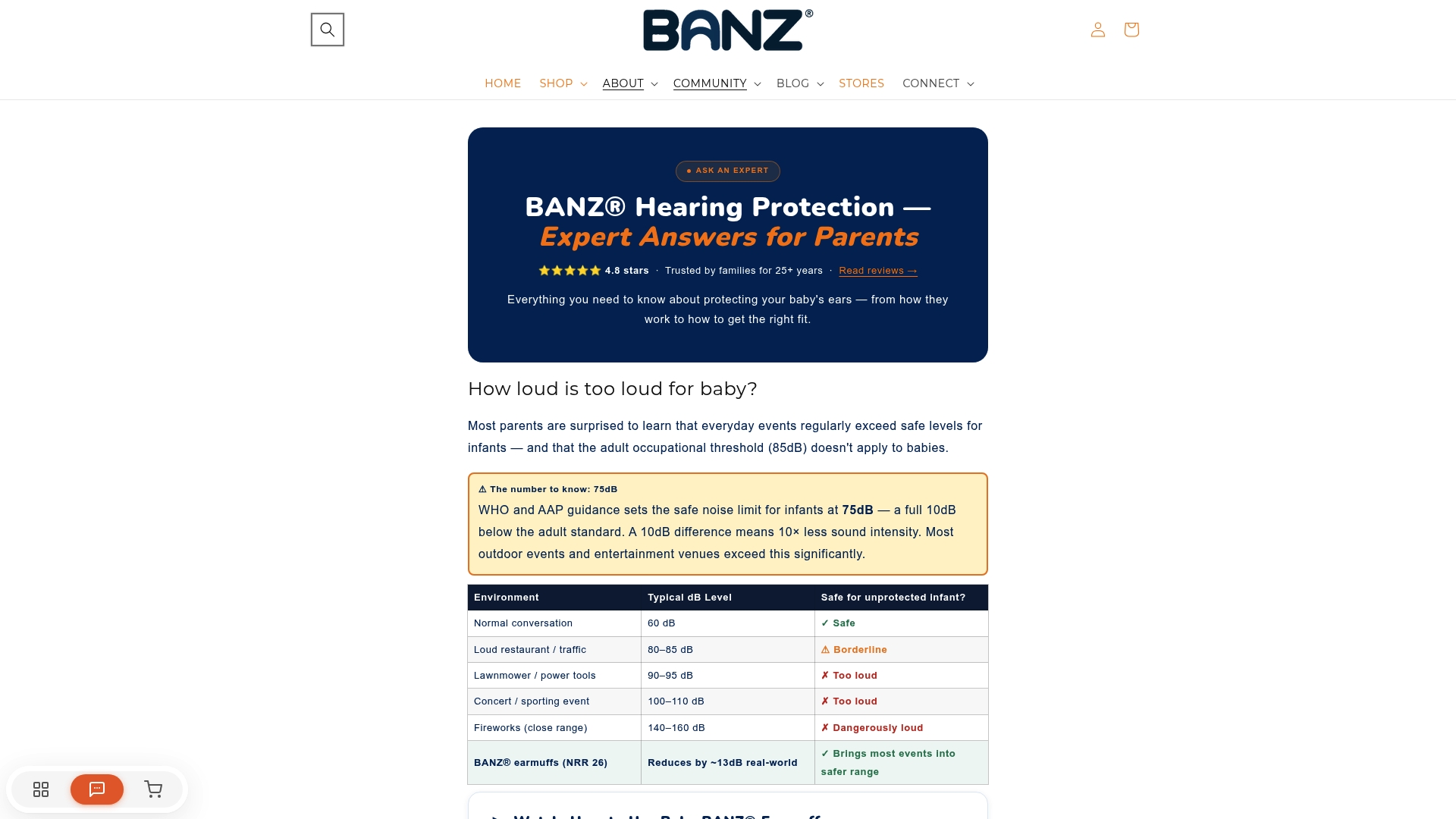
Noise protection. Outdoor events — air shows, motorsports, fireworks, concerts — can exceed safe hearing thresholds for children. NRR-rated earmuffs provide a measurable, rated level of noise reduction. Pairing hearing protection with sun gear covers both sensory risks in one outing.
| Protection Layer | Key Spec | Why It Matters |
|---|---|---|
| Sunglasses | UV400 / 100% UVA+UVB | Blocks cumulative UV that drives cataracts and macular degeneration |
| Lens material | Polycarbonate or Trivex | Impact-resistant for active play and sports |
| Hat | Wide brim, UPF 50+ | Reduces overhead UV; works best paired with wraparound frames |
| Timing and shade | Avoid 10 AM–4 PM peak | Cuts peak UV while preserving daily outdoor light dose |
| Earmuffs | NRR-rated | Protects hearing at loud outdoor events |
How to choose the right sunglasses and gear for your child
Labels tell you most of what you need to know — if you know what to look for.
What labels mean:
- UV400 or 100% UV protection: blocks all light wavelengths up to 400 nanometers, covering both UV-A and UV-B
- UPF 50+: fabric rating for hats and clothing; blocks 98% of UV
- Polycarbonate / Trivex: lens materials rated for impact resistance
- Fashion-only or no UV label: skip these entirely
Fit checklist for children’s eyewear:
- Frames sit temple-to-temple without gaps at the sides
- Nose bridge fits without sliding — look for adjustable nose pads on younger children
- Strap or retention cord keeps frames in place during active play
- Lenses are polycarbonate or Trivex (check the product description)
- Wraparound or close-fitting style covers peripheral angles
- Return policy or warranty covers active-use damage
For toddler-specific sizing, the guide to choosing toddler sunglasses walks through each fit point with age-specific notes.
Pro Tip: Scratch-resistant coatings extend lens life significantly for kids who drop or toss their glasses. Ask specifically — it is not always included by default.
When to see an eye-care professional
Red flags that need prompt attention:
- Persistent redness, pain, or burning after sun exposure
- Significant light sensitivity lasting more than a few hours
- Blurry or reduced vision following outdoor activity
- Any visible growth on the eye’s surface
Routine care. Annual eye exams give clinicians a baseline for tracking axial eye growth and catching early myopia. The AOA recommends discussing year-round UV exposure and any family history of myopia at these visits.
What to tell your child’s eye doctor:
- Estimated daily outdoor time and typical activities (water, snow, sports)
- Whether your child consistently wears UV-rated sunglasses and a hat
- Any family history of myopia, cataracts, or macular degeneration
- Contact lens needs if your child is old enough
When to go immediately. Severe eye pain, sudden vision loss, or photokeratitis symptoms that worsen rather than resolve within a few hours warrant same-day care. The BANZ UV eye protection resource for optometrists can help you start that conversation with your child’s provider.
Pro Tip: Bring your child’s sunglasses to the appointment. An optometrist can verify the UV rating and check the fit in under a minute.
What your child eats also protects their eyes
Diet does not replace UV-blocking gear, but specific nutrients support the eye’s defenses against oxidative damage from UV radiation.
Lutein and zeaxanthin are carotenoids concentrated in the macula. They act as internal light filters, absorbing high-energy blue and UV-adjacent light before it damages retinal cells. Foods rich in these include leafy greens (kale, spinach), eggs, and corn.
Vitamin C and E are antioxidants that help neutralize free radicals generated by UV exposure. Citrus fruits, bell peppers, almonds, and sunflower seeds are practical sources for children.
Omega-3 fatty acids support the retina’s structural integrity. Salmon, sardines, and walnuts are good options. For children who avoid fish, a pediatric omega-3 supplement is worth discussing with their pediatrician.
Vitamin D is synthesized through skin exposure to sunlight and plays a role in retinal function. Most children who spend regular time outdoors with appropriate sun protection maintain adequate levels, but a pediatrician can check if there is any concern.
How much outdoor time actually helps — and when to schedule it
The evidence points to a specific dose. Research published in IOVS found that roughly 90–100 minutes per day of bright outdoor light (above 3,000 lux) is associated with measurable reductions in axial eye growth. A separate clinical review noted that about 1–2 hours of daily outdoor time supports healthy visual development while still allowing time for UV protection measures.
Practical scheduling:
- Morning (before 10 AM) and late afternoon (after 4 PM) offer meaningful light levels with lower UV intensity
- Overcast days still provide sufficient lux for the myopia-protective effect — clouds reduce UV more than they reduce visible light
- Indoor light, even near a bright window, rarely exceeds 500 lux and does not replicate the outdoor dose
The goal is consistency. A child who gets 60–90 minutes outside most days accumulates the protective light dose across the week. Gear up, go outside, and keep the timing sensible.
Selecting children’s sunglasses built for durability and safety
Children’s eyewear fails in two ways: the UV protection is inadequate, or the frames break within weeks. Both problems are avoidable.
Durability markers to look for:
- Flexible frames (TR90 nylon or similar) bend without snapping under playground stress
- Polycarbonate lenses resist shattering on impact — critical for active kids
- Scratch-resistant coating extends optical clarity through a full season of use
- Adjustable straps keep frames on during running, swimming, or cycling
For cycling and other sports, the guide to selecting cycling eyewear covers retention systems and lens standards that apply equally well to children’s active-use frames.
Safety standards. In the US, the FDA regulates sunglasses as medical devices when they carry UV protection claims. Look for ANSI Z80.3 compliance on the label or product page — this standard covers UV transmittance, impact resistance, and optical quality. A product that meets ANSI Z80.3 and carries a UV400 label has passed independent testing, not just a manufacturer’s claim.
BANZ sunglasses are designed specifically for children’s proportions, with flexible frames, polycarbonate lenses, and UV400 protection — built to stay on and hold up through active outdoor use.
Key Takeaways
Daily outdoor light and UV protection work together — children need both to support healthy eye development and avoid cumulative UV damage.
| Point | Details |
|---|---|
| Daily outdoor light dose | Aim for a daily amount of bright outdoor time that supports lower myopia risk. |
| UV400 is the minimum standard | Choose eyewear labeled UV400 or 100% UV protection; pair with a wide-brim UPF 50+ hat. |
| UV risk is year-round | Clouds, snow, sand, and water all reflect or transmit UV — protect on every outdoor day. |
| Noise protection matters too | Add NRR-rated earmuffs at loud outdoor events as part of complete sensory safety. |
| BANZ for combined protection | BANZ offers UPF 50+ sun gear and NRR-rated earmuffs designed for children’s active outdoor use. |
The protection gap most parents miss
Most parents know sunscreen. Fewer think about their child’s eyes with the same consistency — and that gap matters, because UV exposure to the eye is cumulative from birth. A child who spends summers at the beach, winters on the slopes, and afternoons on a soccer field without UV-rated eyewear is accumulating a UV dose that raises their risk of cataracts and macular degeneration decades later.
The myopia evidence adds another layer. Outdoor time is genuinely protective for vision development, but only if it is paired with the right gear. Keeping children indoors to avoid UV is the wrong trade-off. The right answer is consistent, protected outdoor time — UV400 eyewear, a proper hat, sensible timing, and NRR earmuffs when the setting calls for it.
Parents who build these habits early give their children a real advantage. The gear exists. The evidence is clear. The only variable is whether it gets used every time.
BANZ: sun and hearing protection that meets the specs
BANZ was built specifically for this problem. When the founding family couldn’t find adequate sun and noise protection for their own children, they created it. Today, BANZ products reach over 2 million families across six continents — and the US lineup is available now.
BANZ sunglasses carry UV400-rated polycarbonate lenses in flexible, child-sized frames. BANZ earmuffs are NRR-rated for measurable noise reduction at loud outdoor events. The free BANZ Protect app adds real-time UV and noise monitoring so you can make informed decisions on the go.
Browse the kids’ sun safety resource library for curated EPA, CDC, and WHO guidance, or check why parents trust BANZ for product specs and proof points. For hearing protection specifics, the NRR vs. SNR guide explains exactly what the ratings mean for your child’s safety.
Authoritative sources for parents and clinicians
Use these to verify claims and share with your child’s eye-care provider.
- NEI — Protecting Your Eyes from the Sun’s UV Light — National Eye Institute overview of short- and long-term UV damage; reliable for explaining risks to clinicians.
- AAO — The Sun, UV Light and Your Eyes — Practical sun-safety tips from the American Academy of Ophthalmology, including UV400 labeling guidance.
- AOA — Ultraviolet (UV) Protection — American Optometric Association guidance on year-round UV risk, lens materials, and what to discuss at annual exams.
- Prevent Blindness — Protect Your Eyes from the Sun — Covers hats, wraparound eyewear, and peripheral UV risk in plain language.
- IOVS/ARVO — Light Exposure and Eye Growth in Childhood — Primary research linking daily light exposure to reduced axial eye growth; the source behind the 90–100 minutes/day guidance.
- PMC — Review of Outdoor Exposure and Myopia — Comprehensive review of environmental, pharmacological, and optical interventions for myopia control.
- PMC — Effects of UV Light on the Eye — Peer-reviewed summary of UV mechanisms, cataract formation, and the role of protective eyewear.
This article is general information, not medical advice. Confirm current recommendations with your child’s eye-care provider or pediatrician for guidance specific to your child’s situation.
Recommended
- How UV Exposure Affects Toddler Eyes: A Parent’s Guide – BANZ® Carewear USA
- Winter Sun Protection: Why Your Kids Need It — Even on the Slopes – BANZ® Carewear USA
- UV Eye Protection for Children: A Resource for Eye Care Professionals – BANZ® Carewear USA
- Why Summer Programs Require Sun Protection for Kids – BANZ® Carewear USA
