

La densidad del tejido de la tela es el factor estructural más importante que determina la cantidad de radiación ultravioleta que bloquea una prenda infantil. El papel del tejido de la tela en la protección UV funciona a través de un principio físico directo: los tejidos más apretados dejan espacios más pequeños entre las fibras, y los espacios más pequeños significan que menos rayos UV llegan a la piel de su hijo. Esto se mide a través de las clasificaciones UPF, el equivalente textil estandarizado del SPF, y comprender cómo el tejido afecta esos números le da una ventaja real al comprar ropa para exteriores. Una prenda UPF 50+ bloquea al menos el 98% de la radiación UV, en comparación con una camiseta de algodón blanco estándar que puede ofrecer solo UPF 5 a 15.
¿Cómo afecta el tejido de la tela a la protección UV y a la clasificación UPF?
El término técnico para lo que sucede cuando los rayos UV atraviesan los espacios de la tela es el "efecto de agujero". Cada tela tejida contiene espacios microscópicos donde las fibras se cruzan por encima y por debajo. Cuando esos espacios son anchos, la radiación UV pasa directamente a la piel. Cuando son ajustados, la tela intercepta físicamente los rayos antes de que puedan penetrar.
Los tejidos más apretados con menor permeabilidad al aire proporcionan clasificaciones UPF más altas porque reducen el área abierta total disponible para el paso de los rayos UV. Esta relación inversa entre la permeabilidad al aire y la protección UV está bien establecida en la ciencia textil. Una tela que respira más libremente también deja pasar más rayos UV. Esa compensación importa cuando se viste a un niño activo que necesita tanto comodidad como protección.
El peso de la tela agrava el efecto. Las telas más pesadas con tejidos más densos bloquean más rayos UV simplemente porque hay más material en el camino de la radiación. Una gasa ligera y una lona pesada pueden estar hechas de la misma fibra, pero sus valores UPF diferirán drásticamente solo por la densidad del tejido.
Esto es lo que debe buscar al evaluar el tejido de una tela para la protección UV:
- Tensión del tejido: Sostenga la tela contra una fuente de luz brillante. Si puede ver la luz pasar claramente, el tejido es holgado y es probable que la protección UV sea baja.
- Peso de la tela: Las telas más pesadas generalmente indican tejidos más densos y UPF más alto.
- Estiramiento: Las telas que se estiran significativamente cuando se tiran abren sus espacios de tejido bajo tensión, lo que reduce la protección durante el uso activo.
- Etiqueta UPF certificada: Este es el indicador más confiable. Las comprobaciones visuales por sí solas pueden inducir a error.
Consejo profesional: La prueba de sostener a la luz da una idea aproximada de la densidad del tejido, pero no es una prueba UV confiable. Una tela puede bloquear la luz visible y, sin embargo, permitir una cantidad significativa de UV si carece de propiedades de fibra que absorben los rayos UV. Siempre verifique si hay una etiqueta UPF certificada.
¿Qué tejidos de tela proporcionan la mejor protección UV para niños?
No todos los tipos de tejido funcionan igual en lo que respecta a la protección UV. Las mejores telas para la protección UV en la ropa de los niños combinan una construcción ajustada con la química de fibra adecuada. Así es como se comparan las principales categorías de tejido.
| Tipo de tejido | Rango típico de UPF | Ventajas para niños | Contras para niños |
|---|---|---|---|
| Denim (sarga) | UPF 1.700+ (pesado) | Extremadamente duradero, alta protección | Pesado y rígido para el juego activo |
| Gabardina (sarga) | UPF 50+ | Sarga ligera, buena caída | Menos transpirable en el calor |
| Tejido de satén | UPF 30–50+ | Suave al tacto con la piel | Se engancha fácilmente con niños activos |
| Tejido liso (algodón ajustado) | UPF 15–50 | Transpirable, ampliamente disponible | Amplio rango; la calidad varía significativamente |
| Lino suelto o algodón fino | UPF 5–15 | Ligero y fresco | Protección UV mínima sin tratamiento |
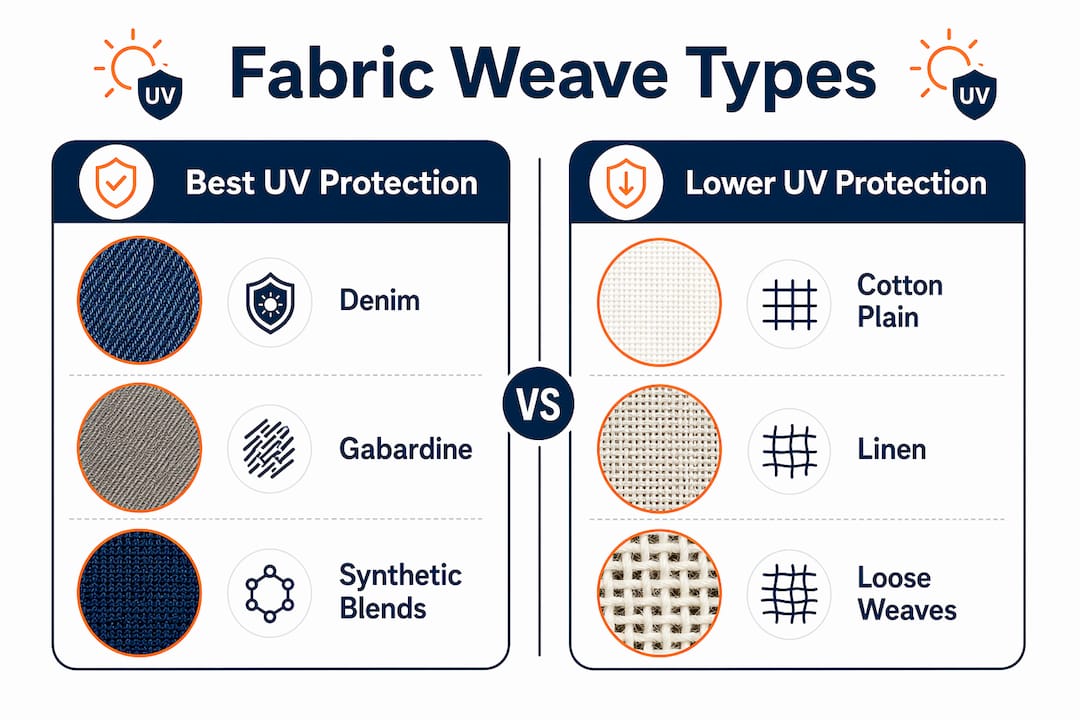
El denim es un ejemplo sobresaliente de cómo funciona en la práctica la resistencia UV del tejido de la tela. Su ajustada construcción de sarga crea una estructura extremadamente densa que bloquea los rayos UV a niveles que superan con creces el umbral UPF 50+. La desventaja para los niños es obvia: el denim no es práctico para un día completo en la playa o una caminata de verano.
Para uso activo al aire libre, la gabardina y las mezclas sintéticas de tejido apretado ofrecen el mejor equilibrio. La combinación de un tejido denso con una química de fibra absorbente de rayos UV crea una verdadera ropa de protección solar. Las fibras sintéticas aromáticas como el poliéster absorben los rayos UV a nivel molecular, agregando una capa de protección que las fibras naturales como el algodón no pueden igualar por sí solas.
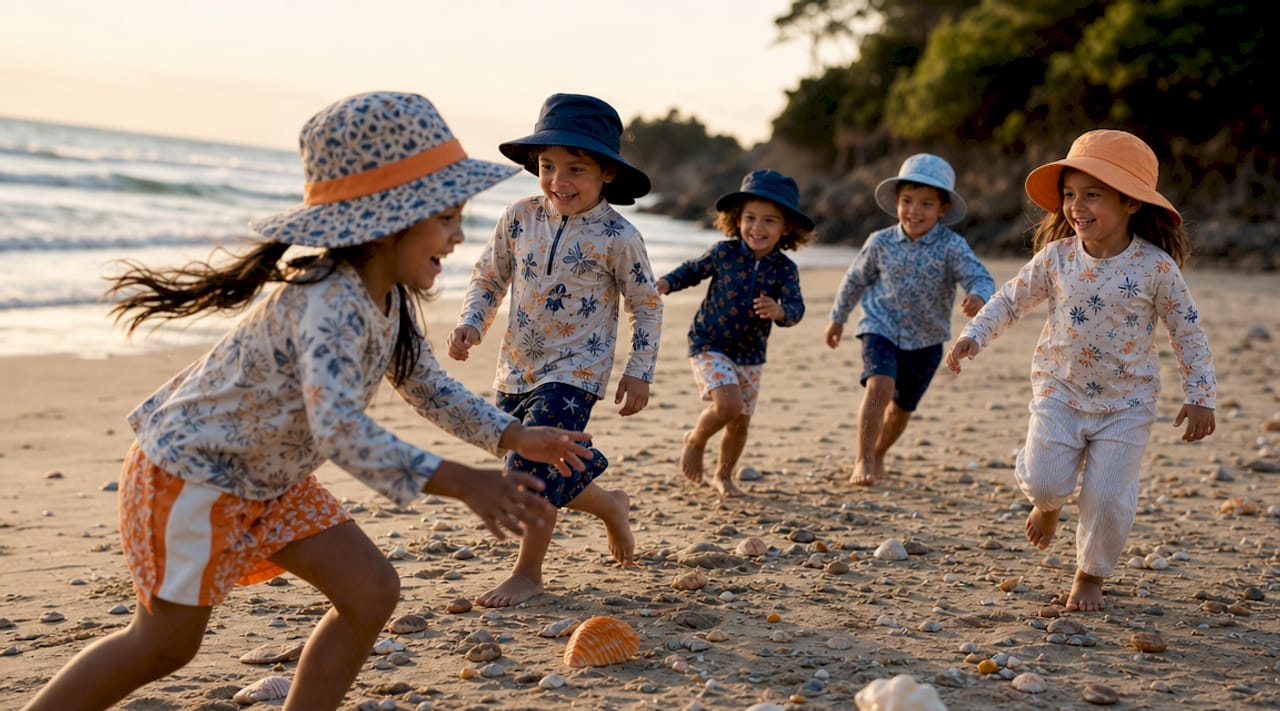
La durabilidad es una preocupación real para la ropa de los niños. El lavado repetido y el estiramiento físico durante el juego pueden aflojar la estructura del tejido con el tiempo. La relajación y el lavado de la tela crean espacios microscópicos que reducen significativamente el UPF. Una prenda que se probó con UPF 50+ cuando era nueva puede tener un rendimiento considerablemente menor después de una temporada de uso intensivo. Por esta razón, las etiquetas UPF certificadas deben especificar la clasificación después de ciclos de lavado estandarizados, no solo para la tela nueva.
Consejo profesional: Consulte las guías de equipo de seguridad solar para 2026 para encontrar ropa para niños que especifique las clasificaciones UPF post-lavado. Ese número es más relevante para la protección en el mundo real que la clasificación de una prenda nueva.
¿Cómo interactúan el color y el tratamiento de la tela con el tejido?
El color afecta la absorción de UV, pero no anula la densidad del tejido. Los colores más oscuros absorben más UV que los claros, por lo que una camisa azul marino suele superar a una camisa blanca de idéntica construcción. El problema es que muchos padres confían en el color como sustituto de la protección, lo que provoca lagunas reales en la seguridad solar.
Una gabardina pálida y de tejido apretado siempre superará a un lino oscuro y de tejido holgado. El color mejora la absorción de UV a nivel de fibra, pero no puede compensar los huecos físicos que crea un tejido holgado. La estructura del tejido es la base. El color y el tratamiento son adiciones a ella.
Los tratamientos químicos y los tintes que absorben los rayos UV añaden una protección significativa cuando se aplican a tejidos ya apretados:
- Tintes que absorben los rayos UV: Se integran en la fibra durante la fabricación y absorben la radiación UV antes de que llegue a la piel. Funcionan mejor cuando el tejido base ya es denso.
- Blanqueadores ópticos: Estos compuestos reflejan los rayos UV, pero su eficacia depende de la construcción de la tela subyacente.
- Recubrimientos químicos UV: Aplicados como acabado, elevan las clasificaciones UPF al absorber o reflejar los rayos UV. Su durabilidad varía con el lavado y el uso.
- Rendimiento en estado húmedo: Algunas telas cambian la transmisión UV cuando están mojadas. Se recomienda realizar pruebas de UPF en estado húmedo para prendas utilizadas en el agua o durante actividades al aire libre con sudor, ya que algunas telas pierden protección cuando están saturadas.
Las prendas de protección solar para niños más confiables alcanzan UPF 50+ al combinar los tres factores: tejido apretado, química de fibra absorbente de rayos UV y tratamiento químico duradero. Depender de un solo factor deja lagunas en la protección.
¿Qué consejos prácticos ayudan a los padres a elegir ropa protectora contra los rayos UV para niños?
Elegir ropa protectora contra el sol eficaz para niños no requiere un título en ciencia textil. Requiere saber qué señales son fiables y cuáles son engañosas.
-
Busque etiquetas UPF certificadas. Una clasificación UPF 30 bloquea aproximadamente el 97% de la radiación UV. UPF 50+ bloquea al menos el 98%. La diferencia parece pequeña, pero para un niño que pasa horas al aire libre, es significativa. Las etiquetas certificadas confirman que la prenda ha sido probada en condiciones de laboratorio estandarizadas, teniendo en cuenta el tejido, el color y el tratamiento juntos.
-
Evalúe visualmente la tensión del tejido. Sostenga la tela contra una ventana a la luz del día. Una transmisión mínima de luz sugiere un tejido más apretado y una mejor protección UV. Esta es una herramienta de detección, no una prueba definitiva. Úsela para eliminar telas obviamente sueltas, luego confirme con una etiqueta UPF.
-
Tenga en cuenta el estiramiento y el ajuste. Las telas bajo tensión abren los huecos del tejido. Una camisa que queda ajustada en los hombros o la espalda está estirando su tejido durante el movimiento, lo que reduce la protección en esas áreas. Elija prendas con un ajuste holgado para niños activos.
-
Mantenga la estructura de la tela con el cuidado adecuado. Lave la ropa de protección solar en agua fría en un ciclo suave. Evite el secado a altas temperaturas, que puede relajar la estructura del tejido. El aflojamiento del tejido por el lavado es una causa común y subestimada de la reducción del UPF con el tiempo.
-
Reemplace las prendas desgastadas. La ropa descolorida, con bolitas o estirada tiene una densidad de tejido comprometida. Si una prenda ha pasado por un verano completo de uso intensivo, su clasificación UPF de la etiqueta ya no se aplica de forma fiable.
Consejo profesional: Las capas añaden protección. Una capa de protección solar para niños pequeños sobre una camisa estándar duplica la tela entre los rayos UV y la piel, incluso si ninguna de las prendas por sí sola tiene una clasificación UPF 50+.
Conclusiones clave
La densidad del tejido de la tela es el determinante estructural principal de la protección UV en la ropa infantil, y las etiquetas UPF certificadas son la única forma fiable de confirmar que esa protección se mantiene en condiciones reales.
| Punto | Detalles |
|---|---|
| La densidad del tejido impulsa el UPF | Los tejidos más ajustados bloquean más UV al reducir los espacios por los que pueden pasar los rayos. |
| El color por sí solo no es suficiente | Una tela pálida y de tejido apretado supera a una oscura y de tejido suelto en cuanto a protección UV. |
| Los tratamientos se añaden al tejido | Los tintes que absorben los rayos UV y los recubrimientos químicos aumentan el UPF, pero dependen de un tejido base denso. |
| El lavado reduce la protección | El lavado repetido y el estiramiento aflojan la estructura del tejido y disminuyen el UPF con el tiempo. |
| Las etiquetas certificadas son el estándar | La certificación UPF 50+ confirma al menos un 98% de bloqueo UV en el tejido, la fibra y el tratamiento. |
Por qué la calidad del tejido es lo primero que les digo a todos los padres que comprueben
He revisado ropa de protección solar para niños durante años, y el error más consistente que veo cometer a los padres es confiar en el color antes que en la construcción. Una camiseta de manga larga de color rojo brillante parece protectora. Una camisa de lino azul pálido parece fresca e inofensiva. Pero si el lino tiene un tejido suelto y no tiene certificación UPF, le está ofreciendo a su hijo casi ninguna defensa UV significativa.
El segundo error es asumir que una prenda que funcionó bien el verano pasado sigue rindiendo al mismo nivel. La ropa de los niños sufre un gran desgaste. Se estira, se lava docenas de veces y se usa hasta que se desvanece. Cada uno de esos ciclos degrada la densidad del tejido. He visto a padres vestir con confianza a sus hijos con una "camiseta UPF 50+" que, después de una temporada completa de uso, rendía más cerca de UPF 15 según la relajación y el estiramiento visibles de la tela.
Mi regla práctica: si puedes ver la luz del día a través de la tela cuando la sostienes, o si la tela se estira notablemente cuando la tiras, es hora de reemplazarla. Y siempre combina la ropa con otros comportamientos de seguridad solar. La tela UPF certificada es una capa de un enfoque completo que incluye la monitorización de la exposición a los rayos UV, sombra, protector solar en la piel expuesta y sombreros adecuados. Ninguna prenda por sí sola lo hace todo.
— Shari M. Murphy
Proteja la cabeza de su hijo con sombreros de sol certificados UPF 50+
La cabeza y el cuello se encuentran entre las áreas más expuestas a los rayos UV en los niños que juegan al aire libre, y un sombrero con un tejido apretado certificado es una de las aplicaciones más directas de todo lo que se cubre en esta guía.
BANZ diseña sombreros de sol para niños con tela certificada UPF 50+ de tejido apretado, fabricada específicamente para niños activos. Los sombreros de sol para niños BANZ utilizan una construcción duradera que mantiene su estructura de tejido a través de lavados repetidos y uso al aire libre. Para los niños más pequeños, los sombreros de sol de bolsillo BANZ Bubzee ofrecen la misma protección UPF 50+ en un diseño suave y plegable adecuado para bebés y niños pequeños. Ambas opciones están certificadas, no solo etiquetadas, por lo que la protección está confirmada en lugar de estimada.
Preguntas frecuentes
¿Cuál es el papel del tejido de la tela en la protección UV?
El tejido de la tela determina cuántos espacios existen entre las fibras para que pasen los rayos UV. Los tejidos más apretados con espacios más pequeños bloquean más radiación UV, lo que produce clasificaciones UPF más altas en las pruebas estandarizadas.
¿Qué tipo de tejido ofrece la mejor protección UV para niños?
Los tejidos de sarga apretados como la gabardina y el denim ofrecen las telas con mayor protección UV para niños. Para un uso práctico al aire libre, las mezclas sintéticas de tejido apretado que combinan una construcción densa con una química de fibra absorbente de UV son la opción más efectiva.
¿Lavar la ropa protectora solar para niños reduce su UPF?
Sí. El lavado y estiramiento repetidos aflojan la estructura del tejido y crean espacios microscópicos que reducen el UPF con el tiempo. Lave en agua fría en un ciclo suave y reemplace las prendas que muestren desgaste o estiramiento visible.
¿Una camisa de color oscuro ofrece mejor protección UV que una clara?
Los colores más oscuros absorben más UV que los claros, pero la densidad del tejido es el factor principal. Un tejido denso y pálido puede superar a un tejido suelto y más oscuro, por lo que el color por sí solo no es una guía fiable para la protección UV.
¿Cómo sé si una prenda infantil tiene protección UV fiable?
Busque una etiqueta UPF certificada, no solo una afirmación de marketing. Una prenda con certificación UPF 50+ ha sido probada en condiciones de laboratorio estandarizadas y bloquea al menos el 98% de la radiación UV, teniendo en cuenta el tejido, la fibra y cualquier tratamiento químico aplicado.
Recomendado
- Cómo la exposición a los rayos UV afecta los ojos de los niños pequeños: una guía para padres – BANZ® Carewear USA
- Capas de protección solar para niños pequeños: ejemplos reales – BANZ® Carewear USA
- Ejemplos de equipo de seguridad solar para niños en 2026 – BANZ® Carewear USA
- Por qué las actividades de playa requieren protección UV adicional – BANZ® Carewear USA