

Mantener a un niño pequeño a salvo del sol durante el juego al aire libre es una de esas tareas que parece sencilla hasta que se lleva a cabo. Los niños pequeños se mueven constantemente, ignoran las instrucciones y tienen una piel mucho más vulnerable al daño UV que los adultos. Las soluciones de sombra adecuadas para niños pequeños al aire libre marcan la diferencia entre una tarde segura en el parque y una dolorosa quemadura solar. La Academia Estadounidense de Pediatría recomienda evitar la exposición directa al sol entre las 10 a. m. y las 4 p. m., especialmente para bebés menores de 6 meses. Esta guía cubre todas las opciones prácticas, desde tiendas de campaña portátiles emergentes hasta estructuras fijas para patios traseros, para que pueda elegir lo que se adapte a su situación.
Tabla de Contenidos
- Puntos clave
- 1. Entender qué hace que las soluciones de sombra para niños pequeños al aire libre sean efectivas
- 2. Tiendas de campaña portátiles emergentes para el sol
- 3. Estructuras de sombra fijas y semipermanentes para áreas de juego
- 4. Capotas para cochecitos y accesorios móviles de sombra
- 5. Comparación de opciones de sombra: ¿cuál se adapta a su situación?
- Mi opinión sincera sobre la sombra para niños pequeños: qué funciona realmente
- Prepárese con BANZ para una protección solar confiable para niños pequeños
- Preguntas frecuentes
Puntos clave
| Punto | Detalles |
|---|---|
| UPF 50+ es el mínimo | Busque productos con clasificación UPF 50+ que bloqueen más del 99% de los rayos UVA y UVB para niños pequeños. |
| La sombra debe moverse con el sol | Las opciones portátiles necesitan reposicionamiento a lo largo del día a medida que cambia el ángulo del sol. |
| La ventilación importa tanto como la cobertura | La sombra sin flujo de aire puede causar sobrecalentamiento; los paneles de malla son una característica clave a buscar. |
| La protección por capas es la más efectiva | Combine estructuras de sombra con ropa UPF y protector solar para niños pequeños mayores de 6 meses. |
| Las estructuras fijas se adaptan a las áreas de juego activas | Las cabinas de sombra permanentes y las velas de sombra funcionan mejor para patios traseros, parques infantiles y guarderías. |
1. Entender qué hace que las soluciones de sombra para niños pequeños al aire libre sean efectivas
No toda la sombra es igual. La copa de un árbol filtra parte de los rayos UV, pero no lo suficiente. Un paraguas barato bloquea la luz visible, pero puede que no ofrezca ninguna protección UV. Al evaluar cualquier sombra exterior para niños, cuatro criterios separan las opciones verdaderamente protectoras de las que solo lo parecen.
Clasificación de protección UV. Busque UPF 50+ en cualquier producto a base de tela. Esta clasificación significa que el material bloquea más del 98% de la radiación ultravioleta. Trate las afirmaciones del fabricante como un piso, no como un techo. UPF 50+ debe ser el estándar mínimo que acepte.
Ángulo de cobertura. La mayoría de los padres solo piensan en la sombra superior. Pero los niños pequeños se agachan, ruedan y se sientan en ángulos donde la exposición lateral se vuelve significativa. Evalúe la cobertura de sombra también desde los ángulos laterales, no solo directamente desde arriba.
Ventilación. Una tienda sellada en un día caluroso se convierte en un horno. Los productos con paneles de malla transpirable permiten el flujo de aire mientras bloquean los rayos UV. Los paneles de malla transpirable y el anclaje adecuado evitan la acumulación de calor bajo la sombra.
Movilidad. El sol se mueve. Una estructura de sombra que funcionaba a las 10 a.m. puede dejar a su niño pequeño completamente expuesto al mediodía. La sombra que se mueve con el sol, ya sea a través de una tienda portátil o una capota de cochecito, es más confiable que un punto fijo de sombra para salidas cortas.
- Clasificación UPF 50+ en todas las telas
- Paneles de ventilación de malla para reducir el calor
- Estacas de tierra o sistema de anclaje para mayor estabilidad
- Cobertura lateral además de protección superior
- Ligero y empacable para viajar
Consejo profesional: Verifique la etiqueta UPF en la etiqueta del producto, no solo el texto de marketing en la caja. Algunos productos anuncian "protección solar" sin especificar una clasificación UPF.
2. Tiendas de campaña portátiles emergentes para el sol
Las tiendas de campaña emergentes son la opción de sombra ideal para los padres que pasan tiempo en la playa, el parque o cualquier lugar fuera de casa. Se montan en menos de un minuto, se pliegan para el transporte y ofrecen protección UV certificada.
La tienda de campaña emergente Babymoov es una de las opciones más mencionadas en esta categoría. Las tiendas Babymoov ofrecen protección UPF 50+ que bloquea más del 99% de los rayos UVA y UVB, con paneles de malla en los laterales para el flujo de aire y una base acolchada para que los niños pequeños puedan sentarse o acostarse cómodamente. El montaje tarda segundos. El proceso de plegado lleva un poco más de tiempo de aprender, pero se vuelve rápido con la práctica.
El WEMOH T1 Plus adopta un enfoque diferente con su diseño 3 en 1. Funciona como refugio solar, mosquitera y tienda de juegos. El WEMOH T1 Plus incluye estacas de tierra para anclar en arena o césped, lo que importa más de lo que la mayoría de los padres se dan cuenta. Una tienda sin anclar en un día ventoso en la playa se convierte rápidamente en un peligro.
- Ideal para: días de playa, visitas al parque, picnics, viajes
- Tiempo de montaje: menos de 2 minutos para la mayoría de los modelos
- Cobertura: normalmente se adapta a un niño pequeño cómodamente, algunos modelos a dos
- Características clave a comparar: sistema de estacas, ventilación de malla, tamaño embalado
Consejo profesional: Al usar una tienda emergente en la playa, oriente la abertura lejos de la posición actual del sol y vuelva a verificar cada 45 minutos. El sol se mueve más rápido de lo que espera, y las paredes laterales de la tienda no siempre compensan.
Una base para tienda de campaña colocada debajo de una tienda de campaña emergente protege la base del suelo áspero o mojado, lo que prolonga la vida útil del producto y mantiene el interior más limpio durante sesiones al aire libre más largas.
3. Estructuras de sombra fijas y semipermanentes para áreas de juego
Para patios traseros, guarderías e instalaciones de juegos, las tiendas portátiles no son prácticas. Las estructuras de sombra fijas brindan protección constante y sin manos que no requiere reposicionamiento por parte de un adulto durante todo el día.
Las velas de sombra son la opción residencial más común. Las telas de las velas de sombra ofrecen porcentajes de bloqueo de rayos UV que van del 93% al 98%, según la densidad del tejido y el material. Los porcentajes más altos de bloqueo de rayos UV también producen un efecto de enfriamiento medible. Las velas de sombra KGORGE que bloquean el 95% de los rayos UV informan una reducción de temperatura de 10 a 15 grados Fahrenheit debajo, lo que mejora directamente la comodidad del niño pequeño durante el juego al aire libre prolongado.
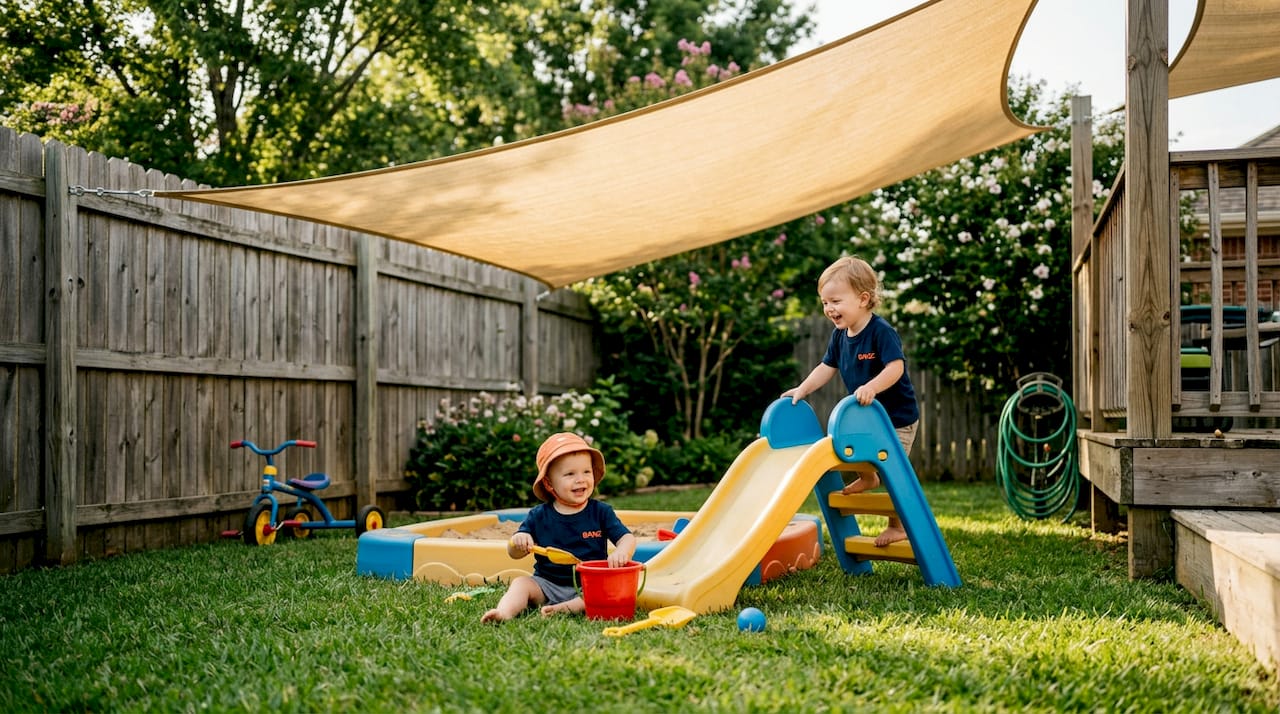
Para instalaciones más grandes como parques infantiles y guarderías, las cabañas de sombra diseñadas valen la inversión. La cabaña de sombra PE de Norna Playgrounds cubre aproximadamente 25 metros cuadrados, utiliza poliéster con certificación UV que bloquea el 98% del sol, y está construida con postes de madera de robinia para resistir la intemperie. Incluye una ligera pendiente en el diseño del techo para manejar el escurrimiento del agua, lo que evita el estancamiento y la tensión estructural.
| Tipo de estructura | Área de cobertura | Bloqueo UV | Mejor para | Complejidad de la instalación |
|---|---|---|---|---|
| Vela de sombra (residencial) | 10–20 metros cuadrados | 93%–98% | Áreas de juego en el patio trasero | Moderada (se requiere anclaje) |
| Cabaña de sombra de PE | ~25 metros cuadrados | 98% | Parques infantiles, guarderías | Alta (instalación profesional) |
| Pérgola con tela de sombra | Varía | 70%–95% | Patios, terrazas | Alta |
| Toldo independiente | 9–16 metros cuadrados | Varía | Uso temporal en el patio trasero | Baja a moderada |
Consejo profesional: Al instalar una vela de sombra sobre un área de juegos para niños pequeños, colóquela en un ligero ángulo en lugar de plana. La instalación en ángulo mejora el drenaje del agua y también aumenta la cobertura lateral efectiva en ángulos bajos del sol por la mañana y al final de la tarde.
Las estructuras de sombra fijas de alta cobertura son la opción más confiable para niños pequeños activos en áreas de juego al aire libre más grandes porque eliminan la necesidad de intervención de un adulto para mantener la protección.
4. Capotas para cochecitos y accesorios móviles de sombra
No todos los momentos al aire libre implican un área de juego estacionaria. Los paseos, los recados y las salidas en las que un niño pequeño va en un cochecito o portabebés necesitan un enfoque diferente para la protección solar.
La mayoría de los cochecitos incluyen una capota básica, pero la cobertura a menudo se limita a una estrecha franja superior. Los accesorios de sombrilla para cochecito del mercado de accesorios amplían la cobertura a los lados y al frente, lo que importa cuando el sol está bajo en el cielo. La AAP señala específicamente que las capotas y las sombrillas para cochecito deben reposicionarse durante el tiempo al aire libre a medida que cambia el ángulo del sol.
Más allá del cochecito, estos accesorios completan un kit práctico de protección solar para niños pequeños:
- Sombreros UPF 50+ para el sol: Modelos de ala ancha que cubren las orejas y la parte posterior del cuello. Un sombrero que se mantiene puesto vale más que un sombrero con una clasificación UPF más alta que se tira. Busque correas para la barbilla o cierres de palanca.
- Ropa con clasificación UPF: Camisas y pantalones ligeros de manga larga en telas UPF 50+ añaden cobertura de cuerpo completo sin sobrecalentamiento. Muchas marcas ahora los fabrican en materiales transpirables y de secado rápido.
- Protector solar: Para niños pequeños mayores de 6 meses, aplique protector solar 15 minutos antes de salir y vuelva a aplicarlo cada dos horas, o antes después de la exposición al agua. El protector solar llena los huecos que la sombra y la ropa no pueden cubrir.
- Sombrillas con clip: Se adhieren a los marcos de los cochecitos o sillas de exterior para extender la cobertura superior sin una configuración completa de tienda.
El principio clave aquí es la estratificación. Ningún accesorio cubre todos los ángulos. Sombra más ropa más protector solar le brinda una protección superpuesta que tiene en cuenta el movimiento, la reflexión del agua y la arena, y los cambios de posición del sol.
5. Comparación de opciones de sombra: ¿cuál se adapta a su situación?
Elegir entre opciones de sombra para niños pequeños se reduce a tres preguntas: ¿Dónde lo vas a usar? ¿Cuánto tiempo vas a estar allí? ¿Cuánto esfuerzo de montaje es realista?
| Opción | Portabilidad | Protección UV | Rango de precios | Mejor caso de uso |
|---|---|---|---|---|
| Tienda emergente (UPF 50+) | Alta | 99%+ UVA/UVB | $40–$120 | Playa, parque, viajes |
| Vela de sombra | Ninguna | 93%–98% | $50–$300 | Áreas fijas del patio trasero |
| Cabaña de sombra | Ninguna | 98% | $500–$2,000+ | Parques infantiles, guarderías |
| Extensión de capota de cochecito | Alta | Varía | $20–$80 | Paseos, recados |
| Ropa UPF + sombrero | Muy alta | 98%+ | $20–$60 | Todas las situaciones al aire libre |
Algunas situaciones en las que la elección se vuelve clara:
- Día de playa o parque: Tienda emergente más sombrero y ropa UPF. La tienda proporciona una base; el sombrero protege durante el juego activo fuera de la tienda.
- Patio trasero con un área de juegos dedicada: Vela de sombra o toldo independiente. Se instala una vez y cubre el área toda la temporada.
- Parque infantil de guardería o escuela: Cabina de sombra diseñada. El área de cobertura y la durabilidad justifican el costo a escala.
- Paseos diarios en cochecito: Capota extendida más sombrero UPF. Sencillo, no requiere montaje.
El presupuesto también importa. Una vela de sombra de 50 $ y un sombrero UPF de 30 $ de BANZ pueden cubrir la mayoría de los escenarios de patio trasero y de salida sin gastar cientos en un solo producto. Las opciones premium como las cabinas de sombra tienen sentido cuando necesita cubrir un grupo grande o una instalación permanente.
Mi opinión sincera sobre la sombra para niños pequeños: qué funciona realmente
Por Shari M. Murphy
He pasado años observando a los padres instalar estructuras de sombra y luego ver cómo sus hijos pequeños salían corriendo inmediatamente de debajo de ellas. Esa es la parte que la mayoría de las reseñas de productos omiten. El desafío con las soluciones de sombra para niños pequeños al aire libre no es encontrar un producto con una buena clasificación UPF. Es tener en cuenta el hecho de que los niños pequeños no se quedan donde los pones.
Lo que he descubierto que realmente funciona es construir un sistema por capas en lugar de depender de un solo producto. Una vela de sombra fija sobre el área de juegos del patio trasero se encarga de la base. Un sombrero UPF que realmente se mantiene puesto se encarga de deambular. El protector solar se encarga de los huecos. Ningún producto por sí solo resuelve el problema.
También he aprendido que la ventilación está infravalorada. Los padres se obsesionan con los números UPF y olvidan que una tienda caliente y sofocante será abandonada en cinco minutos. Una tienda con buen flujo de aire de malla se mantiene lo suficientemente cómoda como para que los niños pequeños la usen.
Mi otra opinión contundente: sáltate el paraguas barato. La protección UV casi siempre no está clasificada, la cobertura es estrecha y se caen constantemente. Gasta ese dinero en un sombrero UPF 50+ certificado que cubra las orejas y el cuello. Ese sombrero va a donde va el niño, lo cual es más de lo que se puede decir de cualquier estructura de sombra.
— Shari M. Murphy
Prepárese con BANZ para una protección solar confiable para niños pequeños
BANZ ofrece una práctica gama de productos de protección solar UPF 50+ diseñados específicamente para niños pequeños y niños. Sus sombreros de sol para niños con bolsillo combinan la protección certificada UPF 50+ con un diseño que se mantiene en su lugar durante el juego activo al aire libre. Para las familias que desean un refugio portátil, el Shelta Sun Shelter ofrece cobertura con clasificación UPF para toda la familia en la playa o el parque.
Para los niños más pequeños, los sombreros de sol reversibles para bebés de BANZ se sujetan directamente a los cochecitos, añadiendo una capa extra de protección durante los paseos. Cada producto cumple con el estándar UPF 50+ que recomiendan las pautas pediátricas de seguridad solar. Explore la gama completa en BANZ Carewear USA para encontrar la combinación adecuada de equipo de sombra para la rutina al aire libre de su hijo pequeño.
Preguntas frecuentes
¿Qué clasificación UPF deben tener los productos de sombra para niños pequeños?
Busque UPF 50+ en todas las telas de sombra y sombreros para el sol. Esta clasificación bloquea más del 98% de la radiación UVA y UVB, que es el estándar recomendado para productos de protección solar para niños.
¿Puede una tienda de campaña emergente reemplazar el protector solar para niños pequeños?
No. Las estructuras de sombra reducen la exposición a los rayos UV significativamente, pero no cubren todos los ángulos a medida que los niños pequeños se mueven. El protector solar aplicado 15 minutos antes de salir y reaplicado cada dos horas todavía se recomienda para niños pequeños mayores de 6 meses, incluso cuando hay sombra disponible.
¿Cómo mantengo una tienda de campaña emergente lo suficientemente fresca para un niño pequeño?
Elija un modelo con paneles de ventilación de malla en al menos dos lados. Anclar la tienda correctamente con estacas de tierra también ayuda a mantener la estructura estable y permitir el flujo de aire por debajo.
¿Son seguras las velas de sombra para las zonas de juego de los niños pequeños?
Sí, si se instala correctamente. Utilice una vela de sombra con certificación UV, con un bloqueo UV del 93 % o superior, incline ligeramente la vela para el drenaje del agua y verifique que todos los puntos de anclaje estén seguros antes de que los niños jueguen debajo.
¿A qué edad pueden los bebés exponerse al sol?
La Academia Americana de Pediatría aconseja que los bebés menores de 6 meses deben mantenerse completamente alejados de la luz solar directa e indirecta. Para los niños pequeños, la sombra, la ropa protectora y el protector solar trabajan juntos para reducir el riesgo de los rayos UV.
Recomendado
- Sombreros de sol reversibles para niños pequeños con protección UPF 50+ (en liquidación) – BANZ® Carewear USA
- COMPRAR POR EDAD: Gafas de sol para niños pequeños – BANZ® Carewear USA
- Gafas de sol envolventes para niños pequeños – BANZ® Carewear USA
- Gafas de sol envolventes para niños pequeños - Bubzee Polarized Wrap Around – BANZ® Carewear USA
